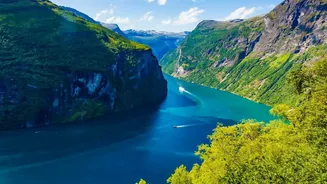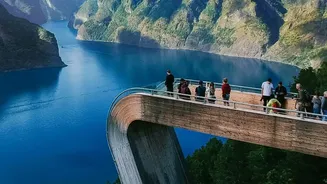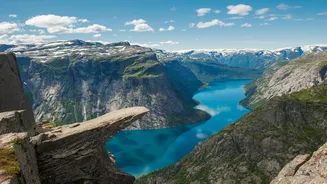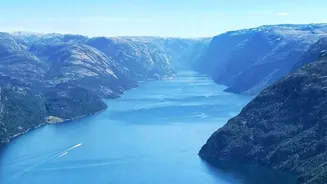





When you picture dramatic, sheer-sided sea inlets, your mind likely leaps to Norway. But closer to home, Scotland’s magnificent west coast offers its own world-class version of this epic landscape, carved by ancient glaciers and steeped in history.
Scotland's Answer to the Fjords
So,
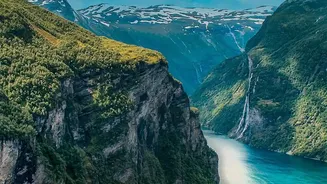
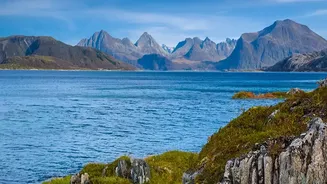
what’s the difference between a Norwegian fjord and a Scottish sea loch? Geologically, not much. Both are fjords: long, deep, narrow sea inlets created by glaciers. The word 'fjord' is Norwegian, while 'loch' is the Gaelic term used in Scotland and Ireland for both lakes and sea inlets. Scotland's west coast is famously shredded by these sea lochs, creating a dramatically indented coastline that stretches for thousands of kilometres. These bodies of water, like Loch Hourn and Loch Torridon, are often described as being as majestic as their Scandinavian counterparts, with steep mountains plunging directly into deep, tidal waters.
The Ultimate Coastal Road Trip
One of the best ways to experience this landscape is by car. The west coast is home to some of Europe's most spectacular driving routes. While the famous North Coast 500 covers the northernmost tip, other routes like the Argyll Coastal Route offer equally stunning scenery further south. This 208-kilometre journey from Tarbert to Fort William takes you past Inveraray Castle, through the ancient heartland of Kilmartin Glen, and into the seafood capital of Oban. For a truly dramatic drive, the winding single-track road to Applecross, Bealach na Bà ('Pass of the Cattle'), offers hairpin bends and views that rival any Alpine pass. Further north, the journey through Glencoe and along the 'Road to the Isles' towards Mallaig presents a continuous spectacle of moody lochs and towering mountains.
Exploring From the Water
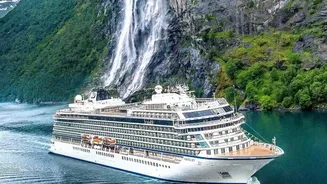
To truly appreciate the scale and shelter of the sea lochs, you need to get on the water. A variety of small-ship cruises and ferry services operate along the coast, offering a perspective that's impossible to get from land. Companies offer everything from multi-day luxury cruises exploring the Hebrides to day trips into specific lochs. From the main hub of Oban, you can sail to the Isle of Mull, Iona, and the Small Isles of Eigg and Rum. These journeys navigate through sheltered sounds and past dramatic headlands, providing opportunities to spot wildlife like seals, dolphins, and sea eagles. Some cruises even venture through the Caledonian Canal, linking sea lochs like Loch Linnhe with the iconic Loch Ness.
Iconic Lochs You Can't Miss
While the entire coast is breathtaking, a few specific lochs stand out. Loch Hourn, whose name translates to 'Loch of Hell', is often called Scotland's most fjord_like loch, a remote and wild inlet separating the Knoydart and Glenelg peninsulas. On the Isle of Skye, Loch Coruisk is a freshwater loch nestled in an amphitheatre of the jagged Cuillin mountains, accessible only by boat or a long hike. Further north, Loch Torridon’s magnificent landscape is surrounded by ancient sandstone mountains and offers incredible hiking. Each offers a unique character, from the accessible beauty of Loch Fyne, Scotland's longest sea loch, to the remote and brooding majesty of those hidden gems.
More Than Just Majestic Scenery
The fjord experience in Scotland is about more than just the water and mountains. The coastline is dotted with ancient castles, from the iconic Eilean Donan to the atmospheric ruins of Dunscaith on Skye. The region is also a haven for food lovers, with towns like Oban and Mallaig serving up world_class fresh seafood. No trip would be complete without sampling the local whisky from one of many coastal distilleries. This rich tapestry of history, culture, and cuisine, set against one of the world's most dramatic coastlines, makes a trip to Scotland's west coast an unforgettable adventure.