




Go Beyond the Weather Forecast
While checking a weather app is a good first step, monsoon conditions, especially in hilly or remote areas, can change in minutes. A forecast might promise a clear spell, but local geography creates its own microclimate. The most reliable information
comes from on-the-ground observation. Notice the immediate environment. Are locals going about their business, or are they securing their homes? Their behaviour is often a more accurate predictor of imminent weather than a generalised satellite report. Having buffer days in your itinerary can also save you from taking risks if conditions suddenly worsen.
Read the Sky and Wind
You don’t need to be a meteorologist to read the sky’s warning signs. Look at the clouds. Fluffy, white cumulus clouds are generally fair-weather indicators. However, if they start to build vertically and darken at the bottom, they can quickly develop into storm clouds. Wispy, high-altitude cirrus clouds can sometimes signal an approaching weather disturbance in the next 24 to 48 hours. Pay attention to the wind. A sudden change in wind direction or a strong, consistent wind in clear weather can be a sign of an incoming storm front. These natural signs often give you a more immediate and localised warning than any app.
Assess Water Crossings Carefully
Gushing streams and overflowing rivers are a classic monsoon sight, but they are also one of the biggest dangers. Never attempt to cross a body of water without assessing it first. Look at the water's colour. Clear water is generally safer, while muddy or brown water indicates heavy rainfall upstream, carrying sediment and debris, and suggests a powerful current. If you hear rocks knocking together, it's a sign that the current is strong enough to move boulders—a clear warning to stay away. Avoid crossing flooded roads, as it's impossible to know their depth or the condition of the road beneath. Just a few inches of fast-moving water can be enough to knock a person over or even move a vehicle.
Listen for Landslide Warnings
In mountainous and hilly regions, landslides are a major risk during the monsoon. Heavy rain saturates the soil, making it unstable. Before you see a slide, you might hear it. Listen for faint rumbling sounds that grow louder, or the sound of trees cracking or rocks falling. Visually, be on alert for new cracks appearing on roads or the ground, trees or electricity poles that are tilting at an unusual angle, and soil pulling away from foundations. If you are driving, be wary of embankments. Locals in these areas are often acutely aware of risky zones, so always heed their advice.
Drive with Extreme Caution
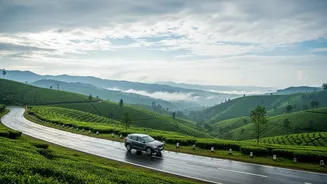
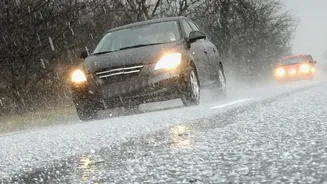
A monsoon road trip requires a different level of alertness. Roads can be slippery, and visibility is often poor. Before you even start, ensure your vehicle’s tyres, wipers, and headlights are in perfect condition. On the road, reduce your speed and significantly increase the following distance between you and the vehicle ahead, as braking takes longer on wet surfaces. Be especially careful on curves and avoid sudden braking. Potholes are often hidden by puddles, so driving slowly is your best defence. If rain becomes too heavy and visibility drops, it's safer to pull over in a safe spot—away from trees or poles—and wait for conditions to improve.
Prioritise Health and Hygiene
Monsoon safety isn't just about avoiding accidents; it's also about staying healthy. The season sees a spike in water-borne and mosquito-borne diseases. Always drink boiled or bottled water and be wary of ice in drinks. Avoid raw or uncooked street food, as high humidity allows bacteria to thrive. Stick to freshly prepared, hot meals from clean establishments. To prevent fungal infections, try to stay dry and change out of wet clothes and shoes as soon as possible. Carry a good insect repellent and wear long-sleeved clothing, especially in the evenings, to protect against mosquito bites.