



A Star System Full of Worlds
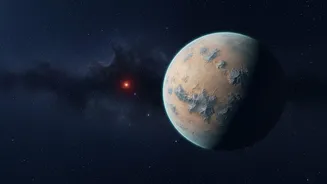
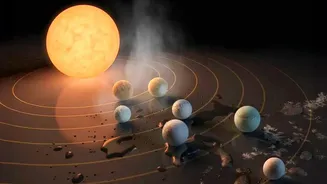
First, a quick refresher on our cosmic neighbour. The TRAPPIST-1 system, located a mere 40 light-years from Earth, is one of the most fascinating planetary systems discovered to date. It features seven Earth-sized rocky planets orbiting a small, cool
star known as an ultracool dwarf. Its discovery captivated the world because several of these planets exist within the star's 'habitable zone'—the region where conditions could be just right for liquid water to exist on a planet's surface. Because the planets are so close to their star and to each other, with orbits taking only a few days, scientists can study them frequently, making it a perfect natural laboratory for understanding how planets form and evolve.
The Telescope That Could
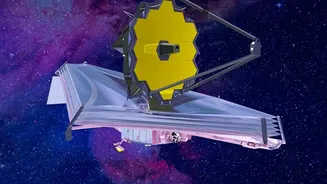
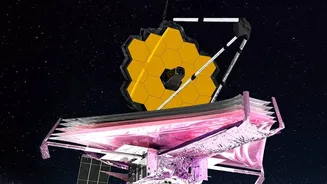
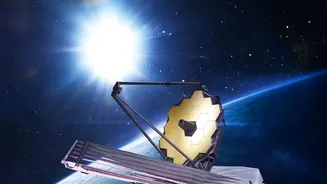
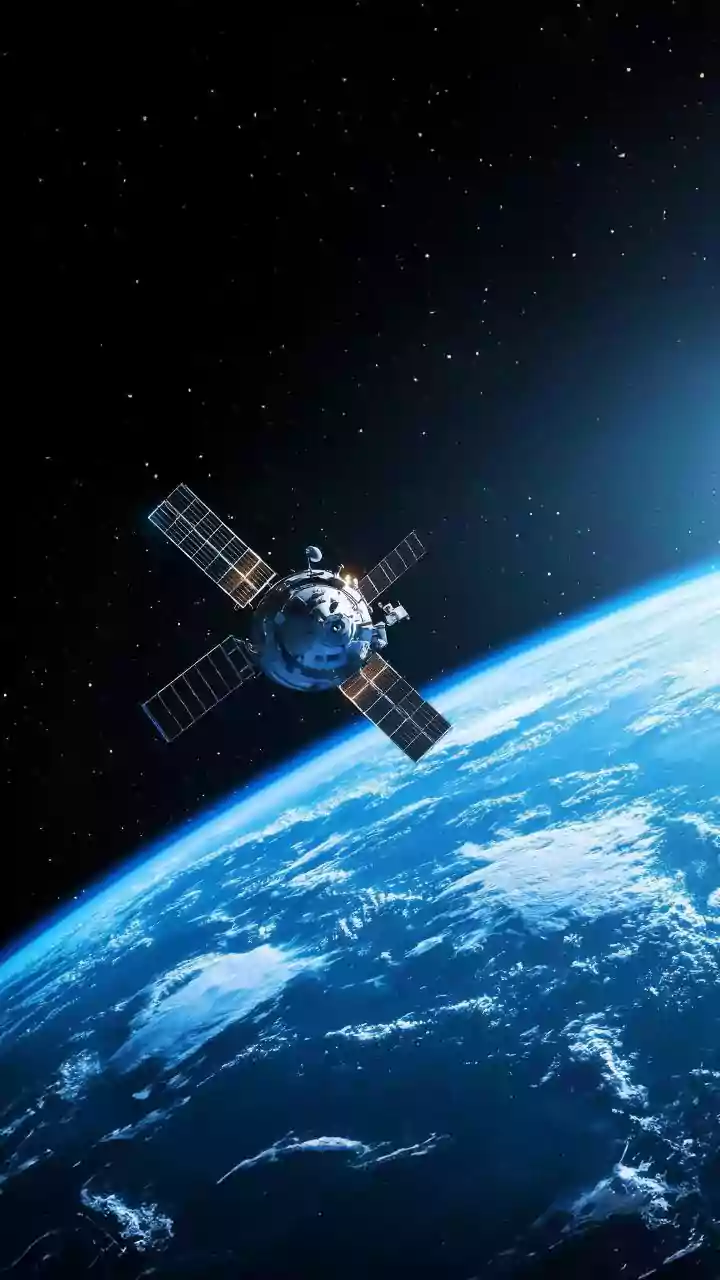
Enter the James Webb Space Telescope (JWST). This marvel of engineering has an unparalleled ability to analyze the chemical makeup of distant atmospheres. It does this by using a technique called transmission spectroscopy. When a planet passes in front of its star, the star's light filters through the planet's atmosphere. Different gas molecules absorb specific wavelengths, or colours, of light. By looking at which parts of the light spectrum are missing, JWST can identify the chemical 'fingerprints' of gases like water, methane, and carbon dioxide, giving us a detailed atmospheric profile from quadrillions of kilometres away.
A Thick Blanket of Carbon
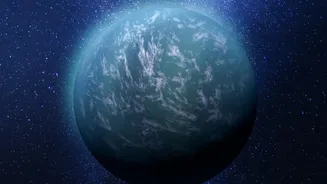
The latest observations have focused on one of the TRAPPIST-1 planets, revealing an atmosphere dominated by carbon-based molecules, likely carbon dioxide. The term 'heavy carbon atmosphere' suggests it is not a light, puffy atmosphere like one made of hydrogen or helium, but a thick, dense one. This is a significant find because previous studies of the innermost planets, TRAPPIST-1b and TRAPPIST-1c, suggested they had very thin atmospheres or were bare rock. This new detection of a substantial atmosphere on a different planet in the system demonstrates the incredible diversity that can exist even among sibling worlds. It changes our understanding of what's possible for planets orbiting these common red dwarf stars.
More Venus Than Earth
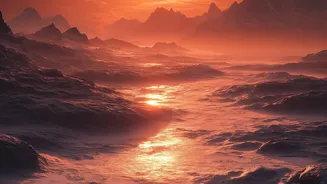
Before we pack our bags, it is crucial to understand what a heavy carbon dioxide atmosphere implies. While essential for life on Earth, an extremely dense CO2 atmosphere creates a runaway greenhouse effect. Think of our own solar system's Venus, a planet with a crushing, toxic atmosphere of carbon dioxide that bakes its surface to temperatures hot enough to melt lead. The new finding suggests this TRAPPIST-1 planet is likely a searing-hot, Venus-like world, not a temperate, Earth-like one. While disappointing for those hoping for a habitable twin, it's a vital piece of the puzzle. It shows that just having the right size and being in the right solar system doesn't guarantee habitability.
Why This Discovery Matters
So, if it’s not an Earth twin, why is this so important? This discovery is a monumental step in the field of exoplanet science. It’s one of the first times we have been able to characterize in detail the atmosphere of a rocky, Earth-sized planet outside our solar system. For years, scientists could only speculate about these worlds. Now, JWST is providing concrete data. Understanding the difference between a planet that holds onto an atmosphere and one that doesn't, or one that becomes a Venus versus one that becomes an Earth, is fundamental to narrowing the search for life elsewhere. This finding provides a crucial data point, helping scientists refine their models of planetary evolution.
The Search Continues
This is not the end of the TRAPPIST-1 story; it's a thrilling new chapter. With this detection confirmed, scientists will now turn their attention to the other planets in the system, especially TRAPPIST-1e, f, and g, which orbit within the traditional habitable zone. Will they be bare rocks? Will they be Venus-like? Or will one of them show signs of a more balanced, temperate atmosphere, perhaps with the presence of water vapour? Each observation gets us closer to answering one of humanity’s oldest questions: Are we alone in the universe? The telescope is now gathering data that was once the stuff of science fiction.