




The Paradox of a Full Stomach
The term 'hidden hunger' sounds like a contradiction, but it describes a widespread and serious nutritional issue. It isn’t about the gnawing feeling of an empty stomach; it’s a deficiency in essential vitamins and minerals, or micronutrients. A person
can consume enough calories to feel full, and even be overweight, yet still suffer from hidden hunger because their diet lacks vital nutrients like iron, zinc, and Vitamin A. This is not a trivial problem. Globally, over two billion people are affected. In India, it contributes to alarming rates of anemia, childhood stunting, and weakened immune systems, quietly undermining the health and potential of millions. The symptoms are often invisible until they become severe, making it a crisis that lurks beneath the surface of apparent food security.
How Our Farms Shaped Our Diet
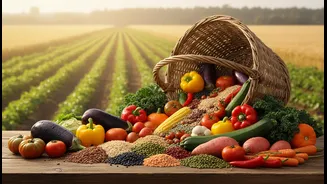
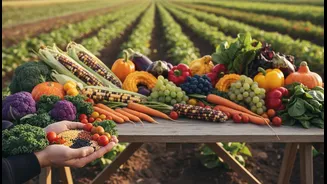
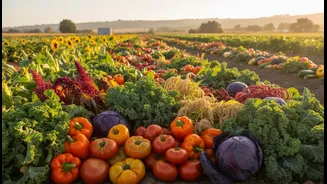
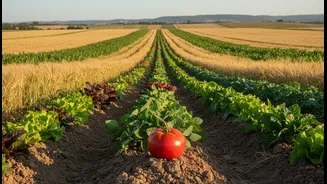
The roots of hidden hunger can be traced back to our fields. The Green Revolution in the mid-20th century was a monumental success in averting famine, dramatically increasing the yields of staple crops like rice and wheat. This ensured India became self-sufficient in food grains. However, this success came with an unintended trade-off. Agricultural policies, including Minimum Support Prices (MSP) and a vast Public Distribution System (PDS), created powerful incentives for farmers to focus almost exclusively on these high-yield staples. This led to the rise of monoculture, where vast tracts of land are dedicated to a single crop. As a result, more nutritious, climate-resilient traditional crops like millets, pulses, and diverse local vegetables were sidelined. Over decades, our national food basket has become less diverse, dominated by energy-dense but often nutrient-poor staples.
Policy on the Plate
Agricultural policy is effectively health policy. When the government guarantees purchase and provides subsidies for wheat and rice, it directly shapes what farmers grow and what ends up on the nation's tables, especially for the hundreds of millions who rely on the PDS. This system, designed to fight hunger, inadvertently contributed to nutritional imbalances by primarily supplying calories rather than a balanced portfolio of nutrients. The economic security offered by staple crops made it risky for small farmers to invest in cultivating vegetables, fruits, or pulses, whose market prices are more volatile. This created a feedback loop: policy drove the supply of certain grains, which in turn cemented their place as the foundation of the Indian diet, making it harder to break the cycle of micronutrient deficiency.
A Return to Richer Roots
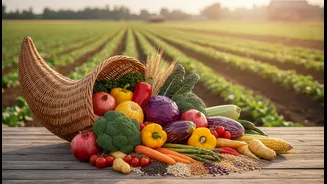
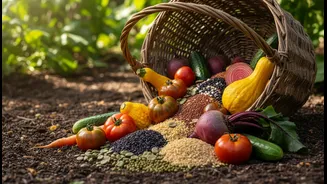
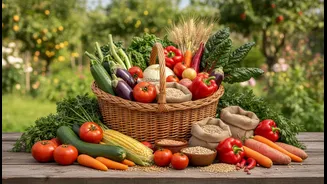
The solution is not to abandon food security, but to evolve it into nutritional security. Experts and policymakers increasingly recognize the need to shift from a crop-centric to a nutrition-centric approach. This involves a deliberate return to crop diversity, championed by the promotion of foods once central to the Indian diet. Millets—such as jowar, bajra, and ragi—are at the forefront of this movement. These 'nutri-cereals' are powerhouses of protein, fibre, and minerals. They are also famously climate-resilient, thriving in arid conditions with minimal water, making them a smart choice for a sustainable future. Recent government initiatives, like designating 2023 as the International Year of Millets and pilot programs to include them in the PDS, signal a crucial policy pivot. Encouraging farmers to diversify their fields isn't just an environmental slogan; it is a direct and sustainable strategy to fight hidden hunger from the ground up.