


More Than Just a Number
So much of the public discourse around climate change revolves around numbers: a 1.5-degree Celsius target, parts-per-million of CO2, or a tenth of a degree of warming in a given year. These figures become battle lines in arguments, yet few stop to ask
where they come from. How are these measurements made? And more importantly, how do we know they are accurate? The truth is, the instruments that gather this data are just as important as the data itself. Without understanding the quality of the measurement, arguing about the number is like debating the time without knowing if the clock is set correctly. This is where the scientific principle of calibration becomes the most important part of the conversation.
Meet NASA's Climate Benchmark
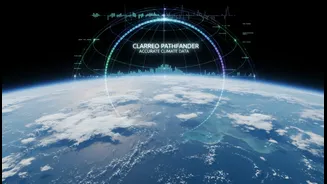
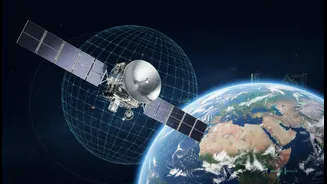
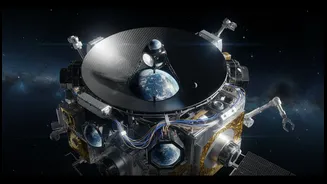
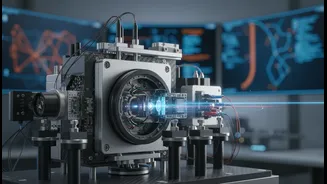
Enter NASA's CLARREO Pathfinder (Climate Absolute Radiance and Refractivity Observatory Pathfinder). This mission, featuring an advanced spectrometer instrument hosted on the International Space Station, isn't just another satellite collecting climate data. Its primary job is to serve as a new, ultra-precise benchmark in orbit. Think of it as a trusted reference, a metrology lab in space. CLARREO Pathfinder is designed to measure sunlight reflected from Earth with an accuracy five to ten times greater than existing sensors. Its purpose is to demonstrate that this high level of accuracy can be achieved and maintained in space, providing a 'gold standard' that other satellites can be compared against.
Why Calibration Is Everything
So, what is calibration? At its simplest, it's the process of making sure a measurement tool is accurate by comparing it against a known standard. Your kitchen scale needs it to measure flour correctly, and a satellite sensor needs it to measure Earth's temperature accurately. Over time, the harsh environment of space—intense radiation and extreme temperature swings—can cause a satellite's sensors to degrade or 'drift'. If this drift isn't accounted for, the data becomes less reliable, making it difficult to distinguish a real climate trend from an instrument error. Long-term climate studies require stitching together data from different satellites over decades, and if each instrument has a slightly different, drifting measurement, the final picture will be flawed.
An On-Orbit Reference Point
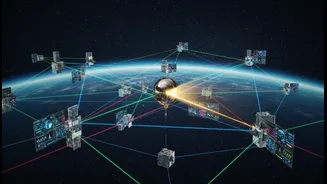
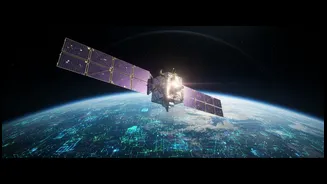
This is the problem CLARREO Pathfinder was built to solve. By maintaining its own high accuracy, it acts as a stable reference point in orbit. As other Earth-observing satellites like CERES and VIIRS cross its path, their measurements can be compared directly to CLARREO's benchmark data. This process, called intercalibration, allows scientists to check for and correct any drift in the other sensors. It effectively synchronizes the entire fleet of climate-monitoring satellites, ensuring that data from a satellite launched in 2015 can be reliably compared with data from a satellite launched in 2025. This creates a single, cohesive, and highly reliable long-term climate record.
Shifting the Climate Conversation
Armed with this knowledge, you can fundamentally change the nature of a debate about warming numbers. Instead of getting bogged down in arguing about a specific temperature anomaly, you can elevate the discussion. The next time someone questions the data, you can explain the concept of calibration. You can ask: How is the data's accuracy ensured over time? You can talk about how the scientific community isn't just collecting numbers, but is actively working to prove their validity with missions like CLARREO Pathfinder. It moves the conversation from one of pure belief to one about scientific rigor and confidence. This focus on improving data quality is what allows scientists to detect subtle climate trends decades sooner and with much greater certainty.