

Know Your Mithai's Lifespan
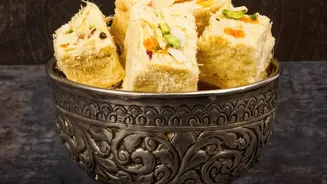
Not all Indian sweets are created equal when it comes to longevity. The shelf life depends heavily on the ingredients. Sweets made with milk, khoya, or fresh paneer, such as Kalakand, Sandesh, or soft pedas, are highly perishable and should be consumed
within one to two days. Ladoos made with besan or boondi, and khoya-based burfis have a slightly longer life, staying fresh for about four to seven days if stored correctly. The most durable options for gifting, especially if shipping is involved, are sweets rich in ghee and dry fruits. Items like Kaju Katli, Anjeer Chikki, and many dry fruit-based ladoos can last well for seven to fifteen days, as the sugar and ghee act as natural preservatives.
Perishables vs. Non-Perishables
Beyond sweets, understanding the broader category of your food gift is crucial. Perishable items are those that require refrigeration to prevent spoilage. This includes dairy products, most homemade sweets, and certain baked goods with cream fillings. These items are best gifted in person or sent via courier services that offer refrigerated transport, especially in India's often warm and humid climate. Non-perishable items, such as roasted nuts, dry fruit boxes, vacuum-sealed savoury snacks like mathri and chakli, and hard-baked goods like biscotti, are much safer bets for shipping over longer distances. They are less susceptible to spoilage from temperature fluctuations, though they still require protection from moisture and crushing.
The Art of Secure Packing
Proper packing is your first line of defense against damage and spoilage. For delicate items like cookies or laddoos, pack them snugly in a sturdy, airtight container like a metal tin. Fill any empty spaces with crumpled paper towels or bubble wrap to prevent movement and breakage. If you're sending multiple items, place heavier ones at the bottom. For items prone to melting, like chocolates, using thermal bubble wrap or insulated boxes can be a game-changer. In warmer weather, including a gel-based cold pack (sealed in a plastic bag to prevent leaks) can help maintain a cool temperature. Finally, place the primary container inside a sturdy corrugated cardboard box, cushioning it on all sides.
Navigating Courier and Transport
When sending your food gift through a courier, transparency is key. Clearly label the package as “Perishable” and “Fragile” to ensure careful handling. It's wise to check the courier company's policies on sending food items, as some have restrictions. For highly perishable items, opt for the fastest delivery service available. Many couriers now offer specialised services for food, including temperature-controlled logistics. To avoid your package sitting in a warehouse over the weekend, try to ship it at the beginning of the week, like on a Monday or Tuesday. This maximises the chances of it reaching its destination without unnecessary delays that could compromise freshness.
Special Care for Homemade Gifts
Gifting homemade treats adds a personal touch, but it also requires extra diligence with food safety. Always start with clean hands, utensils, and work surfaces. For items like jams, pickles, or sauces, proper canning and sealing are critical to prevent bacterial growth. When gifting baked goods, allow them to cool completely to room temperature before packing; this prevents condensation from building up inside the container and making them soggy. If you are sending homemade items, it's a good practice to label them with the ingredients and the date they were made. This not only informs the recipient about what they're eating but also gives them a clear idea of its freshness.