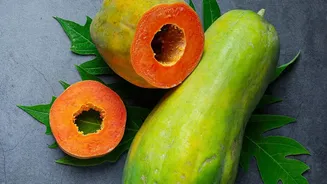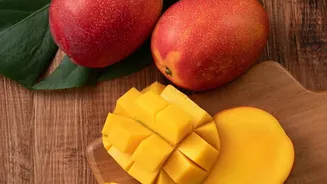




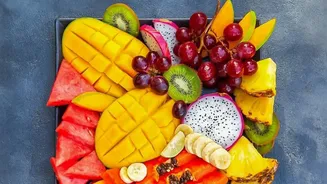
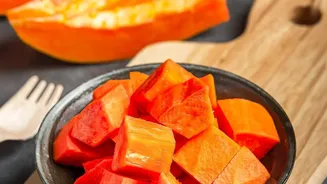

Mangoes and papayas are staples in Indian households, loved for their sweet, tropical flavours. But beyond their taste, how do these two popular fruits stack up in a nutritional showdown? We break down the delicious details to see which one takes the crown.
The Calorie and Sugar Breakdown
For those keeping an eye on their calorie or sugar intake, there is a clear difference. Papaya is the lighter option, containing around 43 calories and 7.8 grams of sugar per 100-gram serving. In contrast, a 100-gram serving of mango has about 60 calories and nearly 14 grams of sugar. This makes papaya a more suitable choice for individuals on a low-calorie or low-sugar diet. While mango's sugar content is higher, it's worth noting that it's a natural source of energy, and its sweetness is balanced by a wealth of other nutrients.
The Vitamin C Champion
When it comes to boosting immunity, Vitamin C is a crucial nutrient, and both fruits are excellent sources. However, papaya has a significant edge. A 100-gram serving of papaya can provide around 61 mg of Vitamin C, which is a substantial portion of the daily requirement. Mango is also a good source, offering about 36 mg of Vitamin C for the same serving size. So, if you're looking to maximise your Vitamin C intake, especially to fend off colds, papaya is the winner.
Vision and Skin: The Power of Vitamin A
Mango takes the lead when it comes to Vitamin A, a nutrient vital for eye health and glowing skin. The rich, orange-yellow colour of a ripe mango comes from beta-carotene, which the body converts into Vitamin A. A 100-gram serving of mango contains about 54 micrograms (mcg) of Vitamin A. Papaya also provides a healthy dose at around 47 mcg per 100 grams, but mango's higher concentration gives it an advantage for those focused on vision and skin benefits.
Aiding Digestion: Fiber and Enzymes
Both fruits are beneficial for digestion, but they work in different ways. They have similar amounts of dietary fibre, with papaya at 1.7g and mango at 1.6g per 100g, which helps promote regularity and gut health. However, papaya contains a unique enzyme called papain, which is well known for its ability to help break down proteins and aid digestion. Mangoes contain their own enzymes, such as amylase, which assist in digesting carbohydrates. For general digestive support, papaya's papain gives it a special advantage.
Blood Sugar and Glycemic Index
For individuals managing blood sugar levels, the glycemic index (GI) is an important factor. The GI measures how quickly a food raises blood sugar. Sources vary, but most place mango in the low–GI category, with a score around $51$. Papaya is generally considered to have a medium GI, with scores ranging from $56$ to $60$. This suggests that mango may cause a slower, more gradual rise in blood sugar compared to papaya, making it a potentially better choice in moderation for those with blood sugar concerns.
Other Key Nutrients
Beyond the major vitamins, both fruits offer other essential nutrients. Mango is a richer source of folate (Vitamin B9) and Vitamin E, which are important for cell growth and skin health, respectively. Papaya, on the other hand, tends to have slightly more potassium and calcium. Both contain beneficial antioxidants; mango boasts mangiferin, which has anti–inflammatory properties, while papaya is rich in lycopene.