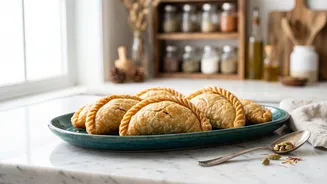



The aroma of freshly fried Gujiya is the scent of celebration in countless Indian homes. This crescent-shaped sweet pastry, with its rich filling and flaky crust, might seem daunting, but it's a joy to create with familiar kitchen staples.
The Soul of Indian Festivals
Gujiya is more
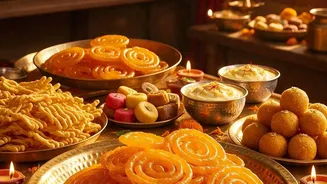
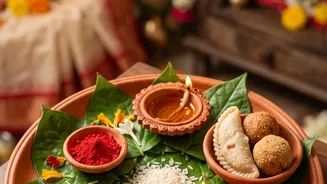
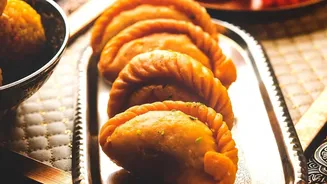
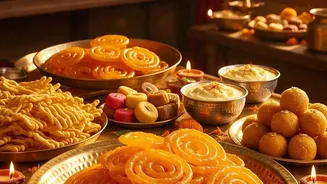
than just a sweet; it’s an emotion wrapped in pastry. Primarily associated with the vibrant festival of Holi, this delicacy is a staple across North India, especially in Uttar Pradesh, Rajasthan, and Madhya Pradesh. Often prepared in large batches by families in the days leading up to the festival, these sweet dumplings are shared with neighbours and friends, symbolizing joy, abundance, and goodwill. While most famous during Holi, Gujiya also makes a cherished appearance during Diwali and other celebrations. The traditional recipe features a half-moon shaped pastry filled with a sweet mixture of khoya (milk solids), nuts, and sometimes coconut.
Gather Your Ingredients
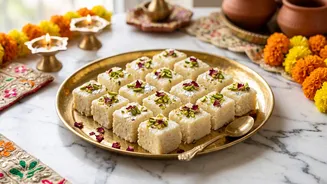
The magic of Gujiya lies in its simple, yet flavourful, components. This recipe focuses on a classic khoya-based filling. For the dough, you will need approximately 2 cups of all-purpose flour (maida), ¼ cup of ghee (clarified butter), and about ½ cup of water. For the heart of the Gujiya, the filling, you'll require 1 cup of khoya (also known as mawa), ½ cup of powdered sugar, ½ cup of finely chopped mixed nuts like almonds, cashews, and pistachios, 2 tablespoons of desiccated coconut, and ½ teaspoon of cardamom powder for that essential aroma. A pinch of salt for the dough will help balance the flavours. You'll also need oil or ghee for deep-frying.
Preparing the Flaky Pastry Dough
The secret to a perfectly crisp Gujiya is a firm, well-made dough. In a large mixing bowl, combine the all-purpose flour and the pinch of salt. Add the melted ghee and use your fingertips to rub it into the flour until the mixture resembles coarse breadcrumbs. This step, known as 'moyan', is crucial for a flaky crust. Next, begin adding water, a little at a time, kneading as you go. You want to form a stiff, tight dough, not a soft one like you would for roti. Overstiff dough can lead to bubbles and prevent the pastry from becoming crisp. Once formed, cover the dough with a damp cloth and let it rest for at least 30 minutes.
Creating the Aromatic Filling
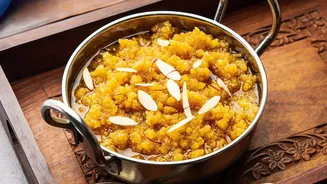
While the dough rests, prepare the sweet filling. Gently roast the crumbled or grated khoya in a pan on low heat until it loses some moisture and turns a light golden colour, which takes about 8–10 minutes. This roasting step is vital to enhance the flavour and ensure the filling isn't too moist, which can make the Gujiya soggy. Set the khoya aside to cool completely. In the same pan, you can lightly toast your chopped nuts and desiccated coconut until fragrant. Once all the roasted ingredients have cooled down to room temperature, combine them in a bowl. Add the powdered sugar and cardamom powder, and mix everything well. Your filling is now ready.
After the dough has rested, knead it for another minute until smooth. Divide it into small, equal - sized balls. Take one ball and roll it into a thin circle, about 4 - 5 inches in diameter. You can shape the Gujiya using a special mould or by hand. If using a mould, place the rolled - out dough over it. Place about a tablespoon of the filling on one half of the circle, being careful not to overfill. Apply a little water along the edges of the dough with your fingertip, which acts as a glue. Firmly press the mould shut, and remove any excess dough from the edges. If shaping by hand, fold the dough over to form a semi - circle, press the edges to seal, and then create a pleated pattern by pinching and twisting the edge.
The final step is frying. Heat oil or ghee in a kadhai or deep pan over medium heat. It 's crucial not to fry the Gujiyas on high heat , as they will brown too quickly on the outside while remaining uncooked inside . To test if the oil is ready , drop a tiny piece of dough into it ; if it rises to the surface steadily , the temperature is right . Gently slide a few Gujiyas into the oil , being careful not to overcrowd the pan . Fry on a low to medium flame , turning them occasionally , until they are golden brown and crisp on all sides . Once done , remove them with a slotted spoon and place them on a wire rack or paper towel to drain excess oil .