





Beyond Vanilla and Chocolate
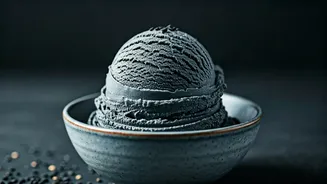
Move over, traditional desserts. A visually stunning and boldly different ice cream is making waves across urban India, one scoop at a time. Known for its dramatic, jet-black appearance, this isn't your average sweet treat. Often served in an equally
dark cone, charcoal black sesame ice cream has become an Instagram sensation, captivating foodies with its 'goth' aesthetic. [19] Parlors are tapping into a desire for new, exciting, and shareable food experiences. The trend, which gained global traction in cities like Tokyo and New York, combines the striking color of activated charcoal with the deep, nutty flavor of black sesame, creating a dessert that's as much a statement as it is a snack. [11, 19]
The Taste of the Void
But what does black ice cream actually taste like? The good news is, it doesn't taste like a barbecue. Activated charcoal is largely flavorless and odorless. [19] Its primary role is to provide the signature black color. The dominant flavor comes from the other star ingredient: black sesame. [20] When toasted and ground into a paste, black sesame seeds impart a rich, nutty, and slightly earthy flavor, often compared to a more intense version of tahini or peanut butter. [11, 20] The result is a sophisticated, complex taste that is roasty and savory-sweet, a far cry from the simple sweetness of most mainstream ice cream flavors. Some find the combination surprisingly delicious, with a creamy texture balancing the bold flavor. [11, 21]
Deconstructing the Darkness
The two key ingredients are what make this ice cream so unique. Black sesame, or 'kuro goma' in Japan, has a long history in Asian cuisine, prized for both its flavor and health benefits. [11] Activated charcoal is a fine black powder made from materials like wood or coconut shells that are heated to become highly porous. [9, 16] This porous nature is why it's used in medical situations to trap toxins and chemicals. [2, 16] In food, however, it's used in small amounts, mainly as a dramatic natural food coloring. [16] Together, these ingredients create a dessert that feels both ancient and modern, blending traditional Asian flavors with a cutting-edge, minimalist aesthetic.
A Health Halo or Just Hype?
Many foods containing activated charcoal are marketed with a 'detox' angle, but the science on this is thin. While it is a powerful agent for treating acute poisoning or overdose in a hospital setting, there is no reliable scientific evidence to support claims of it detoxifying the body during regular consumption in food. [3, 9] In fact, food safety officials in India have previously noted that activated charcoal is not a permitted food additive in certain categories. [4, 5] The porous charcoal can't distinguish between toxins and good-for-you compounds, meaning it may bind with vitamins, minerals, and even medications, reducing their absorption. [3, 6] Most experts agree that enjoying charcoal ice cream as an occasional treat is unlikely to cause harm, but it shouldn't be considered a health food. [8, 9] The real benefit is likely the enjoyment of trying something new and exciting.
Where to Find Your Scoop
While this trend might not be available in every neighborhood parlor just yet, it's popping up in artisanal and gourmet ice cream shops in major metropolitan cities. These are often the places that experiment with innovative and fusion flavors, from Paan and Gulkand to Tender Coconut. [10, 18] Look for parlors known for handcrafted batches and unique menus. The viral nature of the trend means that shops that offer it are usually active on social media. A quick search for #charcoalicecream or #blackicecream along with your city's name might just lead you to your next favorite dessert discovery. Several parlors in cities like Mumbai and Kolkata have been known to feature charcoal ice cream on their menus. [24, 26]