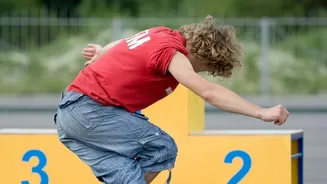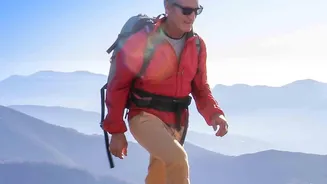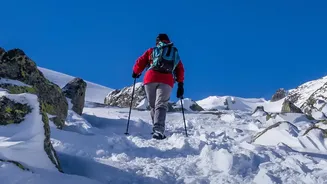




At first glance, hiking and skateboarding seem worlds apart. One is a meditative journey over natural earth, the other a dance of physics on urban terrain. Yet both challenge the body and mind. The real difference lies in how they do it.
The Core Physical Challenge
The fundamental
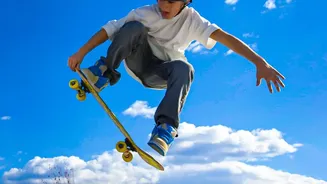
difference begins with the surface underfoot. Hiking on an uneven trail means your body is constantly adapting to a stable, yet unpredictable, surface. Your feet and legs react to rocks, roots, and changing gradients. Studies show that walking on uneven terrain increases metabolic energy expenditure by nearly 30% compared to flat ground. This is because your muscles must work harder to stabilize your joints and propel you forward over obstacles. It’s a challenge of endurance and adaptation against a fixed landscape. Skateboarding flips this dynamic entirely. The challenge isn't the ground itself, which is ideally smooth, but the unstable platform between you and the ground. The board is a moving object that requires constant control. Propulsion comes from pushing, but maintaining momentum involves 'pumping' through transitions and harnessing inertia. It’s a full-body workout where your core, quads, and calves are all engaged not just to move, but to simply stay balanced on a dynamic surface.
The Science of Balance
Both activities are masters at improving balance, but they train it in different ways. Hiking hones your proprioception—your brain's awareness of your body's position in space. Every step on a slanted rock or soft patch of dirt sends feedback through your nervous system, forcing your ankles, knees, and hips to make constant micro-adjustments. This builds what is primarily a form of reactive, stabilizing balance, helping you stay upright when the ground beneath you changes. Skateboarding, on the other hand, is a masterclass in dynamic balance. The board is constantly tilting, vibrating, and moving, requiring your body to manage equilibrium while in motion. Skaters develop exceptional reactive stability, with their ankles and core making thousands of tiny corrections to stay centered over the board. This is less about reacting to the ground and more about controlling your relationship with an object that is itself in motion, a constant conversation between your body and the board.
Muscle Engagement and Movement
When you hike, especially uphill, your large leg muscles—quadriceps, hamstrings, and glutes—do the heavy lifting. Your core muscles work consistently to stabilize your torso against the uneven ground, especially if you’re carrying a pack. The movement is largely linear and repetitive, focused on forward propulsion. Research shows that walking on uneven terrain significantly increases work at the knee and hip joints and activates more muscles throughout the lower leg and thigh. Skateboarding engages a more diverse set of muscles in short, powerful bursts. Pushing off engages the calf and quad of the pushing leg, while the standing leg's muscles work isometrically to maintain balance. Tricks, turns, and even simple cruising require intense core activation to keep your center of gravity managed. The movements are often rotational and lateral, demanding agility and coordination from the entire body to guide the board and absorb landings.
The Mental Game: Focus and Flow
The mental state required for each activity also differs significantly. Hiking demands a broad, navigational awareness. Your brain is engaged in low_level processing of your surroundings—watching the trail ahead, monitoring weather, and making route_finding decisions. This can lead to a meditative state, but it is a state of sustained, outward_looking attention. Studies have shown that spending time in nature this way can reduce rumination (obsessive negative thoughts) and restore cognitive function. Skateboarding demands a narrow, immediate focus. Your attention is fixed on the board, your feet, and the patch of ground directly in front of you. It's about reacting in fractions of a second to shifts in balance or upcoming cracks in the pavement. This intense concentration can induce a 'flow state', where the outside world melts away. The cognitive load is less about navigation and more about fine motor control and rapid_fire problem_solving in response to the board's behavior.
Risks and Injuries
While any physical activity carries risk, the common injuries tell a story. In hiking, the typical issues are repetitive strain injuries, such as sore knees or blisters, and acute injuries like twisted ankles from a misstep on an uneven surface. Getting lost or facing environmental hazards are also risks unique to the trail. Skateboarding injuries are often the result of sudden, high_impact falls. Wrist, hand, and forearm fractures are extremely common, as the natural instinct is to use your hands to break a fall. Head injuries are also a significant concern, making helmets essential. While skateboarding has a lower injury rate per participant than basketball, the injuries that do occur can be more severe than in many other recreational activities.