


Squats and lunges are foundational for strong legs, but are you using them effectively? Understanding how to tweak your form allows you to target different thigh muscles, ensuring balanced development and preventing injury. Let's break it down.
A Quick Tour of Your Thighs
Before
you can target specific muscles, it helps to know what they are. Your thighs are composed of several major muscle groups that work together to help you walk, run, and jump. At the front are the quadriceps (quads), a group of four muscles responsible for extending your knee. On the back of your thigh are the hamstrings, three muscles that allow you to bend your knee and extend your hip. On the inside, you have the adductors, which help you bring your legs together. Finally, on the outside of your hips and thighs are your abductors, which move your leg away from your body's midline.
Mastering the Classic Bodyweight Squat
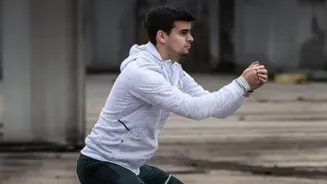
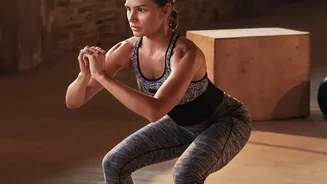
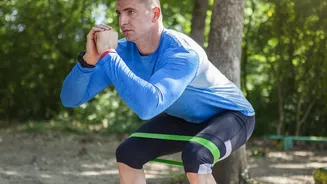
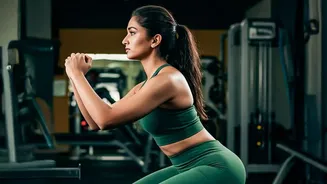
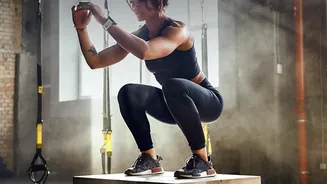
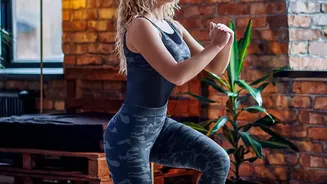
Proper form is the key to both safety and results. For a standard squat, stand with your feet shoulder-width apart, toes pointing slightly outward. Keep your chest lifted and core engaged as you hinge at your hips, pushing your glutes back as if sitting in a chair. Lower yourself until your thighs are parallel to the ground, ensuring your knees track in line with your feet and don't extend past your toes. Your weight should be in your heels. Push through your heels to return to the starting position. This classic stance provides a balanced workout for your quads and glutes.
Squat Variations for Targeted Results
Once you've mastered the basic squat, you can use variations to emphasize different muscles. For a greater focus on the inner thighs (adductors) and glutes, try the Sumo Squat. This involves taking a stance that's wider than shoulder-width and turning your toes out at about a 45-degree angle. As you squat, you'll feel a deeper engagement in your inner thighs. Conversely, a narrow stance, with feet closer than shoulder-width, can place more emphasis on the outer part of your quadriceps. Adjusting your foot position is a simple yet powerful way to change the focus of the exercise.
Perfecting the Fundamental Lunge
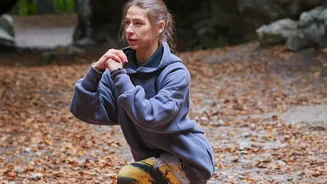
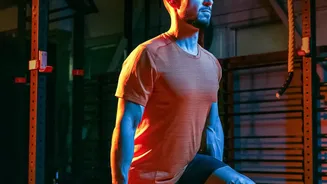
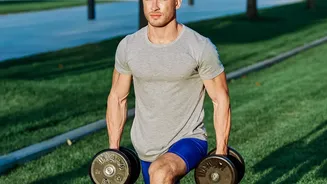
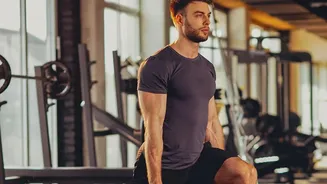
Lunges are excellent for developing single_leg strength and stability. To perform a forward lunge, step forward with one leg and lower your hips until both knees are bent at approximately a 90_degree angle. Your front knee should be directly above your ankle, and your back knee should hover just above the floor without touching it. A common mistake is to take too narrow a stance, as if on a tightrope, which compromises balance. Instead, imagine your feet are on train tracks, maintaining a hip_width distance as you step. Push off the front heel to return to the start.
Lunge Variations to Sculpt and Strengthen
Like squats, lunge variations can hit your thighs from different angles. The Lateral Lunge (or side lunge) is fantastic for targeting the inner and outer thighs. From a standing position, step directly out to one side, sending your hips back and bending that knee while keeping the other leg straight. Another effective variation is the Curtsy Lunge. In this move, you step one leg diagonally behind the other, as if performing a curtsy. This motion heavily engages the glutes and both the inner and outer thigh muscles, promoting hip stability.
Safety Is Your Top Priority
To get stronger, you must train safely. One of the most common form errors in both squats and lunges is allowing the knees to collapse inward, known as knee valgus. This puts undue stress on the knee joint. Focus on actively pushing your knees out so they align with your feet. Another frequent issue is leaning the chest too far forward, which can strain the lower back. Keep your chest proud and your core braced throughout the movement. Finally, avoid using momentum. Perform each repetition in a slow, controlled manner to ensure the muscles are doing the work, not just your joints. If you feel pain, stop immediately and reassess your form.