






Your Kitchen's Invisible Threat
Your kitchen cloth is the perfect home for bacteria. Think about it: it’s often damp, contains tiny food particles, and sits at room temperature. This combination creates an ideal breeding ground for germs. Studies have repeatedly shown that used kitchen towels
can host a frightening array of bacteria. One major study found coliform bacteria, which indicates potential fecal contamination, on nearly 89% of cloths tested. Another 25.6% of towels contained E. coli. Other unwelcome guests can include Staphylococcus aureus, which can cause skin infections and food poisoning, and even Salmonella. These microbes are easily transferred from the cloth to your hands, dishes, and countertops, a process known as cross-contamination. Wiping a surface with a dirty cloth doesn't clean it; it just spreads the germs around.
How Often is 'Often'?
The single most important habit is to change your kitchen cloths frequently. While recommendations vary slightly, most food safety experts agree that a daily swap is best, especially in busy households or if you cook with meat, poultry, or fish. If a cloth is used to wipe up juices from raw meat, it should be removed for washing immediately. For cloths used only for drying clean hands or dishes, you might get away with changing them every two to three days. However, a simple rule of thumb is: if it’s damp, dirty, or has any kind of odour, it’s time for it to go in the wash. That musty smell is a tell-tale sign that bacteria and mould are already multiplying.
The Right Way to Wash and Disinfect
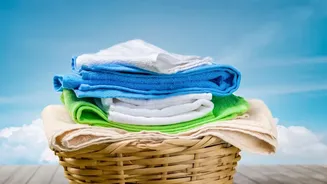
Simply rinsing the cloth under the tap is not enough to kill harmful bacteria. To be truly effective, kitchen cloths need a thorough cleaning. The most reliable method is to wash them in a washing machine on a hot cycle, ideally at 60°C or higher, as hot water is effective at killing germs. It's also best to wash kitchen towels separately from other laundry, like clothes or bath towels, to prevent cross-contamination. For an extra sanitising boost, you can add a small amount of bleach to the wash, provided the fabric can handle it. Alternatively, soaking cloths in a solution of hot water and vinegar before washing can help eliminate odours and bacteria. Some people also opt to boil their cloths for 10-15 minutes to ensure they are fully sterilised.
Why Complete Drying is Crucial
Washing is only half the battle. Moisture is the key ingredient for bacterial growth, so ensuring your kitchen cloths dry completely is just as important as washing them. A cloth that remains damp for hours, especially when crumpled in a pile by the sink, quickly becomes a breeding ground for germs again. The best practice is to hang cloths where air can circulate freely, allowing them to dry quickly between uses and after washing. A simple hook or a dedicated drying rack is far better than leaving it in a wet heap. In humid climates, like during the Indian monsoon, this step is even more critical, as moisture lingers in the air and slows down drying. A fully dry cloth is a much safer cloth.
Smarter Habits for a Safer Kitchen
Beyond washing and drying, a few simple changes can significantly reduce risks. Consider a colour-coded system: one colour cloth for drying clean dishes, another for wiping hands, and a third for cleaning countertops. This prevents bacteria from raw food prep areas from ending up on your clean plates. Many experts also suggest using paper towels for the riskiest jobs, like cleaning up spills from raw meat or poultry, and then disposing of them immediately. Finally, don't let your cloths get old and frayed. Worn-out fabric can trap more dirt and bacteria and is harder to clean effectively. Replacing them regularly is a small investment in your family's health.