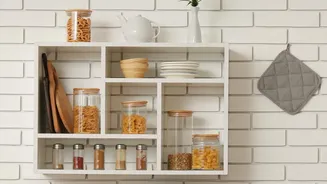







Embrace Airtight Storage
Moisture is the number one enemy of dry goods during the monsoon. Items like biscuits, chips, sugar, and salt quickly become soggy and unusable when exposed to damp air. Your spice powders—turmeric, chilli, and coriander—are also highly susceptible, leading
to clumping and loss of flavour. The solution is non-negotiable: invest in quality airtight containers. Transfer goods from their original paper or thin plastic packaging into glass or stainless-steel jars with tight-sealing lids immediately after purchase. This simple habit forms a crucial barrier against humidity, preserving the texture and longevity of your pantry staples. Make sure containers are completely dry before filling them to prevent trapping any moisture inside.
Rethink Your Spice Strategy
In many Indian kitchens, the spice box (masala dabba) lives right next to the stove for convenience. During the monsoon, this is a critical mistake. Steam from cooking introduces moisture directly into your spices, degrading their quality. Relocate your main spice containers to a cool, dark, and dry cabinet away from the stove and sink. For daily use, keep only small quantities in your masala dabba and refill it every few days from your larger, safely stored jars. Also, always use a completely dry spoon to scoop out spices; even a single drop of water can spoil an entire batch. For expensive or delicate spices like saffron, consider storing small, well-sealed jars in the refrigerator, but allow them to come to room temperature before opening to avoid condensation.
Manage Fresh Produce Smartly
Fruits and vegetables are highly prone to mould and rot in the humid monsoon weather. It's wise to buy produce in smaller batches more frequently rather than stocking up for the week. Upon bringing them home, wash leafy greens and other vegetables thoroughly. Some experts suggest a rinse with salt water or a diluted vinegar solution to help remove germs. The key is to dry them completely afterwards. You can pat them dry or spread them under a fan. Store leafy greens wrapped in paper towels inside breathable bags in the fridge's crisper drawer; the paper absorbs excess moisture that leads to sliminess. Root vegetables like onions, garlic, and potatoes should be kept in a cool, dark, and well-ventilated place, but not in the fridge where the moisture can cause them to sprout.
Protect Grains, Flours, and Pulses
Grains and flours are magnets for moisture, which can lead to insect infestations and mould. Before storing, you can lightly roast some grains or spread them out on a newspaper under a fan to remove any trapped moisture. Once completely dry, store them in airtight containers. Avoid keeping bags of rice or atta directly on the floor, as it can transfer dampness; instead, place them on a wooden plank or a low shelf. For added protection, you can add natural moisture absorbers like a few dried bay leaves or neem leaves to your grain containers, which also act as natural pest repellents.
Handle Cooked Food with Extra Care
Food spoils much faster at room temperature during the monsoon. This increases the risk of foodborne illnesses like gastroenteritis and food poisoning, which see a spike this season. Make it a habit to consume cooked food as fresh as possible. If you have leftovers, don't leave them out on the counter. Cool them down quickly and refrigerate them in covered containers within two hours of cooking. When consuming leftovers, ensure you reheat them thoroughly until steaming hot to kill any bacteria that may have developed. It’s best to avoid street food, especially items like pre-cut salads, raw chutneys, and beverages with ice from unknown sources, as the risk of contamination is significantly higher.
Maintain a Dry and Clean Kitchen
A hygienic kitchen environment is your best defence. Damp surfaces are breeding grounds for germs. Wipe down kitchen counters, chopping boards, and sinks frequently, using a disinfectant cleaner or a vinegar-water solution. Pay special attention to cleaning and drying your refrigerator regularly, including the drip tray, as condensation can promote mould growth. Ensure good ventilation by using an exhaust fan while cooking to pull steam and moisture out of the room. Regularly cleaning cabinets and shelves before stocking them also helps prevent the musty odours and mildew common in the rainy season.