





The Challenge of a Cohesive View
Imagine trying to create a single, perfectly colour-matched photo by stitching together pictures from a dozen different cameras, each with its own lens, settings, and age. Some images might be slightly faded, others a bit too bright. This is the problem
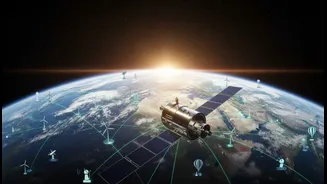
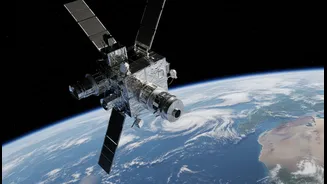
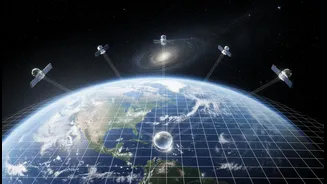
climate scientists face. We rely on a fleet of Earth-observing satellites to monitor everything from sea ice to cloud cover. But these instruments are built by different agencies, launched at different times, and operate in the harsh environment of space, which causes their sensors to degrade over time. This degradation means their measurements can drift, creating tiny inconsistencies that, when compounded over decades, make it difficult to distinguish a real climate trend from an instrument-related error. Without a common, reliable reference point, achieving the high level of certainty needed for critical climate models becomes a massive scientific headache.
Meet the 'Tuning Fork' in Space
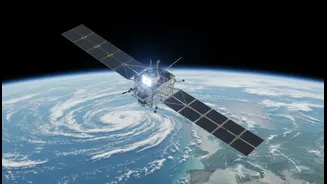
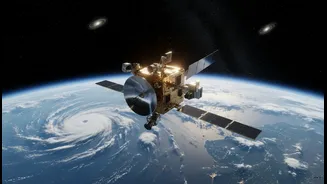
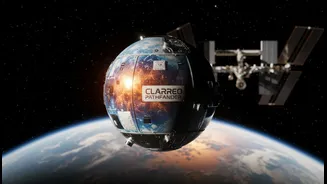
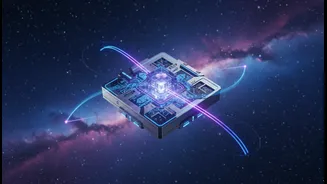
Enter NASA's CLARREO Pathfinder (CPF), an instrument now operating aboard the International Space Station (ISS). Think of it less as another camera and more as a master tuning fork for the entire orchestra of Earth-observing satellites. The mission's primary goal isn't just to gather its own data, but to serve as a high-accuracy benchmark that other sensors can be compared against. The CPF instrument, a hyperspectral spectrometer, measures sunlight reflected from the Earth with an unprecedented accuracy that is five to ten times greater than existing sensors. By providing this on-orbit calibration standard, it aims to harmonize the data from various satellites, ensuring everyone is reading from the same sheet of music.
How Calibration Works from Orbit
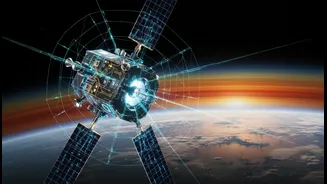
The CLARREO Pathfinder's method is both clever and direct. Hosted on the ISS, its two-axis pointing system allows it to look at the same patch of Earth at nearly the same time and from the same angle as another satellite passing by, such as the CERES and VIIRS instruments. It takes a hyper-accurate reading of the reflected sunlight from that target scene. Scientists can then compare this 'gold standard' measurement with the one taken by the other satellite. Any discrepancies can be identified and used to correct the data from the operational satellite, effectively removing measurement bias. To maintain its own extraordinary accuracy, the CPF instrument regularly calibrates itself by taking direct measurements of stable and well-known targets: the Sun and the Moon. This process ensures it remains a trustworthy reference throughout its mission.
The Quest for Climate Certainty
So, what does this enhanced accuracy mean for climate science? It's about confidence. Detecting long-term climate change requires spotting incredibly small signals over decades. If the data has even minor calibration issues, these subtle trends can be masked or misinterpreted. By improving the consistency and accuracy across different satellite records, CLARREO Pathfinder helps create a more robust, long-term dataset. This directly addresses the problem of 'uncalibrated certainty' by anchoring climate observations to a clear, SI-traceable standard—the international system of units. More reliable data leads to more reliable climate models, which in turn allows for more confident decision-making regarding climate change mitigation and adaptation strategies. It helps scientists say, with greater certainty, what is changing and by how much.
A Pathfinder for the Future
As its name suggests, the Pathfinder mission is a technology demonstration, proving the concept for a potential future fleet of CLARREO-style observatories. The mission, which recently achieved 'first light' by capturing its initial science data, is already showcasing technology that could benefit both government and commercial satellite operators. Its success could pave the way for a new era of space-based observation where a 'metrology laboratory in orbit' provides a constant reference for all Earth-observing assets. This would fundamentally improve the global observing system, allowing us to detect climate trends faster and with more clarity than ever before.