


The Science: High Humidity is the Main Culprit
The number one reason your pots feel constantly damp is the dramatic rise in humidity. During the monsoon, the air inside your home becomes saturated with moisture, mirroring the conditions outside. This high humidity significantly slows down the process
of evaporation. Think of it like trying to dry a towel in a steamy room—it takes much longer. Similarly, the water in your plant's soil has nowhere to go because the surrounding air is already full of water vapour. As a result, soil that might have dried out in a few days during the summer can now stay wet for a week or even longer.
Less Light Means Less Thirst
The second key factor is the reduction in sunlight. The perpetually grey and overcast skies of the monsoon mean your indoor plants receive significantly less light energy. Light is the fuel for photosynthesis, the process by which plants create food. This process also drives transpiration, where plants release water vapour through their leaves. With less light, both photosynthesis and transpiration slow down. In simple terms, your plant's metabolic rate decreases, causing it to 'drink' much less water from the soil. This combination of slower evaporation and reduced water uptake creates the perfect storm for waterlogged soil.
The Danger of 'Wet Feet': Understanding Root Rot
While it might seem harmless, soil that stays wet for prolonged periods is the leading cause of a fatal condition called root rot. Plant roots need oxygen to survive, which they get from air pockets in the soil. When soil is waterlogged, these air pockets fill with water, effectively suffocating the roots. This oxygen-deprived environment allows harmful fungi and bacteria, which thrive in wet conditions, to attack and decompose the weakened roots. The signs of overwatering and root rot can be deceptive; you might see yellowing or wilting leaves and think your plant needs more water, when the opposite is true. Other signs include mushy stems at the base, a sour or rotten smell from the soil, and leaf drop.
Your New Monsoon Watering Plan
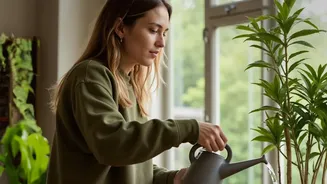
The most critical adjustment during the monsoon is to abandon your fixed watering schedule. Watering your plants every few days, as you might in summer, is a recipe for disaster. Instead, become an observer. Before you even think about reaching for the watering can, check the soil. The easiest method is the finger test: insert your finger about two inches into the soil. If it feels moist, wait. Many indoor plants may only need watering once every 10 to 15 days during the peak rainy season. When you do water, do it in the morning to allow any excess moisture on the surface to evaporate during the day.
Improve Drainage and Airflow
Good drainage is your best defence against waterlogging. Ensure your pots have clear, unblocked drainage holes. If a pot is sitting flat on a saucer or the floor, the drainage hole can get blocked, so raising it slightly on 'pot feet' or even a few stones can make a huge difference. It's also a good time to assess your potting mix. Heavy, dense garden soil retains too much water for containers. A light, well-aerating mix containing components like perlite or cocopeat is much better for indoor plants, as it allows excess water to drain away freely. Improving air circulation around your plants by not crowding them together can also help dry the soil and prevent fungal diseases that flourish in stagnant, humid air.