



A Tale of Two Phases
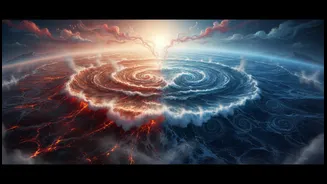
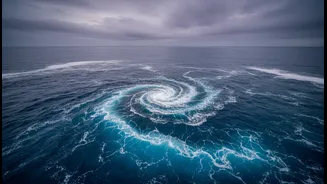
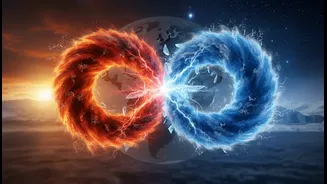
At its heart, the phenomenon is called the El Niño-Southern Oscillation (ENSO), a natural cycle of warming and cooling in the equatorial Pacific Ocean. It has three states: El Niño, La Niña, and neutral. Think of El Niño ('the little boy' in Spanish)
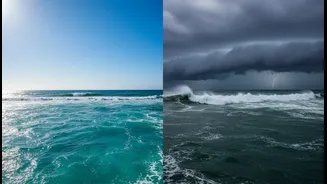
as the warm phase. During an El Niño event, sea surface temperatures in the central and eastern Pacific become unusually warm. This happens when the normal east-to-west trade winds weaken, allowing warm water that has pooled in the west to slosh back eastwards. La Niña ('the little girl') is the opposite. It's the cool phase, where trade winds strengthen, pushing more warm water towards Asia and allowing cold, deep water to rise to the surface in the eastern Pacific. These phases typically occur every two to seven years and can last for nine to twelve months or even longer.
The Pacific's Global Ripple Effect
How can a patch of warm or cool water in the Pacific affect weather thousands of kilometres away in India? The ocean and atmosphere are intricately linked. A massive change in ocean temperature, like that during an El Niño or La Niña, alters atmospheric circulation patterns globally. It's like dropping a huge stone into a pond; the ripples spread far and wide. During El Niño, the warming ocean releases heat and moisture into the atmosphere, shifting rainfall patterns. This disrupts the normal flow of air currents, including the jet stream, which can steer weather systems across the world. La Niña's cooling has a similarly powerful, but opposite, global effect, rearranging weather patterns in its own distinct way.
The All-Important Monsoon Connection
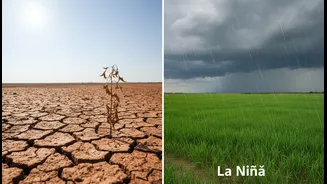
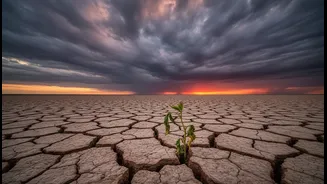
For India, the ENSO cycle's most critical impact is on the Southwest Monsoon, the lifeblood of the nation's agriculture-dependent economy. El Niño has a strong historical correlation with weaker monsoons and drought conditions in India. The atmospheric changes brought by El Niño can suppress the development of the moisture-laden monsoon winds that are crucial for summer rains. In fact, many of India's worst droughts have occurred during El Niño years. Conversely, La Niña is often associated with a stronger monsoon, sometimes leading to above-average rainfall and even flooding across parts of the subcontinent. However, this relationship isn't perfect; not every El Niño year results in a drought, but the connection is strong enough to make it a primary concern for forecasters.
Beyond Rain: Wider Impacts on India
The consequences of a weak or strong monsoon ripple through the entire Indian economy and society. A poor monsoon, often linked to El Niño, can lead to lower crop yields, forcing a greater reliance on food reserves and potentially stoking food price inflation. Water scarcity becomes a pressing issue, affecting not only agriculture but also drinking water supplies and hydroelectric power generation. On the other hand, a very strong La Niña-influenced monsoon can cause widespread flooding, leading to loss of life, displacement, and damage to infrastructure. These climate phenomena influence everything from public health to economic planning.
A Powerful, Predictable Signal
In the complex science of weather forecasting, the ENSO cycle is a uniquely powerful tool. This is because it is one of the most significant and predictable climate signals on Earth. While daily weather is chaotic, the slow-moving changes in Pacific Ocean temperatures provide a long-range glimpse into potential future weather patterns. Forecasters can often detect the early signs of a developing El Niño or La Niña months in advance, giving governments, industries, and farmers valuable time to prepare for potential impacts like droughts or floods. Though models continue to improve, the sheer scale of ENSO's influence ensures it remains a fundamental component of any seasonal or long-term climate forecast.
The Outlook for 2026
As of mid-2026, forecasters are watching the rapid development of what could be a historically strong El Niño event. Forecast models from July 2026 show a consistent and significant warming of ocean temperatures in the key Pacific regions. Predictions indicate the event will continue to intensify through the latter half of the year, likely peaking between November 2026 and early 2027. For India, this has put authorities on high alert, with expectations that the strengthening El Niño could suppress monsoon rainfall. This makes understanding and monitoring the ENSO cycle not just an academic exercise, but a critical task for national preparedness.