




The Common Leftover Letdown
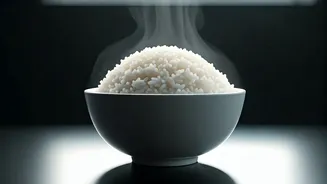
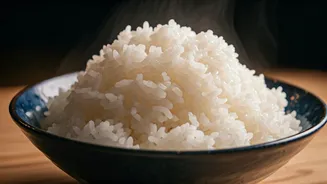
Leftover rice has a notorious reputation. What was once soft, steamy, and delicious can become a sad, clumpy block after a night in the refrigerator. When you try to reheat it, you often end up with an unevenly heated dish that’s somehow both crunchy
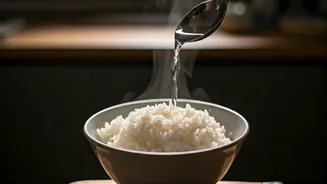
and mushy. This happens because as rice cools, its starch molecules recrystallize and force out moisture, a process known as retrogradation. This leaves the grains hard and dry, a far cry from their freshly cooked state. For years, home cooks have tried various methods to revive it, from sprinkling water on top to covering it with a damp paper towel, with mixed results.
The Viral Ice Cube Trick Revealed
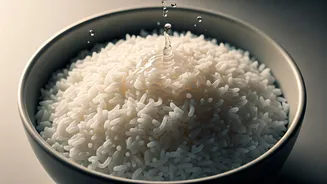
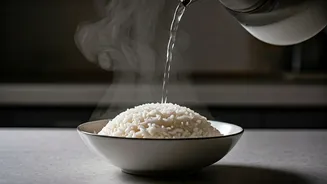
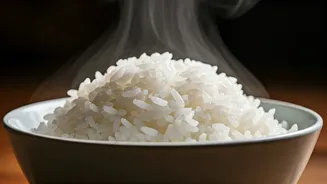
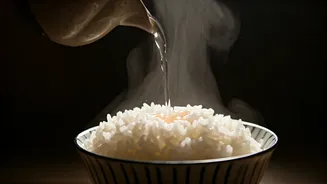
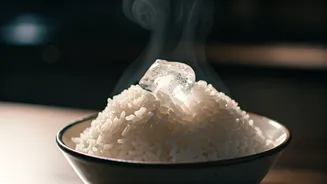
The hack causing a stir online is bafflingly simple: place an ice cube on top of your leftover rice before heating it in the microwave. Many who see it for the first time expect a puddle of water, but that's not what happens. After about a minute in the microwave, the rice is perfectly steamed, hot, and fluffy, and the ice cube is often still surprisingly intact. The trick works by creating steam. As the microwaves heat the food, the ice cube melts just enough on its surface to create a small amount of water, which then turns to steam. This steam gently rehydrates and heats the rice grains, restoring their soft texture without making them soggy.
The Science Behind the Magic
The reason the ice cube doesn't melt completely is due to the physics of microwave ovens. Microwaves work by causing polar molecules, like the water in your food, to vibrate rapidly, which generates heat. In liquid water, these molecules are free to move and vibrate. However, in ice, the water molecules are locked into a rigid crystal structure. This structure prevents them from vibrating as freely, so they don't absorb as much microwave energy. As a result, the rice, which contains liquid water within its starches, heats up much faster than the solid ice cube, allowing the rice to steam before the ice has a chance to fully melt.
A Crucial Note on Food Safety
While this trick is effective, it’s vital to handle leftover rice with care. Uncooked rice can contain spores of a bacterium called Bacillus cereus. These spores can survive the initial cooking process. If cooked rice is left at room temperature for too long (in the 'danger zone' between 5°C and 60°C), the spores can germinate and produce toxins. Crucially, reheating the rice will not destroy these heat-stable toxins. This can lead to a type of food poisoning sometimes called 'reheated rice syndrome', with symptoms like vomiting and diarrhea. To stay safe, always cool leftover rice quickly—ideally within an hour—and store it in an airtight container in the fridge. Consume it within a day or two and only reheat it once.
Other Reliable Reheating Methods
If the ice cube trick isn't for you, there are other trusted ways to bring leftover rice back to life. The stovetop method is a favourite for many. Simply add the rice to a pot with a tablespoon or two of water or broth, cover it, and heat it over low heat for a few minutes until steamed through. This gentle, even heating can produce excellent results. For larger quantities, you can use the oven. Spread the rice in a baking dish, sprinkle with water, cover tightly with foil, and bake at around 150°C until hot. Both methods, like the ice cube trick, rely on the same principle: reintroducing moisture through steam to make the rice soft and enjoyable again.