



Understanding Your Side Body
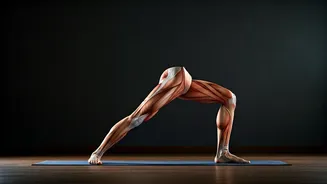
When we talk about the “side body,” we’re referring to a whole group of crucial muscles that run from your outer hip up to your armpit. This includes your obliques on the sides of your abdomen, the latissimus dorsi (lats) in your back, and the intercostal
muscles between your ribs. [2, 20] These muscles are essential for spinal stability, twisting, bending sideways, and even breathing deeply. [6, 8] When they become tight from prolonged sitting or repetitive movements, it can lead to stiffness in the back and hips, poor posture, and a restricted range of motion. [5, 6] Regularly stretching these muscles can alleviate tension, enhance flexibility, and help you move more freely in your daily activities. [2, 5]
The Power of Extended Triangle Pose
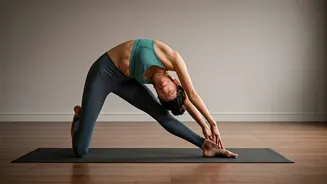
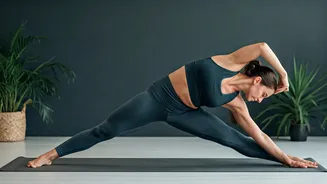
Extended Triangle Pose, or Utthita Trikonasana in Sanskrit, is a foundational standing pose that offers a profound stretch for the entire side body. [19] The shape of the pose creates length from your back foot all the way to the fingertips of your raised hand. This action specifically targets and stretches the hamstrings, hips, and the muscles along the side of the torso. [12, 21] Beyond the stretch, the pose strengthens your thighs, hips, and core as you work to maintain stability. [4, 7] Practicing it can improve balance, enhance body awareness, and counteract the rounding effects of sitting for long periods. [4] Many find it also helps to open the chest and shoulders, promoting better posture and deeper breathing by creating more space for the lungs to expand. [8, 22]
A Step-by-Step Guide to Trikonasana
To practice Extended Triangle Pose safely and effectively, follow these steps: 1. Start by standing with your feet about 3 to 4 feet apart. [4] Turn your right foot out 90 degrees so it points to the front of your mat. Turn your left foot in slightly. Align your right heel with the arch or heel of your left foot. [7] 2. Inhale and raise your arms parallel to the floor, reaching them actively out to the sides. [12] 3. Exhale and hinge at your right hip, reaching your torso forward over your right leg. Keep both sides of your torso long as you extend. [4] 4. Lower your right hand to your shin, ankle, or a yoga block placed outside your foot. Avoid placing your hand directly on your knee. Reach your left arm toward the ceiling, creating a straight line with your right arm. [4, 7] 5. Keep your head in a neutral position or turn your gaze up toward your left hand if it feels comfortable for your neck. [4] 6. Press firmly through both feet, engage your thigh muscles, and hold for 30 to 60 seconds, breathing steadily. [4] To exit, press into your back heel, inhale, and lift your torso back to standing. Repeat on the other side. [7]
Common Mistakes and How to Fix Them
Even though it looks straightforward, a few common misalignments can prevent you from getting the full benefits. One major error is collapsing the torso forward and rounding the spine to reach the floor. [9, 17] The goal is not to touch the ground but to maintain length in both sides of your waist. [11] Use a block under your bottom hand to bring the floor closer to you. [13] Another common issue is locking the front knee. Always keep a micro-bend in your front knee to protect the joint. [7] Also, avoid putting weight on your bottom hand; instead, use your core strength to support your upper body. [17] Finally, ensure your hips aren't shifting too far back. Work on opening the top hip toward the ceiling to keep your body in one plane, as if you were between two walls. [29]
Modifications for Every Body
Triangle Pose is adaptable for all levels. If you have tight hamstrings, placing your hand on a block or higher up on your shin can make the pose more accessible. [1, 13] Bending the front knee slightly is another great option to reduce intensity in the hip and hamstring. [1] For those who struggle with balance, practicing against a wall can provide support and build confidence. [7] If turning your head to look up causes neck strain, simply look straight ahead or down at the floor. [7] For a gentler version, you can even practice the pose while seated on the edge of a chair, extending one leg out to the side and reaching your arms into the triangle shape. [4]