
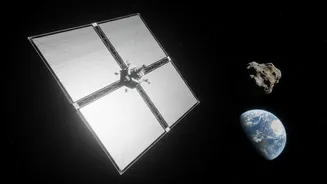
Sailing on Sunshine
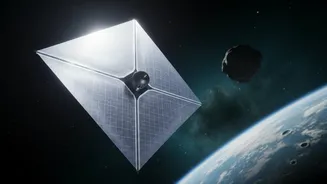
A solar sail operates on a principle that has been understood for over a century: light exerts pressure. While minuscule, the constant stream of photons from the sun can produce a gentle but continuous push. Solar sails are essentially giant, ultra-thin
mirrors made of lightweight reflective materials like Mylar or Polyimide, often no thicker than a human hair. As sunlight reflects off the vast surface, it transfers momentum to the sail, propelling the spacecraft. Unlike conventional rockets that rely on heavy, finite propellant, a solar sail’s fuel is the sun itself—limitless and free. This method provides constant acceleration, allowing a spacecraft to build up tremendous speed over time.
The Efficiency of 'Propellant-less' Propulsion
The primary advantage of solar sailing is its unparalleled efficiency for certain missions. Traditional spacecraft must carry all their fuel, which adds significant mass and cost. This limits not only their operational lifetime but also their maneuverability. Once a rocket performs a burn, that fuel is gone forever. Solar sails, by contrast, require no onboard propellant for propulsion. This dramatic reduction in mass means they can be launched on smaller, cheaper rockets. Furthermore, the continuous thrust, however slight, allows for trajectory adjustments that would be prohibitively expensive for a chemical rocket. By simply tipping and tilting the sail to change the angle of the sunlight, a probe can subtly yet effectively steer its way through space, much like a boat tacking in the wind.
The Unique Challenge of Asteroid Hopping
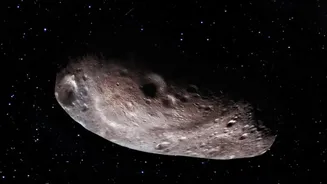
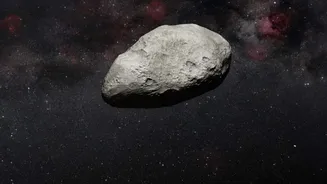
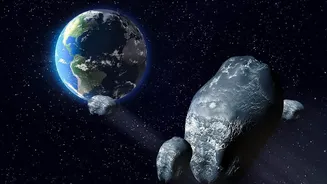
Near-Earth Asteroids (NEAs) are particularly tricky targets. They are often small, fast-moving, and follow unpredictable orbits. A conventional mission would need to expend enormous amounts of fuel to chase down even one of these objects, perform a flyby, and then attempt to travel to another. This makes multi-asteroid survey missions nearly impossible with traditional propulsion. Scientists may discover a new, interesting asteroid, but if it's not in the right place at the right time, a fuel-limited spacecraft cannot divert to study it. This is where the flexibility of solar sails becomes a game-changer.
A Perfect Match for Asteroid Reconnaissance
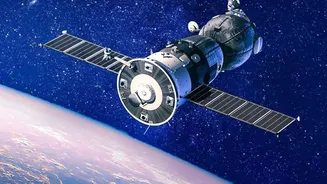
Solar sails are uniquely suited for exploring NEAs. Their ability to provide continuous, low-thrust propulsion allows a probe to reshape its orbit gradually, enabling it to match the speed and path of a target asteroid for a slow, close-up flyby. This was the goal of NASA's NEA Scout mission, a small shoebox-sized CubeSat designed to ride aboard the Artemis I launch. Although contact was lost with the spacecraft after launch, its objective was to demonstrate this exact capability. The plan was for NEA Scout to use its 86-square-meter sail to travel to an asteroid and capture high-resolution images. This kind of mission provides invaluable data on asteroid size, shape, and composition, which is critical for both scientific understanding and planetary defense. The unlimited change in velocity, or delta-v, that a solar sail provides means a single mission could theoretically visit multiple targets, changing its destination even after launch as new asteroids are discovered.
The Next Generation of Sails
The 'breakthrough' in solar sailing is not one single invention, but a culmination of advancements in materials science and deployment systems. NASA's Advanced Composite Solar Sail System (ACS3), for example, is testing new lightweight, rigid booms made from composite materials to support larger and more robust sails. Researchers are also exploring novel photonic materials that can better manage a spacecraft's speed and direction. Future concepts like 'Extreme Solar Sailing' propose using a close slingshot maneuver around the sun to achieve incredible speeds, potentially reaching the outer solar system in a fraction of the time it currently takes. These advancements pave the way for more ambitious missions, from providing early warnings for solar weather to conducting reconnaissance of potentially hazardous asteroids.