


The Ultimate Safety Net
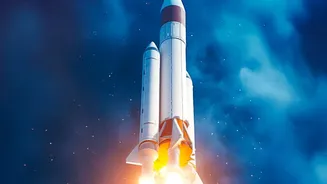
Sending humans to space is an incredibly complex and risky endeavour. While the launch itself is a spectacle of power and precision, the most critical technology is the one everyone hopes is never used: the Crew Escape System (CES). This system is essentially
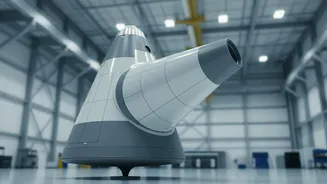
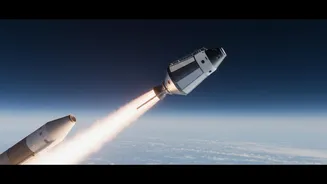
an astronaut's lifeboat. In the event of a catastrophic failure of the launch vehicle on the pad or during its ascent, the CES is designed to fire powerful, quick-acting solid motors to pull the crew module and its occupants away from the failing rocket at lightning speed. It's a non-negotiable component for any human spaceflight programme, providing a vital window for survival when seconds matter most. ISRO has been methodically developing and testing this system to ensure it is robust and reliable for the Gaganyaan mission.
Testing for Every Possibility
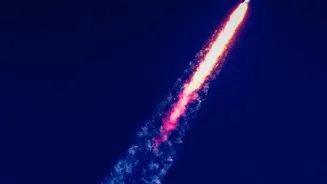
An emergency can happen at any moment, and the escape strategy must adapt accordingly. To prepare for this, ISRO has designed a range of tests to validate the Crew Escape System under different conditions. The first scenario is an issue on the launch pad itself. For this, ISRO successfully conducted a Pad Abort Test (PAT) in 2018. This test demonstrated the system's ability to lift the crew module from a standstill on the ground to a safe altitude and distance, culminating in a gentle splashdown. The second, more complex scenario is an emergency mid-flight. ISRO tested this with the Test Vehicle Abort Mission-1 (TV-D1) in late 2023. This mission simulated a failure at an altitude of about 17 kilometres and a speed of Mach 1.2, where the CES successfully separated the module from the rocket and initiated a safe landing sequence.
More Than Just an Escape
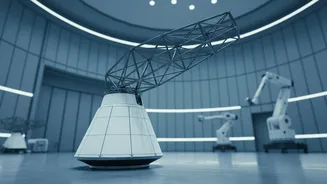
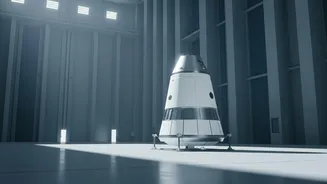
Ensuring astronaut safety goes far beyond just the launch phase. The entire journey, from ascent to re-entry and splashdown, is scrutinised. Recently, in July 2026, ISRO announced the successful completion of three other major qualification tests that are just as vital. One test validated the structural integrity of the crew module when the Apex Cover is jettisoned. This cover protects the parachutes, and its clean separation is crucial for the module's deceleration. Another test focused on the umbilical connection that links the crew module to the service module, which provides power and propulsion. The ability to disconnect this umbilical cleanly at the right moment is essential for a smooth re-entry. These ground-based tests prove that the hardware can withstand the intense forces and execute precise manoeuvres needed for a successful mission conclusion.
A Safe Splashdown
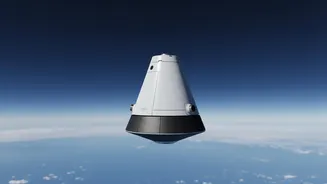
The final moments of the mission are as critical as the first. After re-entering the atmosphere and being slowed by parachutes, the Gaganyaan crew module is designed to splash down in the Indian sea. But what if it lands and tips over? To address this, ISRO has developed and tested a Crew Module Up-righting System (CMUS). Part of the recent battery of tests, the CMUS uses a cold gas-based inflation system to deploy floats that will automatically turn the capsule upright if it lands in an inverted position. This ensures that the crew can exit safely and that recovery operations can proceed smoothly. This meticulous attention to the final stage of recovery highlights the end-to-end safety philosophy driving the Gaganyaan programme.