






Heading out for a run or walk is a fantastic way to stay fit, but what's in the air you're breathing? Many of us glance at a daily air quality forecast, but this might not be enough to protect your health from harmful pollutants.
What the Air Quality Index (AQI) Really Means
The Air Quality Index,
or AQI, is a simple, colour-coded scale from 0 to 500 used to report the level of air pollution. It measures several key pollutants, including particulate matter (PM2.5 and PM10), ozone, and nitrogen dioxide. Each colour corresponds to a level of health concern, from 'Good' (green) to 'Hazardous' (maroon). An AQI value at or below 100 is generally considered satisfactory. Above 100, the air is unhealthy, first for sensitive groups and then for everyone as the numbers climb. When you exercise, your breathing rate can increase from about 15 breaths per minute at rest to between 40 and 60. This means you inhale a much greater volume of air, and therefore more pollutants, which can get deep into your lungs.
The Problem with General Forecasts
A daily air quality forecast, like a weather forecast, provides a broad prediction for a large area over a 24-hour period. It’s a useful overview, but it’s an average. It cannot capture the rapid and significant changes in air quality that happen hour by hour. A forecast that predicts 'Moderate' air for the day might mask a 'Very Unhealthy' spike during your planned 7 AM run. Relying on this general data is like using a map of the entire state to navigate a single neighbourhood—you’re missing the crucial local details.
Why Air Quality Changes So Quickly
Air quality is not static; it's incredibly dynamic. Levels of pollution can change dramatically in just a few hours due to several factors. Morning and evening rush hour traffic, for example, can cause sharp increases in pollutants like nitrogen dioxide and PM2.5. Weather conditions also play a huge role. Wind can disperse pollutants, while temperature inversions can trap them near the ground, causing them to accumulate. Industrial activity, construction dust, and even sunlight, which contributes to the formation of ground-level ozone, all create a constantly shifting air quality landscape. This means the 'Good' air at dawn could become 'Unhealthy' by the time you finish your workout.
The Power of Real-Time, Hyperlocal Data
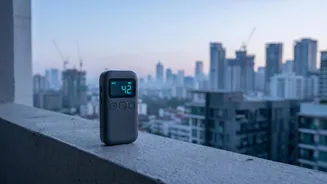
This is where checking real-time AQI makes all the difference. Unlike forecasts, real-time data is pulled from local monitoring stations and updated hourly. This gives you a hyperlocal picture of what the air is like right where you are, right now. It allows you to make an informed decision just before you step out the door. An AQI of 70 in the morning might climb to 150 by late afternoon, a critical difference for your health. Accessing this immediate data transforms your approach from a guess into a precise, health-conscious decision.
Health Risks of Exercising in Bad Air
Exercising in polluted air can undermine the very health benefits you're seeking. Increased inhalation during a workout means greater exposure to fine particulate matter (PM2.5), which can enter your bloodstream and cause inflammation. Shortterm effects include coughing, throat irritation, and shortness of breath. For those with asthma or other respiratory conditions, the effects can be more severe. Longterm exposure to pollution, even during exercise, is linked to reduced lung function and increased cardiovascular stress. Making a smart choice about when and where to exercise isn't just about comfort—it's about protecting your longterm health.
How to Check Your RealTime AQI in India
Accessing live air quality data has never been easier. Several reliable mobile apps and websites provide realtime, locationspecific AQI information across India. Apps like SAFARAir, Sameer (from the Central Pollution Control Board), and other global platforms like IQAir and AQINow offer hyperlocal readings from the monitoring station nearest to you. Even Google Maps has integrated a feature that shows hourly AQI data for various locations. Before you head out, simply open one of these tools, check the current AQI for your neighbourhood, and use the colourcoded guide to decide if it’s safe to exercise outdoors.