

A Time Machine to the Cosmic Dawn
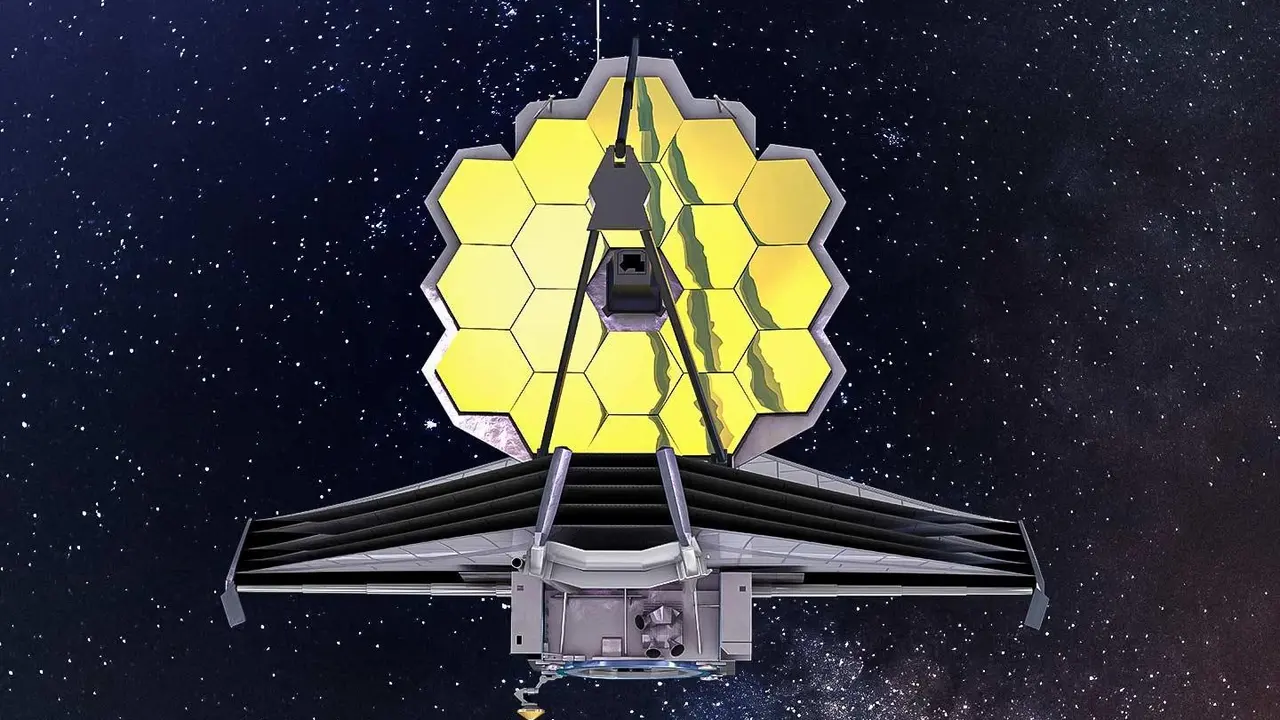
To understand how the Webb telescope maps the infant universe, we first need to grasp a fundamental concept: looking deep into space is the same as looking back in time. Light, as fast as it is, takes time to travel. The light from our Moon is 1.3 seconds
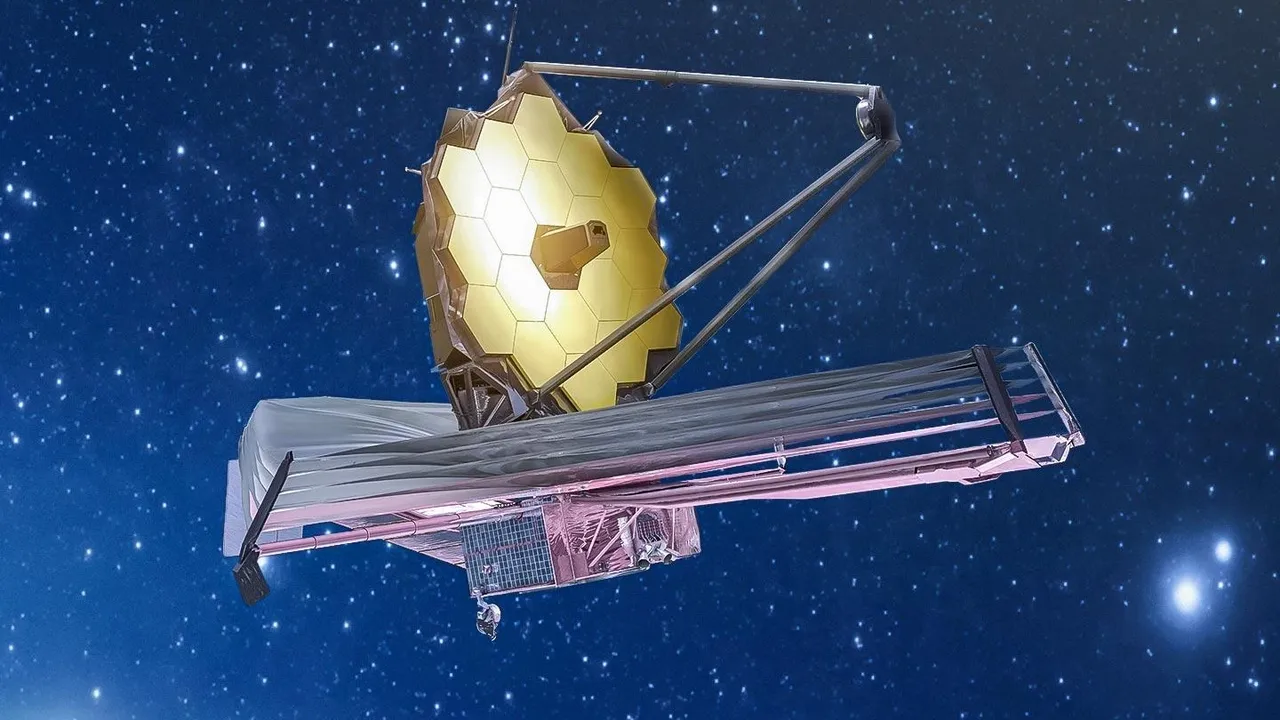
old by the time it reaches us. For the most distant galaxies Webb observes, that light has been travelling for over 13 billion years. We are seeing these galaxies not as they are today, but as they were just a few hundred million years after the Big Bang. This makes the telescope a powerful time machine, but there's a complication. The universe has been expanding since its birth, and this expansion stretches the light waves travelling through it. Visible and ultraviolet light emitted by the first stars gets stretched into longer, infrared wavelengths—a phenomenon called 'redshift'. Humans can't see infrared light, but Webb was specifically engineered to do so.
Webb’s Extraordinary Infrared Eyes
The telescope's ability to chart the early cosmos comes down to a suite of highly advanced instruments designed to capture this faint, ancient infrared light. The Near-Infrared Camera (NIRCam) is Webb's primary imager, capable of detecting light from the earliest stars and galaxies as they were forming. It has given us stunningly beautiful and deep images of the sky, resolving what used to be blurry smudges in images from older telescopes like Hubble into distinct, albeit faint, primordial galaxies. Then there is the Near-Infrared Spectrograph (NIRSpec). Instead of just taking a picture, a spectrograph breaks light down into its constituent wavelengths, like a prism creating a rainbow. This spectrum acts as a cosmic barcode, revealing a galaxy’s composition, distance, and the properties of its stars and gas. By analyzing the unique signatures in the light, scientists can confirm a galaxy's incredible distance and determine that it is from the early universe, often because it lacks heavier elements that had not yet been created.
Mapping the Great Cosmic Web
With these tools, astronomers are not just finding individual galaxies; they are mapping the large-scale structure of the early universe, known as the 'cosmic web'. This is the vast, filamentary skeleton of the cosmos, a scaffolding of dark matter and gas along which galaxies are born and evolve. Major survey projects like COSMOS-Web have used Webb to create the most detailed maps of this structure ever, tracing galaxy networks back to when the universe was less than a billion years old. These maps show denser regions bright with galaxies and vast, dark voids between them. For the first time, scientists can study how the environment—whether a galaxy is in a dense filament or a lonely void—influenced its formation and its ability to create stars. The jump in resolution is so significant that it has been described as a complete change in our view of the universe.
Rewriting the First Chapter of the Universe
The findings are already challenging long-held theories. Webb has found galaxies that are surprisingly mature and structured for their young age. Some appear just 300 to 400 million years after the Big Bang, far earlier than many models predicted. Astronomers have also been baffled by the discovery of hundreds of mysterious 'little red dots'—luminous objects seen in the very early universe whose nature is still being debated. Some appear to have old stars, which is a puzzle for such a young universe. Other findings suggest some primordial galaxies had extremely high rates of star formation, far greater than the Milky Way's today, which could explain why they grew so large, so fast. Each new observation provides another crucial piece of the puzzle, forcing scientists to refine their understanding of how the first beacons of light in the cosmos came to be.