




Could artificial intelligence make cancer a 're relic of the past' within a decade? That's the bold prediction from Dario Amodei, the CEO of leading AI company Anthropic. But is this a true scientific revolution or just tech optimism?
A Vision of Miracles
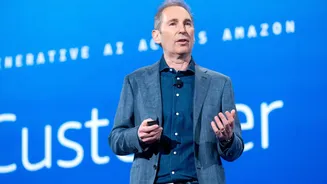
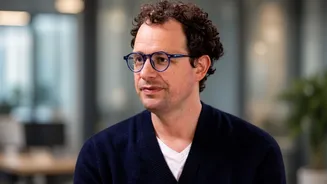
Dario Amodei, co-founder
and CEO of AI safety and research company Anthropic, has repeatedly made headlines with his stunning prediction. He argues that AI could compress what would have been 50 to 100 years of medical progress into just five to ten. This idea of a 'compressed 21st century' is central to his vision, where AI doesn't just assist scientists but actively drives discovery. For Amodei, this mission is personal; his father passed away from Hepatitis C just a few years before a cure became widely available, fueling his sense of urgency. His company, Anthropic, is a major player in the AI space, developing powerful models like Claude and positioning itself as a key rival to OpenAI. It is now actively partnering with major biotech and pharmaceutical firms, including Bristol Myers Squibb, to apply its AI to real-world drug discovery.
The Engine of 'Scientific Acceleration'
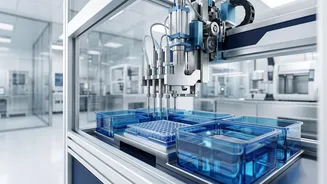
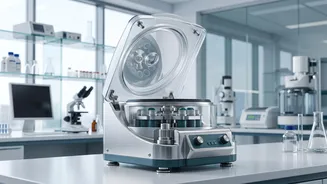
So, what does Amodei mean by 'scientific acceleration'? It's the idea that AI can supercharge the entire research process. Instead of just analyzing data, advanced AI models can generate novel hypotheses, design experiments to test them, and even interpret the results, creating a rapid feedback loop. This is a significant leap from AI's earlier roles. Consider drug discovery, a process that traditionally takes over a decade and costs billions, with a failure rate of over 95%. AI promises to change this. Systems like Google DeepMind's AlphaFold, which can predict the 3D structure of proteins, are already revolutionizing the field, helping scientists design drugs for targets once considered 'undruggable'. Anthropic aims to take this further, using its AI to design better drug candidates and streamline preclinical research from the very beginning.
How AI Tackles Cancer
Cancer isn't one disease but over 200 distinct types, making a single 'cure' an immense challenge. AI's strength lies in its ability to tackle this complexity through personalization and speed. In diagnostics, AI is helping radiologists detect cancers earlier and more accurately from scans like mammograms. In treatment, it can analyze a patient's specific genetic data to help match them with the most effective therapy, a core principle of precision oncology. AI is also being used to design personalized cancer vaccines and more effective antibody therapies that can kill tumour cells with greater precision. By sifting through mountains of scientific literature and trial data, AI can spot patterns and connections that no human could, accelerating the journey from a hypothesis to a potential treatment.
A Necessary Dose of Reality
While the promise is enormous, the path forward is lined with significant obstacles. Many oncologists and researchers caution against the grand claims of tech executives, highlighting the immense complexity of human biology that AI models don't fully grasp. An AI can generate a million hypotheses, but scientists still need to perform the painstaking work of running physical experiments to see what's true. Furthermore, even if AI discovers a perfect drug candidate on a computer, that drug must still go through years of rigorous and expensive human clinical trials to prove its safety and efficacy. Regulatory approval is a major bottleneck that AI cannot simply compute its way around. There are also major ethical hurdles, including data privacy, algorithmic bias in AI models, and questions of legal responsibility when an AI is involved in clinical decisions.
Beyond the Ten Year Timeline
Whether cancer becomes a 'relic' in ten years remains highly speculative. Many experts believe that while AI is a transformative tool, it will deliver incremental gains rather than a single, sudden cure. However, there is no doubt that the fusion of artificial intelligence and biological science marks a pivotal moment in medicine. Companies like Anthropic are already demonstrating how AI can design more effective molecules and shorten parts of the preclinical process. These tools are making researchers more efficient, enabling them to tackle harder problems and accelerate the pace of their work. Even if the ultimate goal takes longer to reach, this new era of AIndriven science is already reshaping our ability to understand and fight one of humanity's greatest medical challenges.