









The Vanishing First Rung
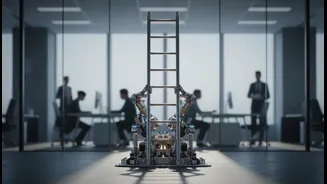
For decades, the journey from novice to expert followed a predictable path. Junior employees learned by doing foundational work: data entry, drafting reports, fixing basic code, or conducting research synthesis. These tasks, while often repetitive, were
crucial. They provided the raw material for understanding a business from the ground up. This apprenticeship model allowed employees to slowly build context, witness how decisions were made, and gradually acquire the nuanced judgment that defines expertise. Today, that first rung on the ladder is being automated out of existence. Generative AI can now draft reports, clean data, and write code with startling efficiency. Research suggests a significant percentage of typical junior tasks can already be executed by AI, leading some companies to slash entry-level hiring to cut costs. While this offers short-term efficiency gains, it masks a dangerous long-term risk: a workforce that never gets the chance to build foundational knowledge.
The New Definition of 'Entry-Level'
As rote tasks disappear, the expectations for junior employees are paradoxically becoming more senior. Employers now need new hires who can focus on judgment-based work from day one. Instead of just executing tasks, they must interpret AI-generated outputs, spot anomalies, frame better questions, and manage relationships with stakeholders. In highly AI-exposed sectors, junior roles are now far more likely to demand skills traditionally associated with seniority, such as leadership, strategic thinking, empathy, and creativity. The job is no longer to do the work, but to work with the technology to deliver value on a greater scale. This creates a new challenge: hiring for potential and skills like adaptability and communication is more critical than ever, as specific job experiences become less relevant.
The Looming Expertise Gap
If companies eliminate the roles that teach foundational skills, who will become the next generation of managers and leaders? Without the gradual learning curve of traditional entry-level work, a critical gap emerges between junior and senior talent. Some companies are already feeling the strain, as middle managers and senior staff become burnt out from absorbing the remaining junior-level tasks that AI cannot handle. This is not sustainable. A failure to intentionally build a pipeline of expertise creates a significant succession planning risk. Organizations that simply let AI substitute for junior talent will eventually find themselves with a hollowed-out middle and a severe shortage of leaders who possess the deep, context-rich understanding that only comes from experience.
Rebuilding the Path: Intentional Development
The solution is not to resist AI, but to redesign the path to expertise with intention. Since learning by osmosis is no longer a given, employers must become more deliberate about talent development. This starts with a fundamental shift in management. Managers are no longer just supervisors; they are coaches responsible for shaping how employees think and engage with the business. They must make development an explicit expectation, helping employees prioritize learning and apply new skills to their daily work. This requires creating structured onboarding programs, personalized learning plans, and clear career paths that show employees how they can grow within the organization.
New Models for Building Context
To compensate for the loss of learning from routine tasks, companies must create new ways for juniors to build broad business context. Formal mentorship programs, where experienced professionals guide newcomers, are essential for transferring institutional knowledge and culture. Some companies are finding success with 'reverse mentoring', where junior employees teach digital and AI skills to senior leaders, fostering cross-generational learning. Other effective strategies include job rotations and stretch assignments, which give employees hands-on experience in different departments. These approaches allow junior talent to see how different parts of the business connect, building the holistic understanding that AI alone cannot provide.