








A New Space Race at Home
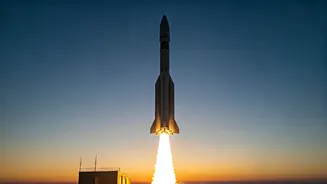
Not long ago, a rocket launch in India was purely a government affair. Today, names like Skyroot Aerospace and Agnikul Cosmos are becoming part of the national conversation. Skyroot’s upcoming orbital launch of the Vikram-1 rocket, named after the father
of India's space program, Vikram Sarabhai, is a highly anticipated event. This follows its historic 2022 suborbital launch of Vikram-S, the first privately developed rocket to lift off from Indian soil. Similarly, Agnikul Cosmos successfully launched its Agnibaan SOrTeD (Sub-Orbital Technology Demonstrator), which notably featured the world's first single-piece 3D-printed rocket engine. These are not just technical achievements; they are cultural milestones, signaling a shift from a single, state-led narrative to a polyphony of private ambitions aiming for the stars.
Meet the New Astronauts of Industry
The faces behind this new wave are not anonymous bureaucrats but passionate entrepreneurs, many of whom are former ISRO scientists. Skyroot was founded in 2018 by Pawan Kumar Chandana and Naga Bharath Daka, who left the national agency to build their own launch vehicles. Agnikul was born in an incubation centre at IIT Madras in 2017. These companies are attracting significant investment, with Skyroot recently achieving a valuation of over $1 billion, becoming India's first space-tech unicorn. They are focused on carving out a niche in the booming global market for small satellite launches, offering customers faster, more flexible, and more affordable access to orbit than what is possible with larger, state-run rockets. This startup agility is bringing a new dynamism to a sector traditionally defined by long timelines and immense state resources.
The Policy Shift That Lit the Fuse
This entrepreneurial explosion wasn't spontaneous. It was enabled by a deliberate and historic policy shift by the Indian government in June 2020 to open the space sector to private participation. The creation of the Indian National Space Promotion and Authorisation Centre (IN-SPACe) was a game-changer. IN-SPACe acts as a single-window agency to promote, authorise, and supervise private space activities, effectively serving as a bridge between the private sector and ISRO. This new framework allows startups to use ISRO’s world-class facilities, access its vast technical expertise, and even launch from its spaceport at Sriharikota. It marked a fundamental change, recasting the private sector from mere suppliers to ISRO into independent partners and innovators in their own right.
More Than Just Rockets
The impact extends far beyond launch vehicles. A whole ecosystem is developing around these pioneers, spanning satellite manufacturing, ground station services, and data analytics. Startups like GalaxEye, which recently launched India's largest privately built Earth observation satellite, are pushing the boundaries of what's possible. This boom is expected to grow India’s share of the global space economy from around 2% to 8% by 2033, with the domestic market projected to reach $44 billion. More importantly, it is creating thousands of high-tech jobs and helping to retain top engineering talent within the country, stemming the brain drain to foreign firms. This is about building a self-reliant and globally competitive industry from the ground up.