

Welcome to the Galaxy's Most Extreme Weather
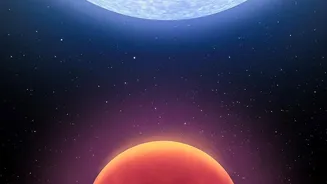
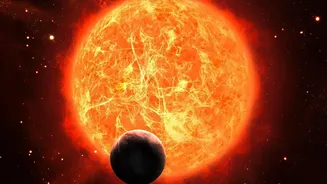
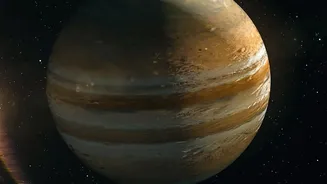
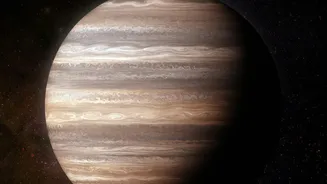
Imagine a world permanently facing its star, one side trapped in perpetual, scorching daylight and the other in an endless, cooler night. This is the reality for 'ultra-hot Jupiters,' a class of gas giants that orbit their stars so closely their years
last only a few Earth days. On planets like WASP-76b, located over 600 light-years away, the dayside temperature soars above 2,400 degrees Celsius. This is hot enough to vaporize metals, including iron, turning the atmosphere into a blistering metallic haze. The vast temperature difference between the day and night sides, which can be more than 1,000 degrees Celsius, creates the perfect conditions for some of the most violent weather ever discovered.
What Exactly Is Iron Rain?
The concept of iron rain sounds like science fiction, but it's a very real phenomenon on these superheated worlds. Here's how it works: the intense heat on the planet's dayside turns iron into a gas. Powerful, high-speed winds then whip this iron vapor across the planet towards the perpetually dark nightside. As the vapor reaches the 'evening' boundary and the cooler temperatures of the nightside (around 1,500 degrees Celsius), the gaseous iron condenses back into liquid. It then falls from the sky as droplets of molten iron. Since these are gas giants without a solid surface, these iron raindrops simply fall into the deeper layers of the atmosphere until they are heated up and vaporized again, continuing the cycle.
Winds Faster Than a Speeding Bullet
Driving this metallic weather system are winds of unimaginable speed. The huge temperature and pressure differences between the two sides of these tidally-locked planets generate ferocious, supersonic winds. On WASP-76b, winds have been measured at around 18,000 kilometres per hour. To put that in perspective, that is many times faster than the speed of sound on Earth. On other extreme exoplanets, like WASP-121b, winds are powerful enough to carry elements like titanium across the atmosphere, creating complex weather patterns. Recent discoveries suggest that the magnetic fields of these planets may also play a crucial role, interacting with the winds in ways that are still not fully understood.
How Astronomers Became Alien Meteorologists
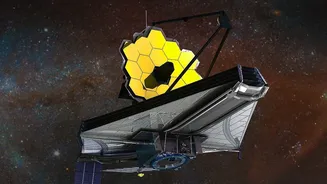
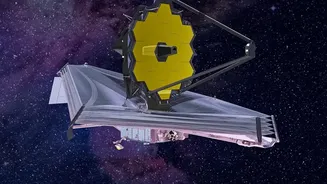
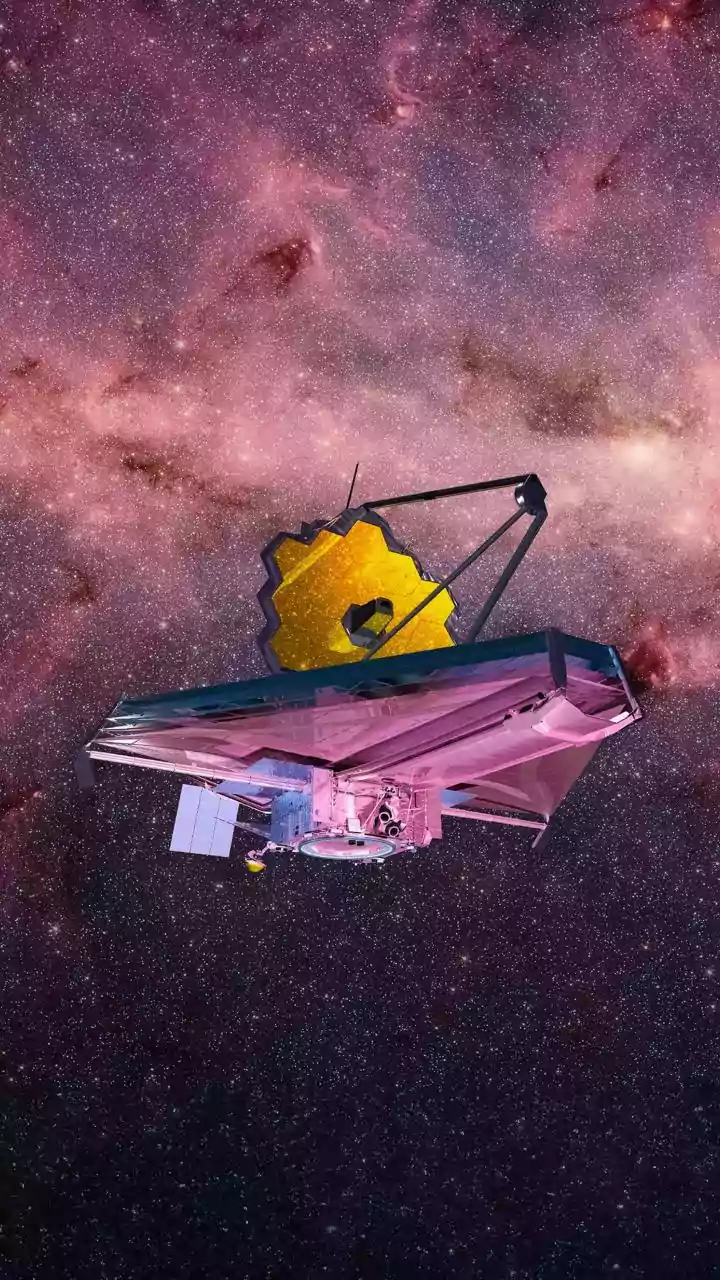
Mapping the weather on a planet hundreds of light-years away is an incredible feat of science. Astronomers use a technique called high-resolution spectroscopy. When an exoplanet passes in front of its star from our point of view (an event called a transit), a tiny amount of starlight filters through the planet's atmosphere. Powerful telescopes like the Very Large Telescope (VLT) in Chile and the James Webb Space Telescope (JWST) can capture this light and split it into a spectrum, like a rainbow. Different elements absorb light at specific wavelengths, leaving a unique chemical fingerprint. By analyzing this fingerprint, scientists can identify elements like iron in the atmosphere and even measure the speed and direction of the winds by observing how these signatures are shifted.
Why This Extreme Weather Matters
Studying these 'hellish' worlds isn't just about cataloguing cosmic curiosities. These extreme planets are natural laboratories that push our understanding of atmospheric physics to its limits. By observing how atmospheres behave under such intense conditions, scientists can refine the models they use to understand planetary climates everywhere, including right here in our own solar system. Each discovery, from iron rain to planet-wide cloud cycles, provides a new piece of the puzzle. It helps us answer fundamental questions about how planets form, how their atmospheres evolve, and what diverse range of worlds might exist across the galaxy. This research marks a new era in which we are moving from simply detecting exoplanets to truly beginning to understand them.