
A Storm You Cannot See
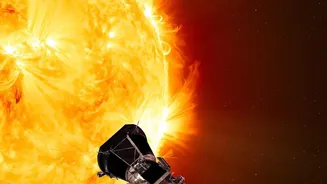
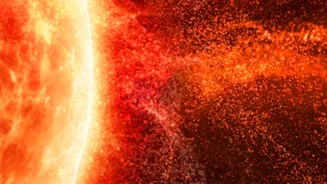
When we think of weather, we picture rain or sunshine. But there’s another kind, originating 150 million kilometres away: space weather. This refers to the storm of charged particles and magnetic fields constantly streaming from the Sun. Most of the time,
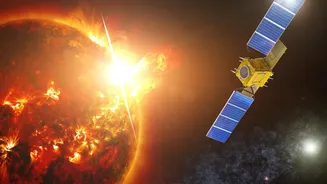
Earth's magnetic field acts as a protective shield. However, the Sun occasionally has violent outbursts, such as coronal mass ejections (CMEs) and solar flares. These events hurl vast amounts of energy and matter into space. If aimed at Earth, they can cause significant disturbances in our planet's magnetosphere and upper atmosphere, creating what is known as a geomagnetic storm. These are the events that create beautiful auroras, but they also pose a serious risk to our technology-dependent society.
Satellites in the Firing Line
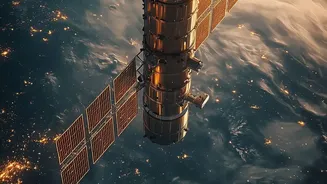
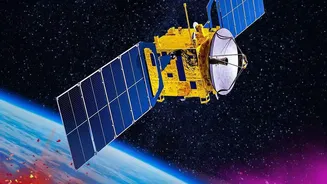
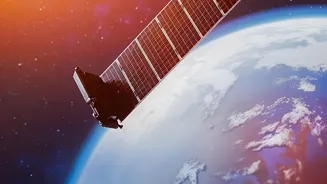
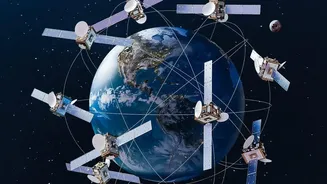
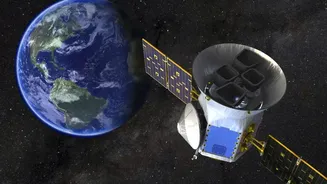
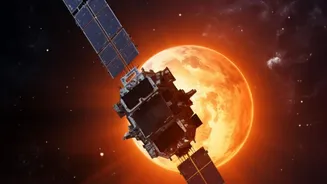
Satellites, particularly the thousands now being launched into low-Earth orbit (LEO) for mega-constellations like Starlink, are uniquely vulnerable. A major geomagnetic storm impacts them in several ways. Firstly, it heats and expands Earth's upper atmosphere, increasing atmospheric drag. For LEO satellites, this is like trying to run through suddenly thicker air; it slows them down, causing their orbits to decay and potentially leading them to burn up in the atmosphere. A minor storm in 2022 caused the loss of dozens of newly launched Starlink satellites, highlighting this very real danger. Secondly, high-energy particles can damage sensitive electronics, degrade solar panels, and cause 'bit flips' in software, leading to malfunctions. Finally, the storms disrupt the ionosphere, the atmospheric layer that radio signals pass through. This can distort or completely block signals, affecting everything from GPS accuracy to satellite internet services.
The View from Below
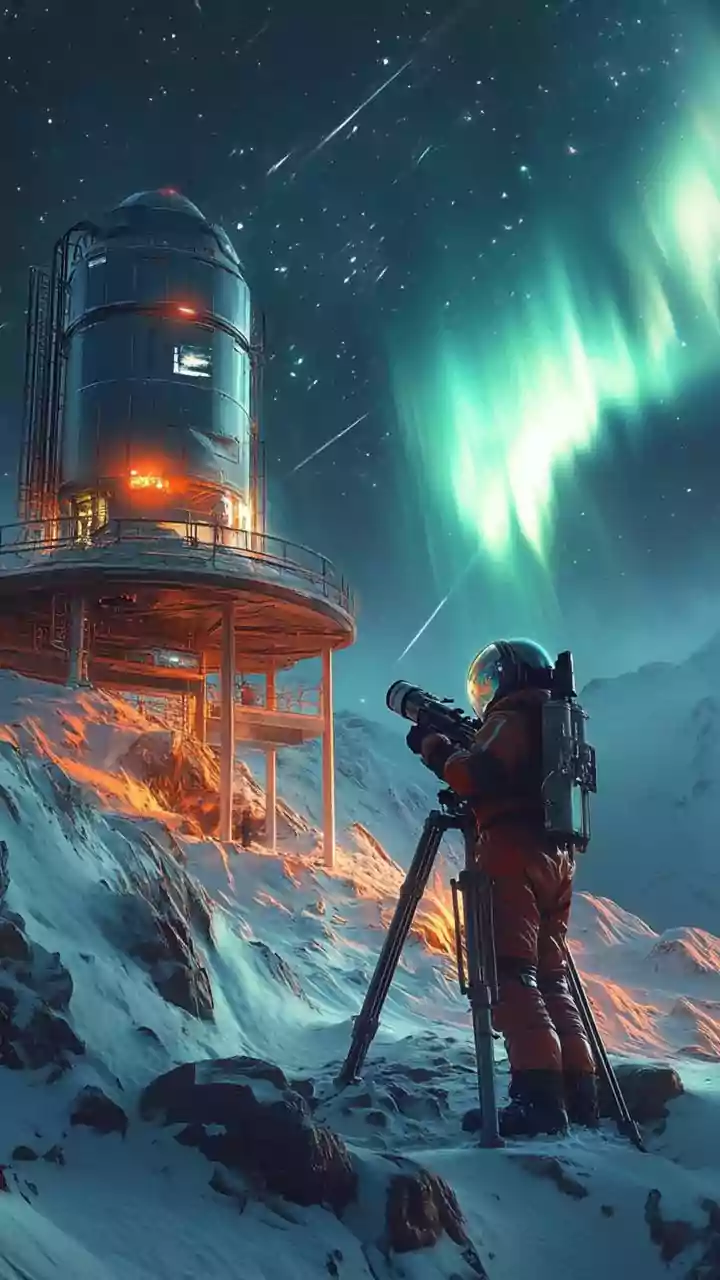
While we have satellites in space monitoring the Sun, much of the crucial work in predicting a storm's impact happens right here on Earth. Ground-based monitoring networks are a vital, cost-effective part of our planetary defence system. These networks consist of instruments like magnetometers, which measure fluctuations in Earth’s magnetic field, and ionosondes and GNSS receivers, which track the density and disturbances in the ionosphere. Unlike a satellite that takes a snapshot from one point in space, a distributed ground network provides a continuous, real-time view of how a solar storm is actually interacting with our planet's atmosphere on a regional level. This is critical because the effects of space weather aren't uniform across the globe. Better ground data means more accurate, localised warnings.
An Insurance Policy for the Skies
So, why the major push for expansion now? It's a matter of economics and risk. The satellite industry is booming, with companies investing billions to build constellations of thousands of satellites. The potential financial loss from a single severe solar storm is staggering, with some estimates running into the hundreds of billions or even trillions of dollars when accounting for cascading failures in power grids, finance, and transport. Expanding ground networks, like the recently completed Chinese Meridian Project, is a direct response to this increased risk. These networks provide the crucial data needed for better forecasting. With more accurate warnings, satellite operators can take defensive measures, such as temporarily shutting down sensitive components or adjusting a satellite's orientation to minimise atmospheric drag. It's a relatively small investment that acts as a vital insurance policy to protect multi-billion-dollar assets and the essential services we all depend on.