



Why Were Controls Activated Now?
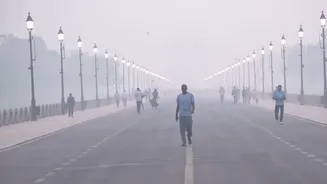
The Commission for Air Quality Management (CAQM) invoked Stage 1 of GRAP on Wednesday, October 21, 2026. This decision was made after Delhi's average Air Quality Index (AQI) jumped from 179 ('moderate') on October 20 to 244 ('poor') the following day.
The spike in pollution followed Dussehra celebrations and coincided with forecasts from the IMD and IITM predicting that air quality would likely remain in the 'poor' range for the coming days. The air quality continued to be in the 'poor' category on Thursday, October 22, with an AQI of 299 recorded in the morning. GRAP is designed to be a proactive measure, implementing controls before the air quality deteriorates into the 'severe' or 'severe+' categories that the region often experiences in peak winter months.
What is the Graded Response Action Plan?
The Graded Response Action Plan, or GRAP, is a set of emergency measures that are implemented incrementally as the air quality in Delhi-NCR worsens. Notified in 2017 following a Supreme Court directive, it provides a clear, step-by-step roadmap for agencies across the region to follow. The plan is divided into four stages, each corresponding to a specific AQI category: Stage I for 'Poor' (AQI 201-300), Stage II for 'Very Poor' (AQI 301-400), Stage III for 'Severe' (AQI 401-450), and Stage IV for 'Severe+' (AQI above 450). The measures are cumulative, meaning that when a higher stage is activated, the restrictions from all previous stages remain in place. The entire system is overseen by the CAQM, a statutory body responsible for air quality management in the capital and its adjoining areas.
Key Restrictions Now in Effect
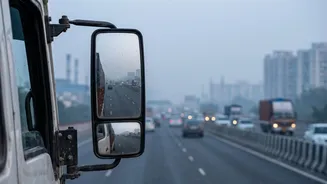
With Stage 1 active, several key restrictions are now being enforced across Delhi-NCR. A significant rule targets vehicular pollution, with a mandate that inter-state buses entering Delhi from neighbouring states must be electric, CNG, or BS-VI diesel compliant. There is currently no ban on private cars, but enforcement of Pollution Under Control (PUC) certificate rules has been intensified, and visibly polluting vehicles are being targeted. Other major actions focus on dust and industrial emissions. Authorities have been directed to ensure regular mechanised sweeping and water sprinkling on roads. Open burning of garbage is strictly prohibited, and hotels, restaurants, and eateries are barred from using coal and firewood in tandoors. The use of diesel generator sets is also restricted, permitted only for emergency and essential services.
What This Means for Residents and Industries
For the general public, the immediate impact includes stricter checks on vehicle fitness and a reminder to follow the citizen charter associated with GRAP. While most private car owners are not yet affected by driving bans, the rules on overage vehicles (15-year-old petrol and 10-year-old diesel cars) remain in force. The construction industry faces heightened scrutiny, with strict enforcement of dust control norms at all sites. The ban on coal and firewood impacts the restaurant industry, requiring a switch to cleaner fuels like electricity or gas. The overarching goal of these early-stage measures is to curb pollution at its source, preventing the accumulation of pollutants that leads to extreme air quality emergencies. Doctors note that while these steps cannot reverse pollution overnight, they are crucial for limiting public exposure to harmful PM2.5 and PM10 particles before the situation worsens.
What Happens if Pollution Worsens?
If the AQI continues to deteriorate and enters the 'Very Poor' or 'Severe' categories, the CAQM will invoke stricter stages of GRAP. Stage II typically involves measures like increasing parking fees to discourage private transport and boosting the frequency of metro and bus services. Stage III brings more drastic actions, including a ban on BS-III petrol and BS-IV diesel four-wheelers in Delhi, Gurugram, Faridabad, Ghaziabad, and Gautam Buddh Nagar. At the most critical 'Severe+' level of Stage IV, the entry of trucks into Delhi could be banned, and state governments might consider implementing the 'odd-even' car rationing scheme. These escalating measures form a critical part of the region's annual battle against the winter pollution crisis.