

The Ultimate Earth-Priced Commodity
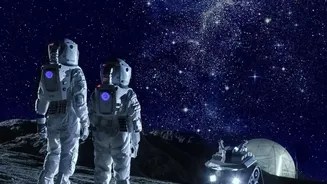
Water is heavy, and launching anything from Earth into space costs a fortune. Establishing a sustainable human settlement on the Moon requires a local source of water for drinking, growing food, and producing breathable oxygen. But water’s value extends
even further. By splitting water molecules (H2O) into hydrogen and oxygen, NASA can create the two primary components of rocket propellant. A lunar gas station, supplied by mined ice, could refuel spacecraft for return trips to Earth or for missions deeper into the solar system, including to Mars. This concept, known as in-situ resource utilization (ISRU), is the cornerstone of making deep space exploration economically viable. Without it, the cost of sending everything from Earth would be prohibitive.
Searching in the Shadows
The Moon’s South Pole is the target destination for these efforts. Its landscape is defined by deep, ancient craters whose floors are permanently shielded from sunlight. These permanently shadowed regions are some of the coldest places in the solar system, acting as perfect cold traps for water ice that may have been delivered by comets and asteroids over billions of years. While past orbital missions have detected hydrogen signatures—a strong indicator of water—at the poles, NASA needs to get on the ground to confirm the quantity, purity, and accessibility of this ice. Knowing exactly where and how deep the ice is buried is essential for planning any mining operations.
The Robotic Scouts: PRIME-1 and VIPER
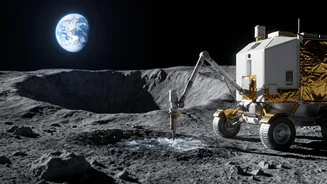
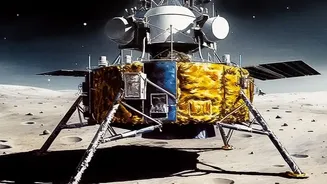
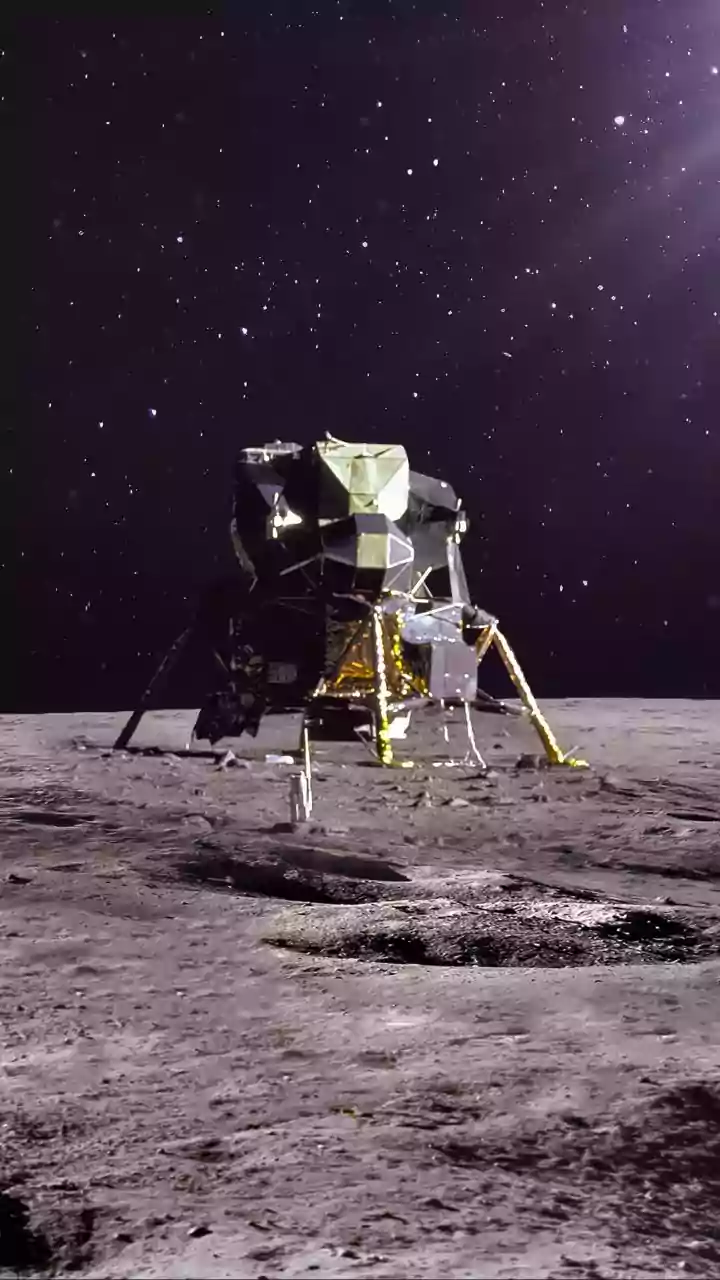
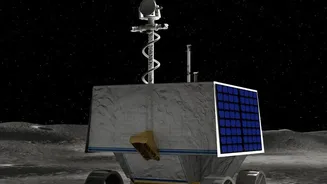
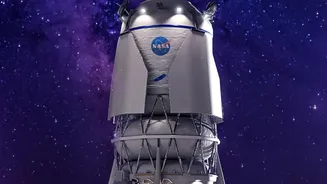
Before committing to large-scale extraction, NASA is sending robotic scouts. The first of these was the Polar Resources Ice-Mining Experiment-1 (PRIME-1), which flew aboard a commercially built lander in 2025. PRIME-1 was a technology demonstration featuring a drill called TRIDENT (The Regolith and Ice Drill for Exploring New Terrain) and a mass spectrometer called MSOLO. The mission's goal was to drill into the lunar soil, or regolith, and analyze the samples for water and other volatile compounds. Although the lander tipped on its side, preventing full science operations, the mission successfully tested key hardware in the harsh lunar environment. The next key step is the Volatiles Investigating Polar Exploration Rover (VIPER). After its original mission with a different lander was cancelled, NASA revived the fully-built rover, awarding a contract in late 2025 for Blue Origin to deliver it to the Moon in 2027. This golf-cart-sized rover is designed to rove into permanently shadowed craters, using its TRIDENT drill and a suite of spectrometers to create the first-ever resource map of lunar water ice.
The Tools of Extraction
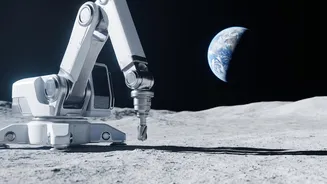
The core of the extraction plan is embodied by the TRIDENT drill. Designed by Honeybee Robotics, this one-meter-long drill can bore into the tough, frozen lunar regolith. As it drills, it brings small samples up to the surface. The MSOLO instrument then heats these samples, releasing any trapped gases like water vapor. The spectrometer analyzes these gases to confirm the presence and concentration of water. For larger-scale operations, other concepts are being explored, such as 'thermal mining.' This method would use concentrated sunlight, beamed via mirrors into shadowed craters, to heat the icy regolith and sublimate the ice directly into water vapor, which could then be collected and stored. These early robotic missions are crucial for proving which technologies are most effective before astronauts arrive to set up more permanent systems.
Building a Lunar Economy
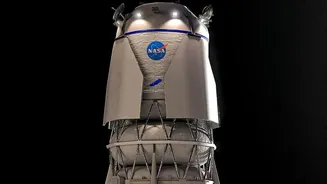
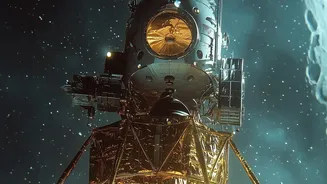
NASA is not going it alone. Through its Commercial Lunar Payload Services (CLPS) initiative, the agency is partnering with private companies to build and fly landers, rovers, and experiments to the Moon. Companies like Intuitive Machines and Blue Origin are providing the delivery services for missions like PRIME-1 and VIPER. This approach is designed to foster a commercial space ecosystem and drive down costs. By acting as a primary customer, NASA helps these companies develop capabilities that can later serve other clients, potentially kicking off a true lunar economy. The successful demonstration of ice mining will be a pivotal moment, transforming a barren celestial body into a valuable resource hub and a stepping stone for humanity's future in space.