





Spain’s high-speed rail network, long seen as a benchmark for safety and efficiency, is facing intense scrutiny. A recent fatal collision has shattered a decades-long safety record, raising urgent questions about its emergency control systems.
What Happened in Spain?
On October
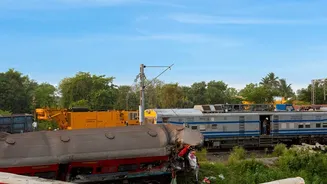
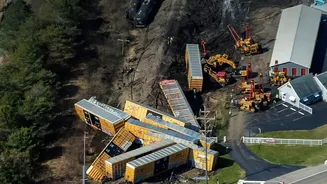
28, 2026, a high-speed train operated by state-owned Renfe crashed into the rear of a stationary train run by private company Iryo near Urda, about 130 kilometers south of Madrid. The collision, which killed 69 people and injured dozens more, occurred on the busy Madrid-Seville line, a flagship route of Spain's AVE network. The incident began when a failure in the automatic signalling system brought several trains to a halt. Subsequently, a central control center in Madrid manually authorized the Renfe train to proceed, despite the Iryo train being stopped on the same track ahead, leading to the catastrophic impact.
The Technology of Safety
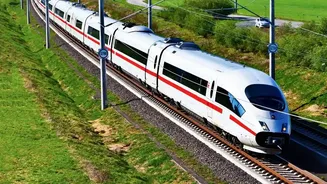
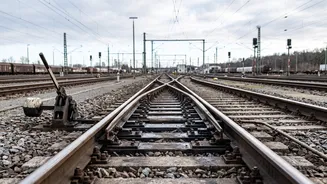
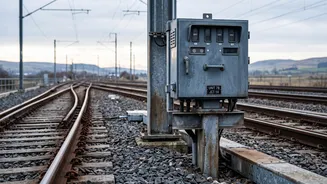
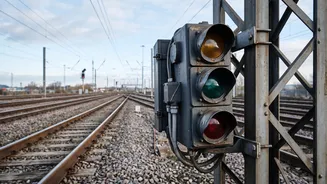
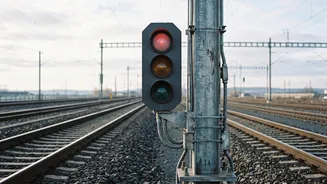
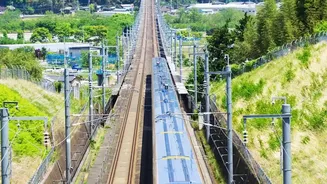
Modern high-speed lines depend on layers of automated safety systems to prevent such disasters. The Madrid-Seville line uses a legacy system called LZB, which is designed to monitor train positions and automatically apply brakes to maintain safe distances. However, the pan-European standard is the more modern European Rail Traffic Management System (ERTMS), which is progressively being deployed across the continent, including on Spain's newer lines. ERTMS uses digital technology to continuously supervise a train's speed and can intervene automatically to prevent signal overruns or collisions. When these primary systems fail, procedures require trains to operate at a much-reduced speed, a protocol that appears to have been tragically bypassed in the recent incident.
A System Under Scrutiny
The investigation is now focused on a combination of technical failure and human error. Initial reports confirm the legacy LZB signalling system failed, which automatically stopped traffic. The crucial question is why the control center then authorized the train to proceed at speed, rather than under a more cautious 'on-sight' protocol where drivers travel slowly enough to stop for any obstacle. Experts and union officials have pointed to a lack of investment and maintenance in the older LZB system, which is being phased out in favor of ERTMS. There are claims that parts for the aging system are scarce and that failures have become more frequent, creating a known risk that was waiting to culminate in tragedy.
Echoes of a Troubled Year
This was not an isolated incident. The October crash was the second fatal accident on Spain's highspeed network in 2026. In January, a collision near Adamuz, also on the Madrid Seville route, killed 46 people. Until this year, the network had operated for over three decades without a single fatal crash, making it a global model. These two disasters have shattered public confidence and put immense pressure on authorities, leading to the resignation of Spain's Transport Minister, Óscar Puente. He acknowledged that a minister could not continue in office after two such severe accidents in less than a year.
The Global Implications
The events in Spain have ramifications far beyond its borders. The ERTMS is the backbone of the European Union's plan for a seamless, interoperable rail network, intended to replace over 20 different national signalling systems. Any weakness or implementation gap in this standardized system is a cause for concern across the continent. For a country like India, which is in the process of building its own ambitious highspeed rail corridors, the Spanish tragedy serves as a critical case study. It underscores that even the most advanced networks are vulnerable, highlighting the nonnegotiable importance of rigorous maintenance, robust training for handling system failures, and a clear chain of command that prioritizes safety above all else. The incident is a stark reminder that the interface between technology and human decisionmaking remains the most critical point of failure.