



A New Golden Age of Space Telescopes
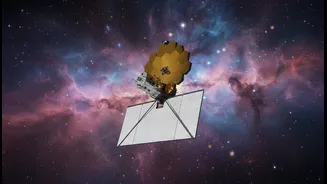
We are living in an unprecedented era of space observation, largely thanks to two powerful instruments: NASA's James Webb Space Telescope (JWST) and the European Space Agency's (ESA) Euclid telescope. These aren't just incremental upgrades; they are revolutionary
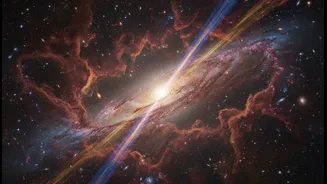
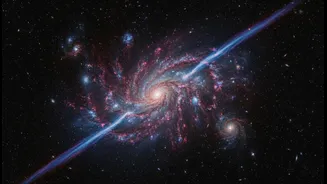
tools that see the universe in ways their predecessors could not. For its fourth anniversary of science operations in July 2026, the JWST released a stunningly detailed image of Centaurus A, a galaxy about 11 million light-years away shaped by a cosmic collision. Meanwhile, ESA's Euclid telescope has been busy discovering some of the most ancient quasars ever seen, objects that existed when the universe was just 5% of its current age. These missions are continuously releasing images that are not only beautiful but are packed with information perfect for those just starting their cosmic journey.
Where to Find These Cosmic Views
Getting access to these images is simple and free. The best places to start are the official websites for NASA and ESA. Specifically, look for the public galleries for the James Webb Space Telescope and the Euclid mission. NASA also features a daily Astronomy Picture of the Day (APOD), which provides a new cosmic image with a clear explanation written by a professional astronomer. These sites often include guided tours and detailed captions that explain what you're seeing, from stellar nurseries where new stars are born to the violent aftermath of galactic mergers. For instance, recent JWST images of the FS Tau star system allow us to peer through thick dust clouds to see 'baby stars' taking shape, something previously hidden from view.
Learning to See the Invisible
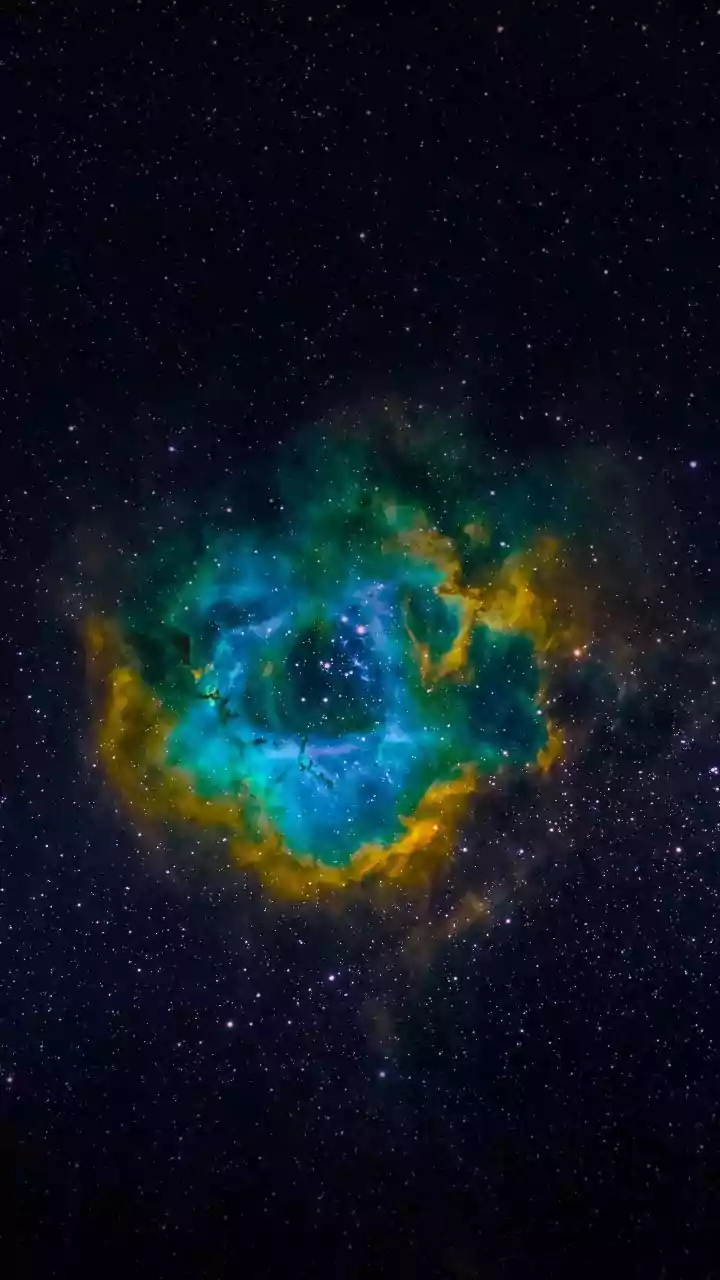
Many of the most spectacular space images are presented in 'false colour.' This doesn't mean the images are fake. Instead, it's a technique to visualise light that our eyes can't see, like infrared. Telescopes like JWST are optimised to see in infrared, which allows them to cut through cosmic dust that would otherwise obscure the view in visible light. Scientists assign visible colours—like red, green, and blue—to different infrared wavelengths. This helps highlight specific features. For example, in a false-colour image, bright red might be used to show areas of dense molecular gas, while blue could represent hot, young stars. Understanding this is key for a beginner; you're learning to interpret data that reveals a hidden layer of the universe.
What to Look For: A Beginner's Guide
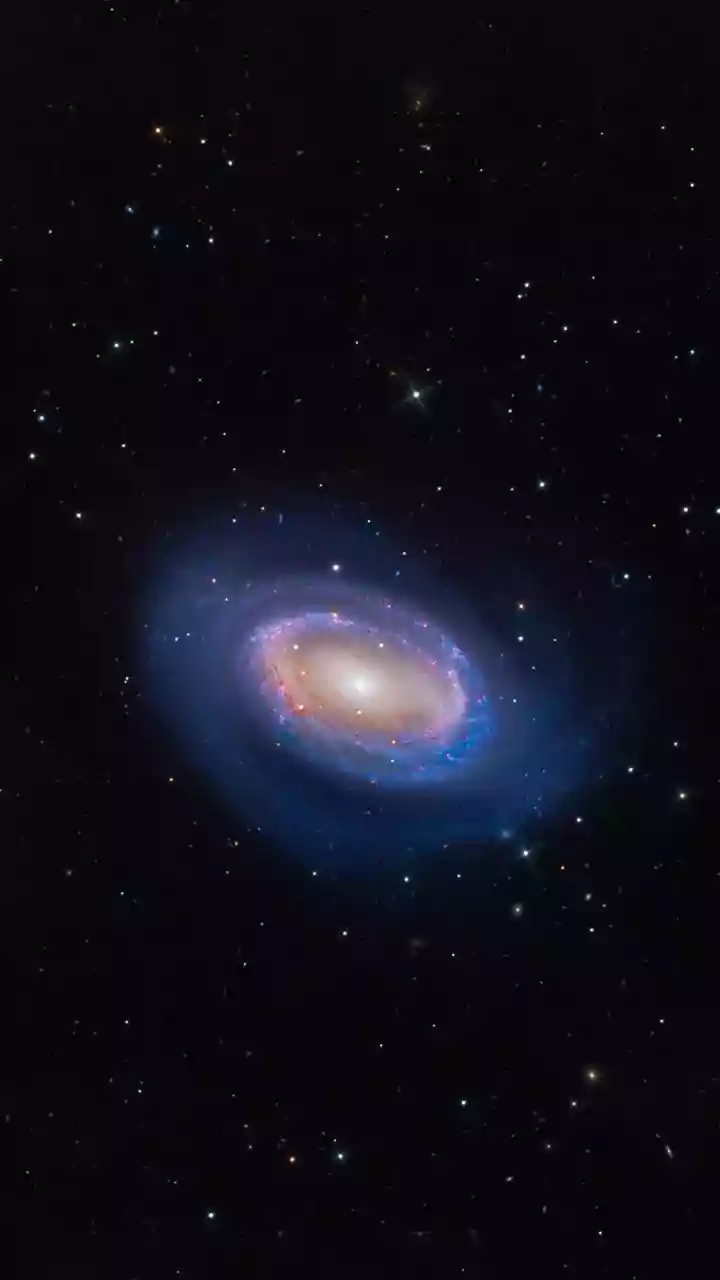
When you open a new image, don't just be wowed by the colours. Start asking questions. Look at the new Webb image of Centaurus A. The reddish-purple dots are stellar nurseries, where new stars are forming within the dust. The strange, warped shape of the galaxy is evidence of its violent past—a collision with another galaxy. In another recent image of star cluster NGC 602, the different colours of the stars—red, white, and blue—can give clues to their age and temperature. Reading the accompanying descriptions from NASA or ESA will teach you to spot these details. You can start to perform your own 'galactic archaeology,' where each star and cloud of dust tells part of a story stretching back billions of years.
From Screen to Night Sky
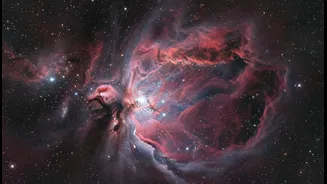
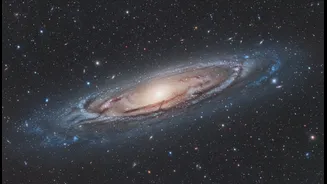
Using these images as a guide, you can start making connections to the sky above you. While you won't see colourful nebulae with the naked eye, you can learn to identify the constellations where these amazing objects are located. Use a stargazing app on your phone to find constellations like Orion or Sagittarius. NASA's monthly 'What's Up' guide gives tips on what planets, constellations, and meteor showers are visible each month. Even a simple pair of binoculars can reveal details you can't see with your eyes alone, like the moons of Jupiter or the fuzzy glow of the Andromeda Galaxy. Start by learning the brightest stars and major patterns, and soon you'll be able to navigate the night sky with confidence, all thanks to a little help from the most powerful telescopes in human history.