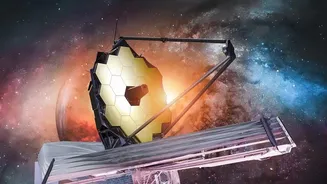

Catching a Distant Shadow
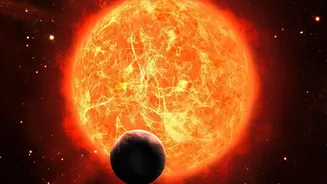
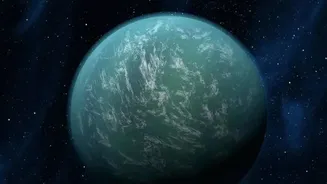
The entire process begins with a simple, yet profound, celestial alignment known as a transit. This occurs when a distant planet, or exoplanet, passes directly in front of its host star from our vantage point on Earth. As the planet makes this journey,
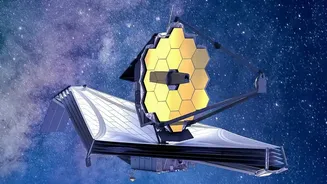
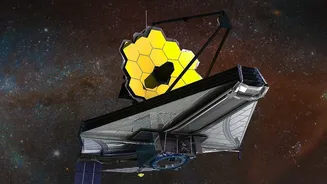
it blocks a minuscule fraction of the starlight, causing a slight, temporary dip in the star's brightness. Telescopes like NASA's James Webb Space Telescope (JWST) are sensitive enough to detect these incredibly subtle changes—sometimes as small as a fraction of a percent. By observing these dips occur at regular intervals, astronomers can confirm the presence of an orbiting planet and calculate its size and how long its year is.
Starlight Filtered Through an Alien Sky
This momentary dimming is more than just a shadow play; it's a golden opportunity. For a brief period during the transit, a tiny amount of starlight filters through the exoplanet's atmosphere before it continues its journey toward our telescopes. This is where the magic of spectroscopy comes in. Telescopes like JWST are equipped with spectrographs, specialized instruments that spread light out into its constituent colors, much like a prism creates a rainbow. By capturing the spectrum of the star before the transit and comparing it to the spectrum captured during the transit, scientists can see what's missing.
The Atmosphere’s Chemical Barcode
Every chemical element and molecule has a unique property: it absorbs specific wavelengths, or colors, of light. When starlight passes through an exoplanet’s atmosphere, the gases present—like water vapor, methane, or carbon dioxide—absorb their signature wavelengths. This leaves a distinct pattern of dark lines in the star's spectrum, like a chemical barcode. Scientists can then compare this absorption pattern to known molecular signatures to identify the exact chemical composition of the planet’s atmosphere. This technique, called transmission spectroscopy, is our most powerful tool for characterizing the worlds orbiting other stars.
The Hunt for Biosignatures
Identifying chemicals is one thing, but finding life is another. The ultimate goal is to detect biosignatures: gases or combinations of gases that are likely produced by living organisms. On Earth, life has drastically altered our atmosphere, filling it with gases like oxygen and methane. Finding these two gases coexisting in a distant atmosphere would be a compelling sign, as they tend to destroy each other and require constant replenishment, which life provides. Other potential biosignatures include nitrous oxide and even specific sulfur compounds like dimethyl sulfide, which on Earth is produced almost exclusively by marine life.
The Challenge of Certainty
The search for life is fraught with challenges. The signals are incredibly faint, and scientists must be cautious about false positives. Many gases, including oxygen and methane, can also be produced by geological or chemical processes that have nothing to do with life. For this reason, context is everything. A potential biosignature is not confirmed by a single gas but by the overall chemical context of the atmosphere. Scientists look for combinations of gases that are in a state of disequilibrium—a chemical imbalance that suggests a constant, active source, like a planet-wide biosphere. Even then, confirming a detection is a rigorous process, with recent studies on planets like K2-18b showing that initial interpretations can change as more data becomes available.