



India's Next Interplanetary Frontier
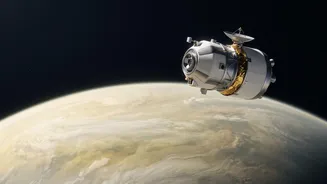
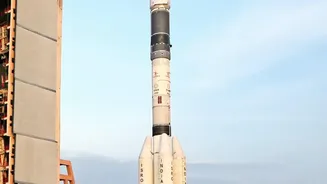
Following the historic triumphs of its Mars Orbiter Mission (Mangalyaan) and the Chandrayaan series, the Indian Space Research Organisation (ISRO) is embarking on its next great interplanetary adventure: a mission to Venus. Officially named the Venus Orbiter Mission,
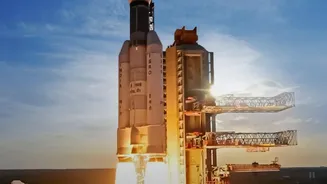
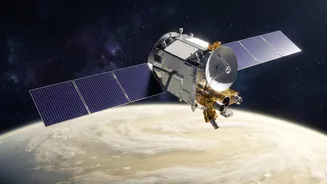
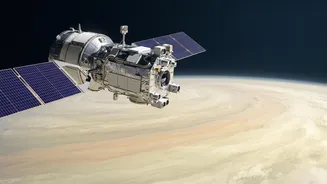
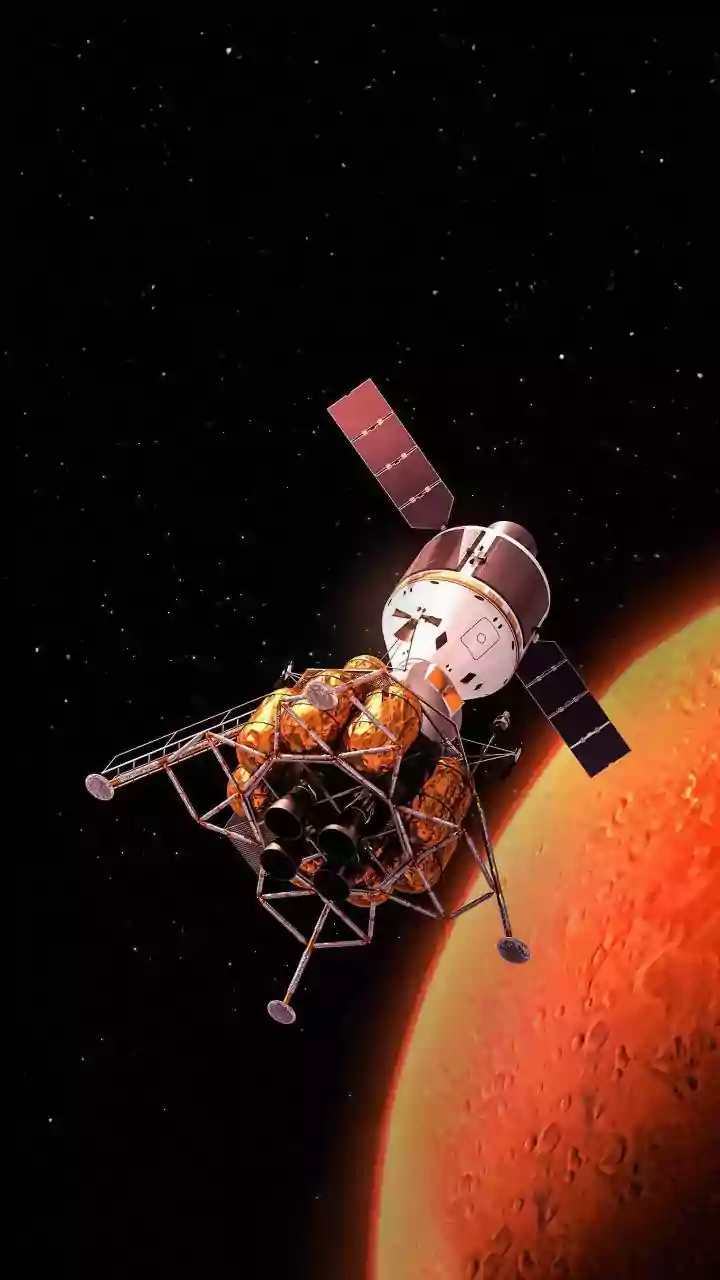
and popularly known as Shukrayaan-1, the project was formally approved by the Indian government in September 2024. While the headline suggests an immediate deployment, the mission is planned for a launch in March 2028. After a journey of about four months, the spacecraft will enter a large elliptical orbit around Venus, later using a fuel-saving technique called aerobraking to settle into a lower, more circular orbit for its scientific operations. This mission places India in a select group of nations turning their attention back to our so-called 'twin planet'.
Why Venus? Earth's Cautionary Tale
Venus is often called Earth's twin due to its similar size and mass, but its environment is anything but hospitable. With surface temperatures hot enough to melt lead (over 460°C) and a crushing atmosphere 90 times denser than Earth's, it's a hellish landscape. Its thick clouds are made not of water, but of corrosive sulphuric acid. Scientists believe Venus once may have had liquid water oceans but suffered a runaway greenhouse effect, transforming it into the furnace it is today. Studying Venus is therefore crucial for understanding how a planet so similar to our own could have evolved so differently. It offers a natural laboratory for studying climate change and planetary evolution, providing insights that could be vital for modeling Earth's own climate future.
A Toolkit for a Toxic Atmosphere
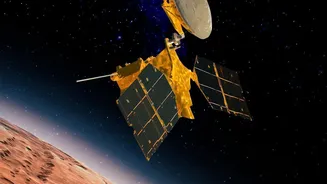
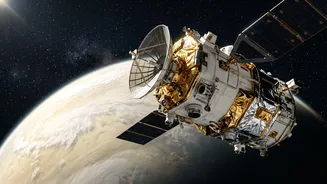
To peer through the dense Venusian clouds and analyze its complex chemistry, Shukrayaan-1 will carry a payload of around 100 kg, comprising nearly 20 scientific instruments. The mission's primary objectives include studying the planet's atmospheric composition, dynamics, and its interaction with the solar wind. A key focus will be on the chemical processes that govern this extreme environment. The payload includes a range of spectrometers designed to study the atmosphere in infrared, ultraviolet, and submillimeter wavelengths. It will also carry instruments developed through international collaboration, such as the Venusian Neutrals Analyzer (VNA), built with Sweden, to study how the solar wind strips particles from the atmosphere. Another instrument, VIRAL, co-developed with Russia, will specifically investigate atmospheric gases.
The Search for Chemical Clues
One of the most tantalizing chemical mysteries on Venus is the potential presence of phosphine. On Earth, this gas is associated with microbial life. While its detection on Venus remains contested, Shukrayaan's instruments, like VIRAL, are equipped to measure atmospheric gases and could provide definitive data, either confirming or refuting the extraordinary claim. Beyond the search for potential biosignatures, the sensors will analyze the composition of the thick carbon dioxide atmosphere and the dynamics of the sulphuric acid clouds. The mission will also investigate Venus's super-rotating atmosphere, where winds whip around the planet much faster than the planet itself rotates. These chemical and dynamic studies are fundamental to understanding why Earth's twin took such a divergent path.
A Renewed Global Race to Venus
ISRO is not alone in its renewed interest in Venus. NASA is planning its own ambitious missions, VERITAS and DAVINCI, scheduled for the early 2030s to map the surface and descend through the atmosphere. The European Space Agency (ESA) has also approved its Envision mission, set to launch around 2031 to perform a holistic study of the planet. This convergence of missions from multiple space agencies represents a new golden age of Venus exploration. Shukrayaan-1 is poised to be a significant contributor, with its unique instruments like a ground-penetrating radar—a first for Venus exploration—and high-resolution surface mapping capabilities that will complement the data from other agencies. This collaborative global effort promises to unlock the secrets of our enigmatic neighbour.