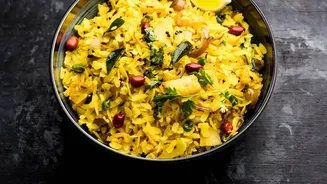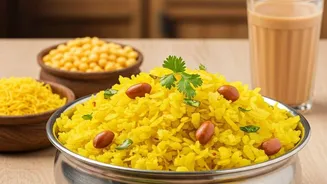




It’s the simple, soulful breakfast that fuels Maharashtra. Kanda Poha, a humble dish of flattened rice and onions, is a masterclass in flavour and texture. It’s light yet filling, easy to make, and woven deep into the state's cultural fabric.
More Than Just a Meal
In Maharashtra,
Kanda Poha is more than just a quick breakfast; it’s a cultural touchstone. The term 'Kande-Pohe' has become a charming metaphor for the formal meeting in an arranged marriage scenario. Traditionally, when a prospective groom's family visited, the girl would serve a plate of freshly made poha. If the meeting went well over this simple, comforting snack, it was considered a good sign for the match. This tradition highlights the dish's role as a symbol of home, comfort, and new beginnings. Beyond this unique custom, it remains a beloved staple for breakfast, an evening snack, or a light meal, cherished for its simplicity and wholesome taste.
The Soul of the Dish
The name itself reveals the two heroes of the dish: 'Kanda' (onion) and 'Poha' (flattened rice). The onions are not just a minor ingredient; they are sautéed until soft and translucent, forming the sweet, aromatic base that defines the dish. The other critical component is the poha itself. For the perfect fluffy texture, it is essential to use medium or thick flattened rice flakes ('jada poha'). Thin poha varieties tend to become mushy when rinsed and are better suited for snacks like chivda. The right poha will absorb the moisture and flavours without breaking down, resulting in soft, separate grains.
Crafting the Perfect Kanda Poha
The magic of Kanda Poha lies in its 'phodni' or tempering. The process begins by heating oil and popping mustard seeds, followed by cumin seeds, asafoetida (hing), and curry leaves, which release a fragrant aroma. Green chillies are added for a gentle heat before the star ingredient, finely chopped onions, are sautéed until they soften. A pinch of turmeric gives the dish its signature sunny yellow hue. While the onions cook, the poha is rinsed quickly under running water in a colander—never soaked—and left to drain. This is the most crucial step to prevent mushiness. The softened poha is then added to the pan along with salt and a little sugar, which balances the flavours. It’s all gently mixed and steamed for a few minutes until every flake is heated through and infused with the spices.
Secrets from a Maharashtrian Kitchen
To elevate your poha from good to great, a few simple tricks make all the difference. The key to fluffy poha is to wash it just enough to make it pliable; you should be able to press a flake easily between your fingers. If it feels too dry after rinsing, a light sprinkle of water is all it needs. Many cooks add salt, sugar, and turmeric directly to the wet poha in the colander to ensure even seasoning. A generous squeeze of fresh lemon juice at the end is non-negotiable; it brightens all the flavours. Classic garnishes include freshly chopped coriander leaves, grated coconut, and sometimes crunchy peanuts or sev for added texture. While Kanda Poha is the most classic version, some households also add diced potatoes to make 'Kanda Batata Poha'.