

What Exactly Is Cat-Cow?
Cat-Cow is not a single pose but a dynamic, flowing sequence that links two poses together: Marjaryasana (Cat Pose) and Bitilasana (Cow Pose). The movement is typically performed on all fours and involves rhythmically rounding and arching the spine in coordination
with your breath. In Cow Pose, you inhale as you drop your belly, lift your chest, and look forward, creating a gentle arch in your back. In Cat Pose, you exhale as you round your spine toward the ceiling, tucking your chin to your chest, similar to a cat stretching its back. This continuous flow from one shape to the other is what makes the sequence a powerful tool for spinal awareness and mobility.
The Main Benefit: Mobilising Your Spine
The primary purpose of the Cat-Cow sequence is to gently warm up and increase the flexibility of your spine. Modern lifestyles often involve long periods of sitting, which can lead to a stiff and compressed back. Cat-Cow directly counteracts this by moving the spine through its two main directions of movement: flexion (rounding in Cat Pose) and extension (arching in Cow Pose). This motion helps to create space between the vertebrae, promoting better circulation of spinal fluid and keeping the joints lubricated and healthy. Regular practice can lead to improved posture, reduced back stiffness, and a greater overall sense of body awareness.
A Step-by-Step Guide to Cat-Cow
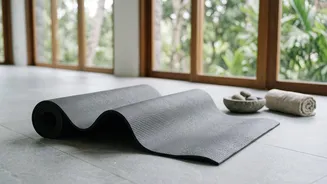
Ready to try it? Find a comfortable space on a yoga mat or soft surface. 1. Start in a 'tabletop' position on all fours. Align your hands directly under your shoulders and your knees directly under your hips. Your back should be flat and your gaze toward the floor. Spread your fingers wide to distribute your weight evenly. 2. Move into Cow Pose: As you inhale, gently drop your belly toward the mat. Lift your chest and tailbone toward the ceiling, creating an arch in your back. Look straight ahead or slightly upward, being careful not to strain your neck. 3. Transition to Cat Pose: As you exhale, reverse the movement. Press into your hands to round your spine upward. Tuck your tailbone and release your head toward the floor. You should feel a nice stretch across your upper back and shoulders. 4. Create a Flow: Continue moving smoothly between Cow Pose on your inhales and Cat Pose on your exhales. Aim for 10-20 repetitions, allowing your breath to guide the pace of your movement. The goal is a controlled, rhythmic flow, not speed.
Common Mistakes to Avoid
To get the most out of the pose and prevent strain, watch out for a few common errors. First, avoid rushing the movement; the benefits come from slow, controlled transitions linked to the breath. Another common mistake is letting the head drop back too far in Cow Pose, which can compress the neck. Instead, focus on lifting your chest and keeping length in the back of your neck. Also, ensure your shoulders stay relaxed and away from your ears, and keep a micro-bend in your elbows to avoid locking the joints. Finally, focus on initiating the movement from your spine rather than just your hips or shoulders, aiming to articulate each vertebra one at a time.
Modifications for Every Body
Cat-Cow is highly adaptable. If you experience wrist pain, you can modify the pose by making fists with your hands and resting on your knuckles, or by coming down onto your forearms. For sensitive knees, simply place a folded blanket or towel underneath them for extra cushioning. If getting on the floor isn't an option, you can perform a seated version of Cat-Cow in a chair. Sit tall with your feet flat on the floor and hands on your knees, then move through the same spinal flexion and extension. A standing variation is also possible by placing your hands on a wall or the back of a sturdy chair.