






The End of the AI Honeymoon
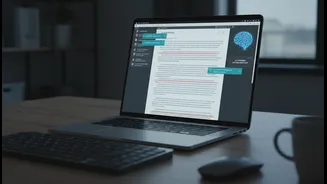
Not long ago, the arrival of powerful AI chatbots was hailed as a revolutionary moment in education. Students quickly discovered their utility for everything from brainstorming ideas and debugging code to drafting entire assignments. The convenience was undeniable,
and in the initial excitement, countless documents, research notes, and personal essays were uploaded to these platforms. This early phase was marked by uncritical adoption, with a focus on output rather than process. The primary question was “What can this do for me?” not “What am I giving up in return?”. That period of unbridled enthusiasm, however, is now giving way to a more sober and calculated approach as students and educators alike begin to grasp the hidden costs of convenience.
Understanding the Data Bargain
The core of this newfound caution lies in a growing understanding of what happens when a file is uploaded to a public AI tool. Many of these services state in their terms of use that they may use submitted data to train their models. This means a student's original essay, confidential research, or personal reflection could become part of the AI's vast knowledge base. There have already been instances of AI chatbots leaking information provided by one user to another. This raises significant privacy concerns. Universities are now issuing explicit warnings, cautioning students against inputting any sensitive or personally identifiable information into unapproved AI platforms. The advice is simple: treat any information given to a public AI tool as if it were being made public. This realization has been a wake-up call, turning a seemingly free tool into a transaction where personal data is the currency.
The Double-Edged Sword of Detection
Beyond privacy, the fear of academic discipline looms large. As universities grapple with AI's role, many have adopted AI detection software. These tools scan student submissions for patterns suggesting AI generation, but their reliability is a subject of intense debate. Research and anecdotal reports have shown that these detectors can produce false positives, incorrectly flagging human-written text as AI-generated. This is particularly concerning for non-native English speakers or students with unique writing styles, who may be disproportionately affected. The result is a climate of anxiety, where some students are now reportedly terrified that their own original work will be misidentified. This has forced a re-evaluation of how AI is used, shifting focus from a potential shortcut to a potential liability.
A Smarter Way to Use AI
In response to these risks, a smarter, more strategic approach to using AI in academics is emerging. Instead of outsourcing the writing process, savvy students are now using these tools as collaborative assistants. This includes using AI for brainstorming, exploring complex topics, creating study guides, or summarizing publicly available articles. The key difference is the careful gatekeeping of personal and proprietary information. Students are learning to engage with AI without uploading their unique intellectual property. For instance, they might ask a chatbot to critique an argument's structure using a generic example, rather than uploading their entire draft. It's a move from blind delegation to informed collaboration, leveraging AI's strengths while mitigating its significant risks.
Institutions Play Catch-Up
Educational institutions are no longer issuing outright bans but are instead developing nuanced guidelines for responsible AI use. Universities from Harvard to local Indian colleges are publishing policies that clarify what is and isn’t acceptable. Many are creating lists of approved AI tools that have been vetted for data security, ensuring that student and university data will not be used for model training. Faculty are being encouraged to set clear expectations in their syllabi, defining the line between permissible assistance and academic misconduct. The goal is to integrate AI literacy into the curriculum, teaching students how to use these powerful tools ethically and safely, rather than leaving them to navigate the complex digital landscape on their own.