






The Sandwich Struggle Is Real
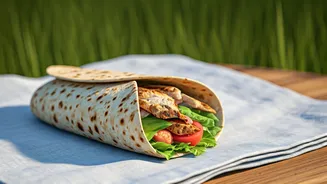
The sandwich is a brilliant concept, but it has a fundamental flaw: its structural integrity is often fleeting. The bread, a porous sponge, eagerly soaks up moisture from tomatoes, chutneys, and sauces. Crisp lettuce wilts into a sad, green memory. By
the time you’re ready to eat, you’re often left with a compressed, damp package that’s a shadow of its former self. This is especially true in India’s climate, where humidity can accelerate the decline of a perfectly packed lunch. For train journeys, long office commutes, or school tiffins, the sandwich is a high-risk, low-reward gamble.
Meet Your New Travel Champion
Enter the Aloo Paratha. This isn't just a breakfast staple; it's arguably the most perfectly engineered travel food ever conceived. A whole-wheat flatbread encasing a flavourful, spiced potato filling, the aloo paratha is a self-contained meal. It asks for nothing more than a bit of pickle or a dollop of yoghurt, but even on its own, it’s a satisfying, complete dish. Unlike a sandwich, its components are designed to work together, not against each other, over time. It’s a culinary marvel of portability, designed implicitly for a culture that has always understood the art of packing food for the road.
The Science of Superior Portability
Why does the aloo paratha triumph where the sandwich fails? It comes down to a few key principles. First, the filling is cooked. The spiced potato mash has a relatively low water content compared to fresh vegetables, and the cooking process stabilises it. Second, the dough acts as a formidable barrier. The whole-wheat exterior, often lightly crisped with ghee or oil, creates a seal that prevents moisture from escaping or entering. The fat used in cooking forms a hydrophobic layer, actively repelling sogginess. Finally, it tastes great at room temperature. While a hot paratha is a joy, a room-temperature one is still delicious, its flavours having melded and matured over a few hours. A cold, damp sandwich can rarely say the same.
How to Make It Travel-Proof
To maximise your paratha’s travel potential, a few simple tricks go a long way. When making the filling, ensure it’s not too wet. If you’ve boiled the potatoes, let them cool and dry completely before mashing. Some pros even roast or pan-fry the mashed filling for a minute to remove excess moisture. When cooking the paratha, use a moderate amount of ghee or oil — enough to crisp the surface and create that protective layer, but not so much that it becomes greasy. Finally, the cooling process is crucial. Let the parathas cool completely on a wire rack before packing. Stacking them while hot creates steam, which is the enemy of crispness. Once cool, wrap them in foil or a clean kitchen towel and place them in your tiffin.
Beyond the Aloo
While the aloo paratha is the undisputed king, the principle extends to its many delicious cousins. Gobi (cauliflower), paneer, and mooli (radish) parathas are all excellent travel companions, provided the filling is prepared with minimal moisture. Even a simple masala or thecha paratha, which incorporates spices directly into the dough, travels brilliantly. The core concept remains the same: a sturdy, flavourful flatbread that is built to last, offering a delicious and dignified meal, no matter how long the journey.