




Embrace Tradition and Sustainability
For generations, Indian households have marked their entrances with beautiful patterns, known as rangoli or kolam. Traditionally, these were not just for decoration but also held a deeper meaning of harmony with nature. Instead of chemical-based powders
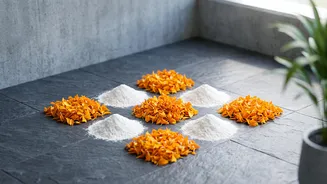
that can harm the environment, our ancestors used simple, natural ingredients. Rice flour was used to feed ants and small insects, a symbolic offering of coexistence. Fresh flower petals, like the vibrant marigold, added colour, fragrance, and an auspicious touch. By choosing these materials, you're not only creating something beautiful but also reviving a practice that is gentle on the earth, safe for your family, and welcoming to all forms of life.
Gathering Your Natural Palette
The beauty of this project lies in its simplicity. You won't need to visit a special craft store; a trip to the local flower market and your kitchen will suffice. Here’s what to gather: Fresh Marigold Flowers: You'll want a generous amount of both yellow and orange marigolds for colour variation. These are ideal for rangoli because their petals are dense, hold their shape, and don't wilt quickly. Rice Flour: This will be your primary tool for drawing lines and creating a white base. Standard kitchen rice flour works perfectly. For finer lines, you can sift it. A Clean Surface: Prepare the area at your doorstep by sweeping it clean. A dust-free surface helps the petals and flour stay in place. Optional Accents: Consider adding other natural elements for contrast and texture. Fresh green leaves (like mango or ashoka), red rose petals, or even other kitchen staples like turmeric for a yellow hue or pulses for texture can elevate your design.
A Simple Step-by-Step Guide
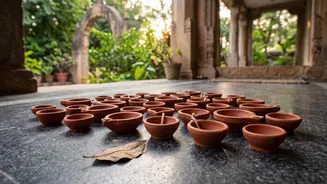
The promise of this decoration is ease, so let’s break down the process into simple, manageable steps. 1. Prepare Your Petals: Begin by separating the marigold petals from the flower heads. Keep the yellow and orange petals in separate bowls to make designing easier. This is a calming activity and perfect for involving children. 2. Create Your Outline: Before you start filling with colour, it’s helpful to have a design in mind. For beginners, a simple geometric pattern like concentric circles is a great starting point. Use a piece of chalk or your finger dipped in rice flour to lightly draw the outline on the floor. 3. Fill the Design: Start from the centre and work your way outwards. This prevents you from smudging your work. You can fill a central circle with a bright orange, followed by a ring of yellow, and then another of orange. Using rice flour for a white ring provides a beautiful, clean contrast. 4. Add Finishing Touches: Once your main pattern is filled, you can add details. Use rice flour to draw delicate lines or dots. Place a few green leaves around the border to frame your artwork. Placing a diya or a small brass lamp in the centre or around the design adds a warm, festive glow.
Easy Design Inspiration
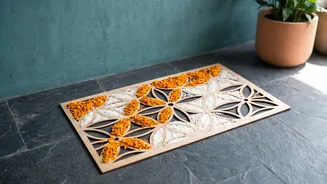
You don't need to be an artist to create a stunning design. The vibrant colour of the marigolds does most of the work. Here are a few simple ideas to get you started: The Classic Circle: This is the most forgiving design for beginners. Create a few concentric circles, alternating between orange marigold petals, yellow petals, and white rice flour. It's quick, simple, and always looks festive. The Corner Accent: If you have limited space, a corner design works beautifully. Create a quarter-circle pattern in a corner of your doorway, layering arcs of petals and flour. The Floral Border: Simply create a thick, straight line of marigold petals along the threshold of your door. You can add dots of rice flour or place single rose petals at intervals for a pop of colour. The Central Motif: Place a single large diya in the centre and arrange petals in a spiral or sun-ray pattern radiating outwards. This creates a powerful focal point with minimal effort.
Making Your Creation Last
While the ephemeral nature of flower rangoli is part of its charm, there are a few tips to keep it looking fresh. If you live in a dry, windy area, a very light misting of water can help the petals settle and stay in place, but avoid over-spraying, which can make them soggy. Keeping the design in a shaded spot away from direct foot traffic will naturally help it last longer. When it's time to clean up, you can simply sweep the natural materials into a compost pile, returning them to the earth. This mindful practice completes the sustainable cycle, leaving no waste behind. Embracing this tradition is a beautiful way to connect with culture, creativity, and nature right at your doorstep.