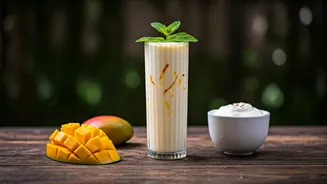









An Ancient Thirst Quencher
Lassi is believed to have originated in the Punjab region of the Indian subcontinent as far back as 1000 BC. [4, 13] In an era before refrigeration, fermenting milk into yogurt was a way to preserve it. Mixing this yogurt (dahi) with water and salt or spices
created a nourishing drink that could beat the formidable heat. [4, 6] This concoction, traditionally served in earthen clay cups called kulhars, was not just for refreshment; it was deeply integrated into the principles of Ayurveda. [4, 12] The ancient Indian system of medicine praised lassi for its digestive properties, ability to cool the body, and its role in balancing the body's internal systems. [4, 12] In its earliest forms, it was a simple, savoury drink, a world away from the sweet, fruity versions many know today. [4, 8]
The Great Divide: Sweet, Salty, and Beyond
The most fundamental split in the lassi world is between sweet (meethi) and salty (namkeen). Salty lassi, often considered the more traditional style, is typically flavoured with roasted cumin powder and black salt, serving as a digestive aid. [13, 22] Sweet lassi, a blend of yogurt, water, and sugar, is often enhanced with aromatic additions like rosewater, cardamom, or saffron. [20, 22] But the diversity doesn't stop there. Punjabi lassi is famously thick, rich, and creamy, often topped with a generous dollop of malai (clotted cream). [19, 24] Travel across India, and you'll find countless regional variations. [17] There is masala lassi with a kick of ginger and green chillies, and even Bhang Lassi, a cannabis-infused version consumed in a religious context during festivals like Holi. [20, 12] This contrasts with its lighter cousin, chaas (buttermilk), which is thinner in consistency and more savoury. [9, 10, 16]
A Glassful of Goodness
Beyond its refreshing taste, lassi is a powerhouse of health benefits. As a fermented dairy product, it is a rich source of probiotics, the beneficial bacteria that promote a healthy gut microbiome. [2, 15] This aids digestion, helps prevent issues like bloating and constipation, and can soothe the stomach after a spicy meal. [2, 5, 7] The drink is also an excellent source of calcium, crucial for strong bones and teeth. [3, 7] During hot weather, lassi helps hydrate the body by replenishing fluids and essential electrolytes like potassium. [2] Rich in protein, it can be a filling beverage, and the presence of lactic acid and Vitamin D is also thought to help boost the immune system and improve skin texture. [7, 15]
The Modern Lassi Makeover
While its classic forms remain beloved, lassi has proven to be incredibly adaptable. The rise of mango lassi in Indian restaurants worldwide has made it an international star. [4, 6] Today, cafes and home cooks are experimenting with a vast array of flavours. You can find everything from strawberry, banana, and avocado lassi to more decadent versions with chocolate or butterscotch. [3, 18, 25, 26] Some recipes get even more creative, incorporating ingredients like tender coconut, pistachio, or even ground sumac. [17, 25, 26] The evolution continues into the realm of fusion cuisine and mixology, with some using lassi as a base for smoothies or even creating spirited versions spiked with vodka or rum, served like a frozen margarita. [18]