



The High Cost of Going Electric
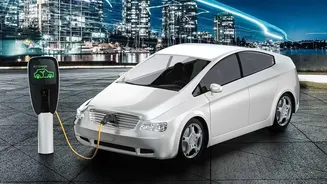
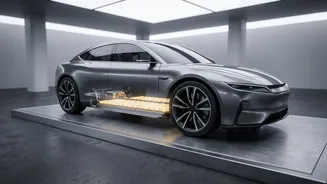
For years, the biggest hurdle for mass EV adoption in India has been the sticker price. A significant portion of this cost, often between 40% and 50%, is tied directly to the vehicle's battery pack. The dominant technology, lithium-ion, relies on materials
like lithium and cobalt, whose supply chains are complex and expensive. India imports the vast majority of its lithium, leaving the market vulnerable to volatile global prices and geopolitical tensions. This dependency creates a persistent financial barrier, keeping EVs out of reach for many potential buyers and slowing the country's transition to cleaner transportation.
Sodium: The Abundant Alternative
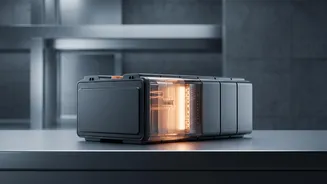
Enter the sodium-ion battery, a technology poised to disrupt the industry. Its core advantage is simple economics. Sodium is one of the most abundant elements on Earth, found readily in common salt, and is estimated to be over 1,000 times more plentiful than lithium. This abundance translates to dramatically lower and more stable raw material costs. Estimates suggest that the material costs for sodium-ion cells can be 15% to 40% lower than their lithium-ion counterparts. Furthermore, manufacturing can utilize cheaper aluminium foil instead of the more expensive copper required for lithium-ion anodes, adding another layer of savings. This cost reduction is the single most powerful factor that could enable automakers to finally price EVs competitively for the Indian mass market.
More Than Just a Price Drop
While affordability is the main headline, the benefits of sodium-ion technology don't stop there. These batteries are widely considered to be safer, with a much lower risk of fire from thermal runaway, a key concern that has made some consumers hesitant. They can be fully discharged to zero volts for transport, significantly reducing logistical costs and fire hazards. Critically for India, sodium-ion batteries demonstrate better performance and resilience in extreme weather, showing greater stability in both intense heat and sub-zero temperatures. Developers have also showcased impressive durability and the potential for ultra-fast charging, with some prototypes achieving significant charge in just minutes.
Addressing the Performance Trade-Off
However, sodium-ion technology does come with a significant trade-off: energy density. In simple terms, these batteries store less energy per kilogram compared to high-performance lithium-ion cells. This means that to achieve the same driving range as a premium EV, a sodium-ion battery pack would need to be heavier and bulkier. This makes the technology less suitable for long-range luxury sedans or high-performance SUVs where weight and space are at a premium. But for a large segment of the Indian market, this limitation is far from a dealbreaker.
India's Homegrown Push
The push for sodium-ion is not just a global trend; it's becoming a key part of India's self-reliance strategy. Pune-based KPIT Technologies has already developed its own sodium-ion battery technology, claiming it could be up to 30% cheaper than the common LFP lithium batteries. Meanwhile, corporate giant Reliance Industries has acquired the UK-based sodium-ion specialist Faradion, signaling its serious intent. More recently, JSW Group announced a major investment in a new R&D facility in Pune that will focus on the technology. With Indian research now reaching a high level of maturity, commercial production is realistically expected within the next two to three years.
The Perfect Fit for Indian Roads
The lower energy density of sodium-ion batteries makes them the perfect solution for the vehicle segments that dominate Indian roads. The technology is an ideal match for two-wheelers, three-wheelers, and budget-friendly commercial vehicles. In these applications, affordability and safety are far more important than achieving a 500-kilometre range on a single charge. For city commuters and last-mile delivery fleets, a reliable and inexpensive EV is the priority. By targeting these high-volume segments first, sodium-ion technology can make the biggest and most immediate impact, electrifying transport for millions of Indians.