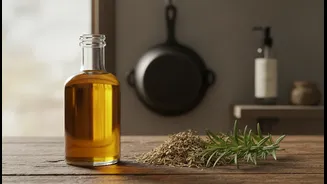







The Science of Smoke Point
We often reach for familiar oils without a second thought. But for cooking, one of the most important factors is an oil's smoke point—the temperature at which it stops shimmering and starts smoking. When an oil is heated past its smoke point, it starts to break
down, releasing a burnt flavour and potentially harmful compounds. Traditional cooking methods might not have involved the high-heat searing we do today in a non-stick pan. For example, unrefined oils that are cold-pressed tend to have lower smoke points because they retain more nutrients and compounds. Refined oils, on the other hand, are processed to remove impurities, which gives them a higher smoke point and a more neutral flavour. A good quality, cold-pressed mustard oil, for instance, has a high smoke point of around 250°C, making it suitable for high-heat Indian cooking methods like frying and tadka. In contrast, extra virgin olive oil has a lower smoke point and is best reserved for dressings and low-heat sautéing.
Not All Oils Are Created Equal for Skin
An oil that works wonders for your hair or body might not be the best choice for your face. The reason lies in the comedogenic scale, a system that ranks oils and butters on their likelihood to clog pores. The scale runs from 0 (won't clog pores) to 5 (highly likely to clog pores). Coconut oil is a classic example. Traditionally used for hair and body massages, it provides immense moisture and strengthens the hair shaft. However, when it comes to facial skin, it scores a 4 on the comedogenic scale, meaning it has a fairly high chance of causing breakouts for those with acne-prone or oily skin. While it can be a saviour for very dry skin on the body, applying it to your face could lead to clogged pores and pimples. Oils like hemp seed oil (rated 0) or argan oil (rated 0) are generally considered safer bets for facial application across most skin types.
The Mustard Oil Controversy
Mustard oil is a staple in many Indian kitchens, celebrated for its pungent flavour and preservative qualities in pickles. It has a high smoke point, making it a traditional favourite for deep frying. However, there is ongoing debate surrounding its high content of erucic acid. Studies on rats in the 1970s linked high erucic acid intake to heart problems. This led countries like the US to ban the sale of mustard oil for cooking; it's sold there for 'external use only'. Conversely, many other countries, including those in the European Union, allow it with set limits for erucic acid. In India, it is still widely recommended and consumed. This highlights a crucial point: an ingredient's traditional status doesn't exempt it from scientific scrutiny, and global standards can differ vastly based on varying interpretations of research.
Understanding Hair and Oil Penetration
When it comes to hair care, not all oils perform the same function. Some oils are excellent at penetrating the hair shaft to nourish it from within, while others simply coat the surface to provide shine and reduce frizz. Coconut oil is a star performer in this category because its fatty acid structure allows it to penetrate deep into the hair, reducing protein loss and strengthening strands. This is why it has been a trusted hair treatment for generations in many parts of India. Other oils, while beneficial, might work differently. They can form a seal on the outside of the hair cuticle, which helps to lock in moisture and protect from heat styling, but they don't offer the same internal strengthening benefits. So, while your grandmother was right about coconut oil being great for hair, understanding the science helps you know why it works and choose other oils based on whether you need deep conditioning or surface-level smoothing.