








The Hidden Strain of Monsoon Workouts
Exercising in the sticky, humid air of the monsoon season can feel significantly harder, and there’s a scientific reason for it. Your body’s primary cooling mechanism is the evaporation of sweat. When the air is already saturated with moisture, as it is during
the monsoon, sweat can't evaporate effectively. As a result, your body has to work much harder to regulate its internal temperature. This forces your heart to pump more blood to the skin to try and release heat, placing additional stress on your entire cardiovascular system. This can lead to increased fatigue, a faster heart rate, breathlessness, and in some cases, dangerous heat-related conditions, especially for those with pre-existing heart issues.
More Than Just Cooling: The HVAC's True Role
A gym's Heating, Ventilation, and Air Conditioning (HVAC) system does more than just blow cold air; it's a critical tool for health and safety. Simply lowering the temperature is not enough to combat the dangers of high humidity. A well-managed HVAC system serves as an environmental control unit, tasked with creating an indoor climate that is not only comfortable but also physiologically safe for strenuous activity. This involves a careful balance of temperature, humidity control, and air circulation to create an atmosphere where members' bodies can cool themselves efficiently, reducing the cardiovascular load.
Smart Dehumidification Is the Priority
The single most important function of a gym's HVAC system during the monsoon is dehumidification. By actively removing moisture from the air, the system creates an environment where sweat can actually do its job. Fitness centres should aim for a relative humidity level between 40% and 60%. Anything higher can feel stuffy and inhibit cooling, while also creating a breeding ground for mould and bacteria. Many modern commercial HVAC systems work in conjunction with dedicated dehumidifiers to maintain this optimal range, ensuring the air feels fresh and dry, not just cold and clammy.
Optimal Temperature and Air Circulation
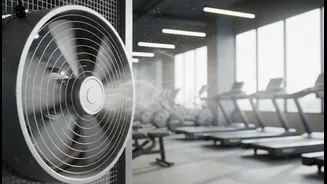
Once humidity is under control, temperature becomes the next focus. For general workout areas like cardio and weight training floors, a temperature between 20°C and 22°C (68°F to 72°F) is widely recommended. This range is cool enough to prevent overheating during high-intensity exercise but not so cold as to cause muscle stiffness. Equally important is air circulation. Good ventilation and strategically placed fans ensure that fresh, conditioned air is distributed evenly, preventing pockets of stale, humid air from forming. This constant movement of air further aids in the evaporation of sweat, enhancing the body's natural cooling process.
What Gym Members Can Do to Stay Safe
While the gym has a responsibility to provide a safe environment, members also play a role in their own well-being. Pay attention to the signals your body is sending. If you feel unusually fatigued, dizzy, or nauseous, it's a sign to slow down or stop. Ensure you are well-hydrated before, during, and after your workout. When choosing or visiting a gym, take note of the air quality. Does it feel stuffy or damp? A well-managed facility should feel cool and relatively dry. Don't hesitate to speak with gym management if the air feels uncomfortable; it's a valid safety concern.