


A Glimpse of Our Sun's Future
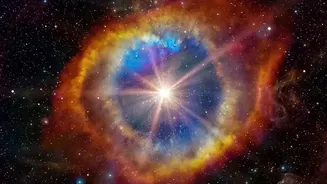
Located about 650 light-years away in the constellation Aquarius, the Helix Nebula is what astronomers call a planetary nebula. Despite the name, it has nothing to do with planets. Instead, it’s the spectacular death shroud of a star once like our own
sun. As the star ran out of fuel, it shed its outer layers of gas and dust into space. At its center now sits a white dwarf—the star’s collapsed, intensely hot core—which illuminates the expanding shells of gas, causing them to glow. For astronomers, the Helix Nebula isn't just a beautiful spectacle; it's a relatively close-up laboratory for studying the final life stages of sun-like stars. By understanding its structure and evolution, we get a preview of the cosmic fate that awaits our own solar system billions of years from now.
What Webb's Infrared Vision Uncovered
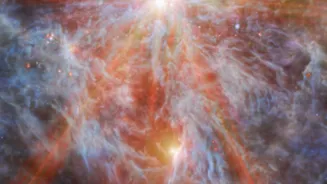
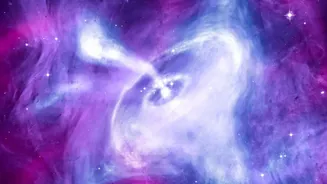
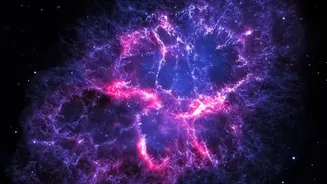
Previous telescopes, including the venerable Hubble, have taken breathtaking images of the Helix. But Webb’s Near-Infrared Camera (NIRCam) sees the universe in a different light, quite literally. Its latest view has brought startlingly fine structures into focus, particularly thousands of previously unseen “cometary knots.” These are not actual comets, but massive, dense clumps of gas and dust, each spanning an area larger than our solar system. While their existence was known, Webb's clarity reveals them in staggering numbers and detail. These knots, which resemble tadpoles with long tails streaming away from the central star, are the result of a violent cosmic collision. Hot, fast winds from the dying star are slamming into cooler, denser gas that the star ejected thousands of years earlier, fragmenting it into these droplet-like structures. Webb’s image clearly shows the fine filaments and tails of these knots, providing crucial data on how a dying star's material is sculpted and redistributed.
The Power of Seeing the Invisible
The secret to Webb's revolutionary view is its specialization in infrared light. Visible light, which our eyes and telescopes like Hubble primarily see, is easily blocked by cosmic dust. Much of the Helix Nebula's intricate structure has remained hidden behind these dusty curtains. NIRCam, however, is designed to detect longer infrared wavelengths that can penetrate the dust, unveiling the processes happening within. This capability allowed astronomers to see the delicate tendrils of molecular hydrogen, a key ingredient for forming new stars and planets. The new images show a clear transition, represented by different colors, from the hottest gas near the central star to the cooler molecular gas and dust farther out. In essence, NIRCam doesn't just see through the dust; it reads the temperature and chemical story written in the nebula's layers, a story that was previously obscured.
Cosmic Recycling in Action
Beyond the sheer beauty, these new details provide profound insights into one of the universe's most fundamental processes: cosmic recycling. The elements cooked inside a star are not lost when it dies. They are expelled back into the interstellar medium, enriching it with the raw materials needed for the next generation of stars and planets. The cometary knots are especially important. They are dense, dusty pockets that shield molecules from the harsh radiation of the central star. These protected nurseries are where more complex molecules can begin to form, eventually becoming part of new solar systems. Webb’s detailed look at the Helix Nebula shows us this process in action. We are witnessing the final, glorious breath of a dying star being transformed into the building blocks of future worlds, helping astronomers connect the dots between stellar death and cosmic birth.