




The 'Sunshine Vitamin' Paradox
Vitamin D is essential for absorbing calcium, ensuring strong bones, and supporting immune function. Ironically, despite India being a tropical country with abundant sunshine, studies show that 70% to 100% of the population suffers from a deficiency of this
crucial nutrient. Factors like modern indoor lifestyles, urban air pollution that blocks UVB rays, darker skin tones which synthesize Vitamin D less efficiently, and cultural clothing practices contribute to this widespread issue. This 'sunshine paradox' makes dietary sources and food fortification not just helpful, but necessary for public health.
What is Food Fortification?
Food fortification is the process of deliberately adding essential micronutrients, like vitamins and minerals, to staple foods to improve their nutritional quality. The goal is to deliver these nutrients to a large population without requiring drastic changes in eating habits. In India, this practice dates back to the 1950s with the fortification of vanaspati. Today, the Food Safety and Standards Authority of India (FSSAI) regulates the fortification of common staples like salt, milk, edible oil, wheat flour, and rice to combat deficiencies of nutrients including iron, iodine, and Vitamin D. This strategy is considered a cost-effective and scientifically-proven way to address widespread nutrient gaps.
How to Spot a Fortified Food: The +F Logo
To help consumers easily identify fortified products, the FSSAI has introduced a simple yet powerful symbol: the '+F' logo. This logo, a blue square with a white '+' and 'F', is a clear visual cue that the food product has been enriched with micronutrients according to government standards. When you see this logo on a packet of milk, oil, or atta, it serves as an assurance that the manufacturer has added the specified nutrients in regulated quantities, making it a safe and reliable choice for boosting your family's nutrient intake. The logo is often accompanied by the tagline ‘Sampoorna Poshan, Swasth Jeevan’.
Decoding the Nutrition Label for Vitamin D
Once you've spotted the +F logo, the nutrition information panel on the back of the pack provides the details. First, check the list of ingredients. Fortified foods will list the added vitamin, which might appear as 'Vitamin D', 'Ergocalciferol (Vitamin D2)', or 'Cholecalciferol (Vitamin D3)'. Next, look at the nutritional facts table. This section will tell you exactly how much Vitamin D is in a single serving or per 100g of the product, often measured in International Units (IU) or micrograms (mcg). Some labels may also show the '% Daily Value' or '% RDA' (Recommended Dietary Allowance), which tells you what percentage of your daily need for that nutrient is met by one serving. A DV of 20% or more is considered high, making it a good source.
Common Vitamin D Foods in Indian Kitchens
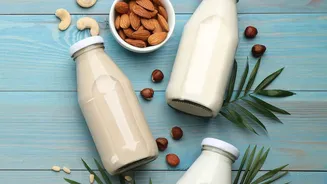
Beyond looking for the logo, it helps to know which foods are commonly fortified. Milk and edible oil are the two main staples that FSSAI has approved for voluntary Vitamin D fortification. Many major brands of toned and double-toned milk are fortified with both Vitamin A and D. Likewise, you can find various brands of refined vegetable oil carrying the +F logo. While less common, some breakfast cereals, plant-based milks (like soy or almond), and brands of atta or maida are also fortified. For non-vegetarians, fatty fish like salmon, mackerel (bangda), and sardines, as well as egg yolks, are excellent natural sources of Vitamin D.