




India Sets Its Sights on Venus
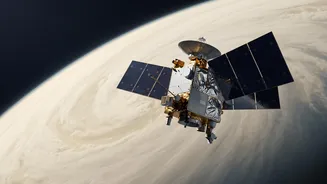
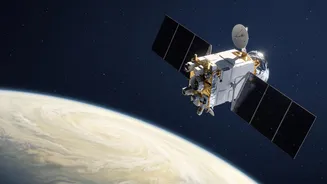
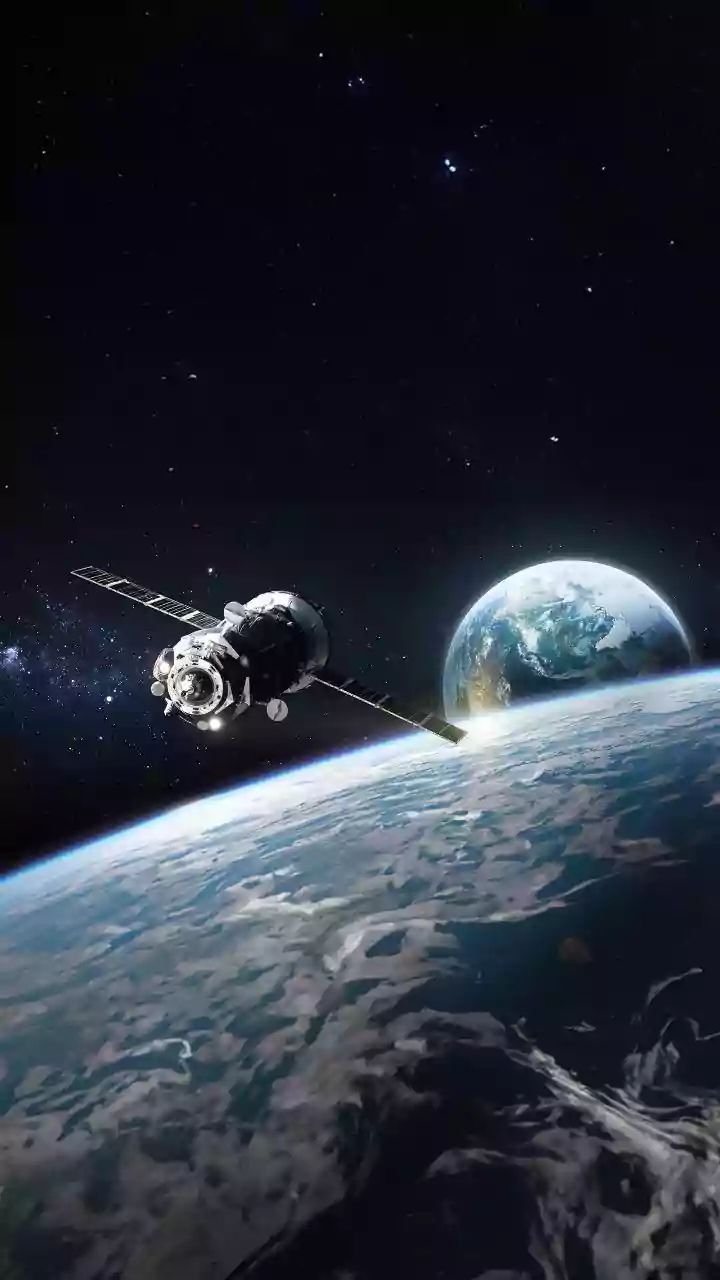
Following the historic successes of its missions to the Moon (Chandrayaan) and Mars (Mangalyaan), ISRO is venturing to the second planet from the Sun. The Shukrayaan mission, which translates to 'Venus Craft', represents India's first dedicated journey
to our closest planetary neighbour. This orbiter is designed to conduct a comprehensive study of Venus from above, examining its geology, volcanic activity, and the complex dynamics of its notoriously dense atmosphere. The mission positions India among a select group of space-faring nations that have taken on the immense challenge of exploring this hostile yet scientifically fascinating world.
The Challenge of an Extreme Atmosphere
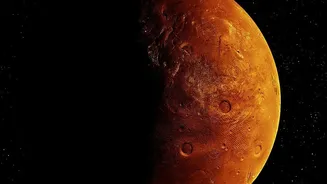
Exploring Venus is one of the toughest challenges in the solar system. The planet is shrouded in thick clouds of sulfuric acid and has a runaway greenhouse effect, creating surface temperatures of around 465 degrees Celsius—hot enough to melt lead. But the most daunting obstacle is the atmospheric pressure. At the surface, the pressure is over 90 times that of Earth's, which is equivalent to being 900 meters deep in our ocean. This immense force can crush spacecraft in moments. In fact, the longest any probe has survived on the Venusian surface is just over two hours, a record set by a Soviet probe in 1981. Shukrayaan, as an orbiter, will safely study this brutal environment from a distance, using advanced instruments to peer through the clouds.
Peering into the Cloud Chemistry
A primary focus of the Shukrayaan mission is to analyze the chemistry of Venus's upper atmosphere. This region, about 50 kilometers above the surface, is far more temperate, with Earth-like pressure and temperatures. It is here that scientists are most intrigued. In recent years, there has been intense debate over the detection of phosphine gas in these clouds. On Earth, phosphine is overwhelmingly associated with biological processes, raising tantalizing, though highly speculative, questions about the possibility of microbial life floating in the Venusian clouds. Shukrayaan will carry a suite of instruments, including payloads developed through international collaborations with countries like Sweden, Russia, and France, to study the composition of the atmosphere and search for clues that could help solve these mysteries.
What Shukrayaan Hopes to Discover
Beyond the atmospheric chemistry, Shukrayaan has a broad scientific mandate. One of its key instruments will be a high-resolution Synthetic Aperture Radar (SAR), which can penetrate the thick cloud cover to map the planet's surface in unprecedented detail. The mission also plans to use a ground-penetrating radar, a first for Venus, to study its subsurface stratigraphy—the layering of rock beneath the surface. By studying the interaction between the solar wind and the Venusian ionosphere, scientists also hope to understand why a planet so similar to Earth in size and origin evolved so differently. Answering this question could provide crucial insights into how planetary climates change over time, offering a cautionary tale for our own world.
The Next Frontier for ISRO
While original timelines have been adjusted, the government has given its approval for the mission, with a launch now anticipated for 2028. The mission involves significant international cooperation, with several countries contributing scientific instruments. Sweden, for example, is providing the Venusian Neutrals Analyser (VNA) to study how solar particles interact with the atmosphere. This collaborative approach underscores the global importance of understanding Venus. For ISRO, Shukrayaan is a logical and ambitious next step, building on its proven capabilities to explore our solar system and cementing India’s role as a major player in planetary science.