




What Makes a Flood ‘Flash’?
First, let's clarify the terms. Unlike gradual riverine floods that build over days, a flash flood is defined by its speed. It occurs when water levels rise rapidly, often within six hours of the cause. This could be intense rainfall, the failure of a dam,
or rapid snowmelt. The defining characteristic is the suddenness, which leaves little to no time for warning or evacuation, making them exceptionally dangerous. A creek that is only ankle-deep can transform into a destructive, 10-foot-deep river in under an hour.
Geography as a Funnel
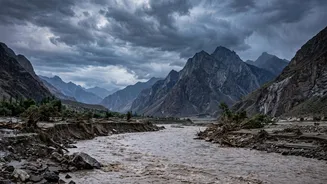
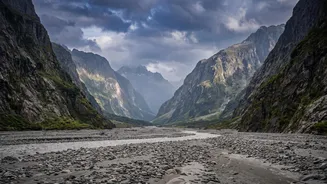
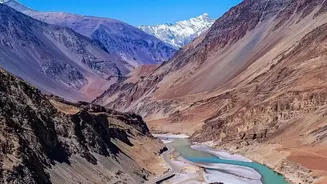
The primary reason mountain valleys are so susceptible is topography. Steep slopes and narrow canyons act as a natural funnel. When rain falls on a mountain, the steep terrain prevents water from soaking into the ground. Instead, it runs off rapidly, gathering speed as it flows downhill. This runoff from a large catchment area is channelled into a single, narrow valley, causing water levels to surge dramatically and with immense force. Flat landscapes allow water to spread out, but in the mountains, it has nowhere to go but down a confined path, concentrating its power.
The Threat of Intense Rainfall
Mountainous terrain itself can create intense weather. As moist air is forced up and over mountains, it cools and condenses, often resulting in extremely heavy, localized rainfall. These events, sometimes called cloudbursts, can drop an enormous amount of water over a small area in a very short time—sometimes over 100 mm in an hour. This sudden deluge quickly overwhelms the landscape's ability to absorb the water, triggering rapid runoff and initiating a flash flood.
Not Just Water: The Peril of Debris Flow
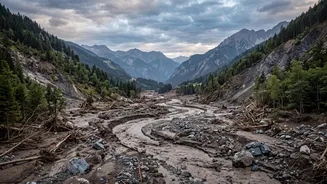
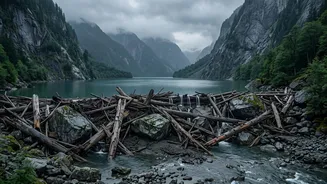
A flash flood in the mountains is rarely just water. The powerful current can roll boulders, tear out trees, and scour soil from the hillsides. This transforms the flood into a debris flow or mudflow, a thick, fast-moving slurry of water, mud, rocks, and vegetation that resembles wet concrete. These flows are incredibly destructive, capable of obliterating buildings, roads, and bridges in their path. The added weight and abrasive power of the debris make mountain flash floods significantly more hazardous than a typical water-only flood.
When the Ground Gives Way
The condition of the ground before a storm plays a crucial role. If the soil is already saturated from previous rains, its capacity to absorb more water is virtually zero, leading to immediate runoff. Similarly, rocky terrain or ground that has been hardened by a recent wildfire can also be highly impermeable. In these scenarios, even moderate rainfall can behave like a downpour on concrete, sheeting off the surface and accelerating into valleys and streams, amplifying the flood risk. Human activity, like deforestation and construction on steep slopes, can also destabilize the soil and increase runoff.