





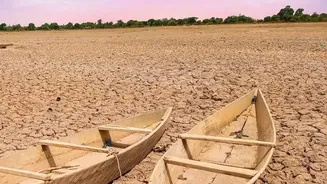


An Uneven and Anxious August
After a recovery in July, the southwest monsoon appears to be losing steam at a critical time. The India Meteorological Department (IMD) has forecast that rainfall in August is likely to be 'below normal', falling short of the long-period average. This
follows a season that has already been marked by erratic distribution. While some parts of the country have seen heavy showers and even floods, many agricultural heartlands are still experiencing a rainfall deficit. As of mid-August, the national cumulative rainfall deficit remained stuck at around 12% below average. This unevenness is the core of the problem; it’s not just about the total volume of rain, but when and where it falls. For farmers, a dry spell in August can be devastating.
The Critical Kharif Connection
August is a make-or-break month for India’s Kharif (summer) crops, which are sown during the monsoon. The productivity of key staples like rice (paddy), pulses, soybeans, and cotton depends heavily on adequate moisture during their growth phase. This year's planting season has already been sluggish. As of early August, the total area sown was trailing behind last year's figures, with paddy acreage down by over 3-4%. With the sowing window nearly closed, the nation’s food output now hinges on the final yields of the planted crops. A prolonged dry spell could stunt growth, shrink yields, and threaten the production targets for essential grains and oilseeds.
What This Means for Your Wallet
The link between monsoon performance and household budgets is direct and unavoidable. A shortfall in agricultural production inevitably leads to food inflation. Lower yields for crops like pulses (dal), vegetables, and oilseeds mean reduced supply in the markets, which pushes prices up. We are already seeing signs of stress, with prices of some vegetables like coriander and ginger surging due to supply disruptions from complicated weather patterns. If the monsoon remains weak, the cost of a basic food thali could rise significantly, putting a strain on millions of households. Economists warn that a deficient monsoon is a primary risk to keeping inflation in check.
The Broader Economic Ripple Effect
The impact of a poor monsoon extends far beyond agriculture, which is the backbone of the rural economy. Lower crop output means reduced income for a vast population of farmers and farm labourers. This, in turn, dampens rural demand for everything from tractors and two-wheelers to fast-moving consumer goods. A weak monsoon also affects water reservoir levels, which are crucial for drinking water supply and hydroelectric power generation. As of early August, live storage in India's major reservoirs was below last year's levels, adding another layer of concern. A struggling agricultural sector can act as a drag on the entire economy, potentially slowing down overall GDP growth.
Monitoring, Measures, and Mitigation
The situation is serious, but not all is lost. The government is monitoring the situation closely and has contingency plans in place. These include issuing advisories to farmers, promoting the use of drought-tolerant seed varieties, and managing water from reservoirs more efficiently. India is also better prepared to handle rainfall shocks than in the past, thanks to improved irrigation infrastructure in some areas and healthier reservoir levels from previous good monsoons. Furthermore, a potential positive Indian Ocean Dipole (IOD) developing later in the season could partially offset the negative impact of the prevailing El Niño conditions, though its strength remains uncertain. The next few weeks will be critical in determining the final outcome for the Kharif harvest and its impact on the economy.