



A New Look at a Familiar Neighbor
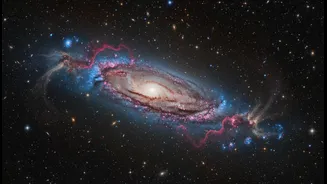
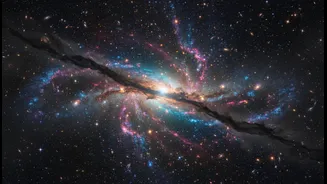
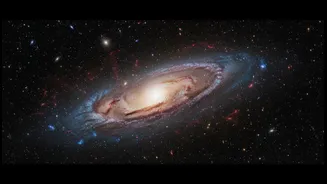
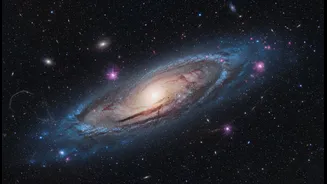
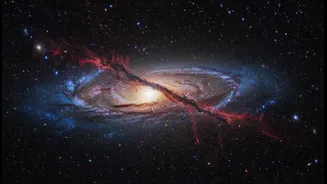
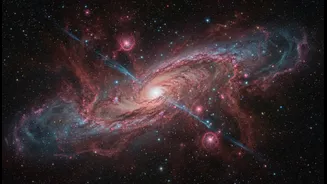
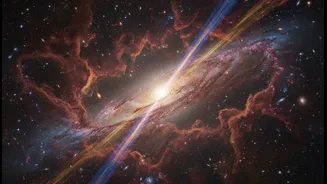
To mark the fourth anniversary of its scientific operations, NASA and its partners have released spectacular new images of Centaurus A. Located a relatively close 11 million light-years from Earth, this galaxy has long been an object of fascination and debate
among scientists. What makes Centaurus A special is that it’s one of the nearest active galaxies, providing a perfect natural laboratory for studying how galaxies and the supermassive black holes at their centers grow and evolve together. The new images cut through the thick dust lanes that previously obscured our view, revealing the galaxy’s inner workings with unprecedented clarity.
Peering Through the Cosmic Dust
Previous observations by telescopes like Hubble were hampered by the dense dust that clouds the galaxy's heart, blocking visible light. Even infrared telescopes like the retired Spitzer could see large-scale structures but couldn't resolve individual stars. Webb’s powerful infrared cameras, NIRCam and MIRI, change the game entirely. They peer through the dust as if it were transparent, transforming our view of Centaurus A from a blurry outline into a rich tapestry of millions of individual stars. This capability allows astronomers to perform what they call 'galactic archaeology,' studying stars one by one to piece together the galaxy's history.
A Violent Past and Active Present
Centaurus A is not a quiet galaxy; it bears the scars of a colossal merger with another galaxy that occurred about two billion years ago. This collision supplied the raw materials—gas and dust—that fuel intense bursts of star formation, a process that continues today. At its core, a supermassive black hole is actively feeding, blasting out powerful jets of energy that shape the entire galaxy. Webb’s instruments can detect the motion of gas near this black hole, revealing how it both triggers star birth by compressing gas and potentially halts it by blowing the raw material away.
Unraveling Unanswered Questions
The new images don't just provide answers; they also raise intriguing new questions. Webb's mid-infrared view highlights a mysterious S-shaped dust feature near the galaxy's center. Astronomers are still working to understand what created this unusual structure and what role the central black hole or the ancient merger may have played in its formation. The sheer detail in the images, which can look 'grainy' to the untrained eye, is actually a dense field of countless stars, each holding clues to the galaxy’s evolutionary timeline. This data is helping scientists reconstruct when different stellar populations were born.
Rewriting the Story of the Universe
Beyond Centaurus A, Webb's fourth year has been filled with groundbreaking discoveries that are reshaping our understanding of the cosmos. The telescope has found evidence of galaxies forming and merging much earlier in the universe's history than previously thought possible. It is revealing the 'cosmic web,' the large-scale structure that governs how galaxies are distributed throughout the universe, with stunning clarity. By resolving faint, distant objects that were once just blurry blobs, Webb is consistently finding that the early universe was a more complex and active place than models had predicted.