





Tyres: Your First Line of Defence
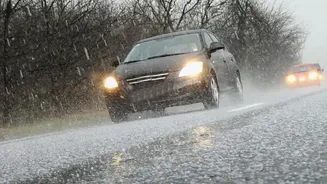
Your tyres are the only part of your car in direct contact with the road, making them critical for monsoon safety. Wet roads dramatically increase the risk of skidding and hydroplaning, where a layer of water builds up between the tyres and the road surface,
causing a loss of traction. Before the rains set in, inspect your tyres for adequate tread depth. For monsoon driving, a depth of at least 3mm is recommended to effectively channel water away. Also, check the tyre pressure weekly, including the spare. Incorrect pressure affects your car's handling and braking efficiency on slippery surfaces.
Wipers and Windshield: See and Be Seen
Visibility is severely reduced during a downpour. Your windshield wipers are your most important tool for a clear view. Summer heat often causes the rubber blades to crack and harden. If your wipers leave streaks, make screeching noises, or skip across the glass, it’s time to replace them. This is a small, inexpensive fix that makes a huge difference. Also, ensure your windshield washer fluid is topped up with a proper cleaning solution, not just plain water, to effectively clear away oily road grime splashed up by other vehicles.
Brakes: The Ultimate Safety Net
Wet roads mean longer stopping distances. Your braking system needs to be in top condition to handle the reduced traction. If you hear any squealing or grinding sounds, or if the brake pedal feels spongy or vibrates when you press it, get your brakes inspected by a professional immediately. These are signs that your brake pads may be worn out. After driving through a waterlogged area, gently tap your brakes a few times to help dry out the components and restore normal performance.
Lights and Electricals: Essential for Visibility
In heavy rain and overcast conditions, your car's lights are crucial not just for you to see, but for others to see you. Walk around your vehicle and check that all lights are working correctly: headlights (both high and low beam), tail lights, brake lights, and indicators. Clean the lenses, as a layer of dirt can significantly dim their brightness. Also, be wary of exposed wiring, especially if you have aftermarket accessories fitted. Moisture can cause short circuits, so ensure all electrical connections are properly insulated.
Battery Health: Powering Through the Rain
The monsoon puts extra strain on your car's battery. You’ll be using your wipers, headlights, and air conditioner more frequently, all of which draw power. An old or weak battery is more likely to fail in such conditions. Check the battery terminals for any signs of corrosion—a white, powdery deposit—and clean them if necessary. Ensure the connections are tight. If your battery is more than a few years old or has been showing signs of weakness, it's wise to have it tested at a service centre before you get stranded.
The Interior: Keep it Dry and Mould-Free
Water has a knack for finding its way inside during the monsoon, leading to damp carpets, musty smells, and potential mould growth. Check the rubber seals around your doors and windows for any cracks or gaps. Replacing old fabric floor mats with rubber ones is a great monsoon-specific upgrade, as they don't absorb water and are easy to clean. Using your car's air conditioner can also help, as it dehumidifies the air inside the cabin, preventing the windshield from fogging up.
Emergency Kit: Be Prepared for Anything
Even with the best preparation, things can go wrong. A well-stocked emergency kit can be a lifesaver. For the monsoon, consider packing a powerful torch, a tow rope, basic tools, a puncture repair kit, and a first-aid kit. An umbrella and a waterproof sheet or old towels are also incredibly useful. Ensuring your phone is fully charged before you set off on a long drive is another simple but crucial step. These items can make a huge difference if you find yourself stranded in heavy rain.