

The Culinary All-Rounder
Known as dahi, Indian curd is a cornerstone of the country's cuisine, prized for its versatility and health benefits. Unlike many other forms of yogurt, dahi is celebrated for its ability to play multiple roles in the kitchen. It can be a cooling agent
to balance fiery spices, a souring agent to add tang to curries, a tenderiser for meats, and a base for countless dishes, from refreshing drinks to complex curries. Its natural fermentation process makes it rich in probiotics, aiding digestion and boosting immunity. Whether enjoyed plain, used as a marinade for tandoori chicken, or whisked into a cooling raita, dahi is fundamental to creating the balanced and complex flavour profiles that define Indian food.
Cooling and Creamy: Raita
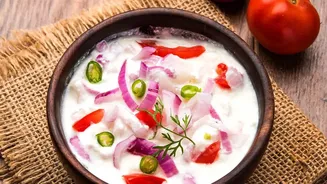
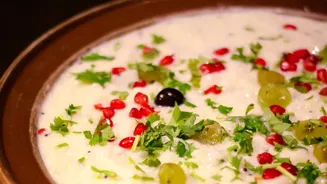
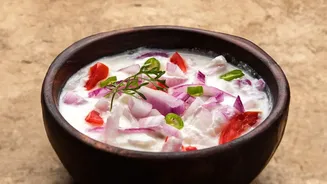
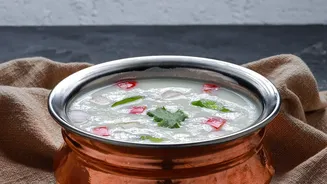
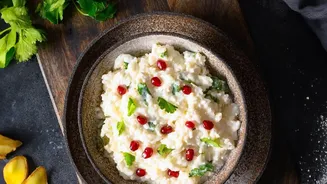
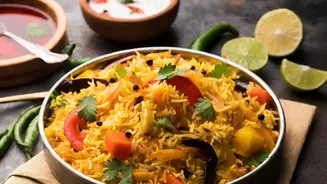
Raita is perhaps the most famous and simplest dahi-based preparation, a cooling condiment that accompanies spicy main courses like biryani or rich parathas. The basic formula is straightforward: whisked curd mixed with raw or cooked vegetables, fruits, and a few spices. A classic Cucumber Raita involves mixing finely diced or grated cucumber into yogurt seasoned with salt and roasted cumin powder. For a different texture, try Boondi Raita, where tiny fried gram flour balls are soaked and then added to spiced dahi. Variations are endless, from sweet Pineapple Raita to savoury Onion and Tomato Raita, each offering a refreshing counterpoint to a hearty meal.
The Comforting Curry: Kadhi
Kadhi is a beloved comfort food across India, a smooth, tangy curry made from a base of sour dahi and gram flour (besan). The beauty of kadhi lies in its regional variations. Punjabi Kadhi is often thick and creamy, featuring fried vegetable fritters (pakoras) submerged in the yogurt gravy. In contrast, Gujarati Kadhi is typically thinner, with a distinct sweet and sour flavour from the addition of jaggery or sugar. To make a simple kadhi, whisk dahi and besan together to form a lump-free batter, then add water. This mixture is then tempered with spices like cumin seeds, curry leaves, and ginger, and simmered until it thickens and the raw taste of the besan disappears. It is most commonly served hot with steamed rice.
Refreshing Thirst-Quenchers: Lassi and Chaas
On a hot day, nothing is more refreshing than a tall glass of a dahi-based drink. Lassi is the most well-known, a creamy, frothy drink originating from Punjab. It can be sweet, made by blending dahi with sugar and a touch of cardamom, or savoury (salted). Fruit versions, especially Mango Lassi, are popular worldwide, combining the tang of yogurt with the sweetness of ripe mango pulp. Chaas, or buttermilk, is a lighter, more liquid cousin of lassi. It is made by thinning dahi with water and seasoning it with salt, roasted cumin powder, and fresh herbs like mint and coriander. It is a fantastic digestive aid often consumed at the end of a meal.
A Festive Favourite: Dahi Vada
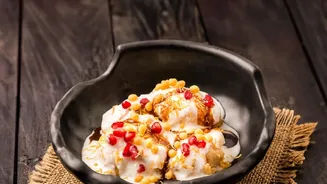
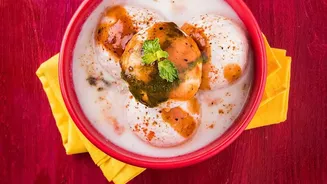
Dahi Vada, also known as Dahi Bhalla, is a popular snack prepared for festivals and special occasions. The dish consists of soft, fluffy lentil fritters (vadas), made from a batter of soaked urad dal (skinned black gram), which are deep-fried until golden. After frying, the vadas are soaked in water to soften them further before being submerged in a bath of thick, creamy, and lightly sweetened dahi. The final dish is a spectacular chaat, garnished with a drizzle of sweet tamarind chutney and spicy green chutney, and a sprinkle of roasted cumin powder and red chilli powder. The result is a delightful explosion of textures and flavours in every bite — soft, cool, sweet, tangy, and spicy all at once.